
By Grace Wanja
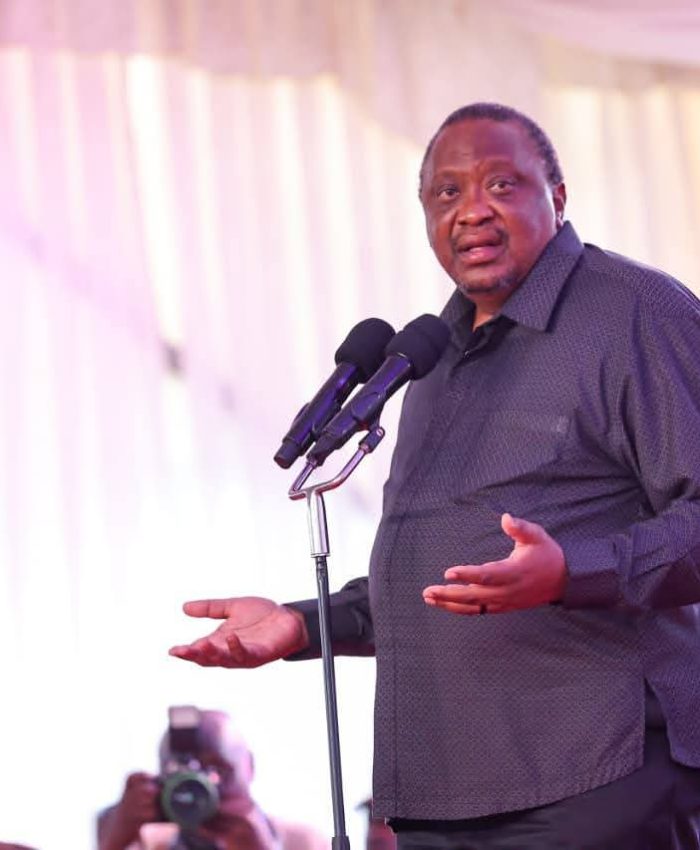
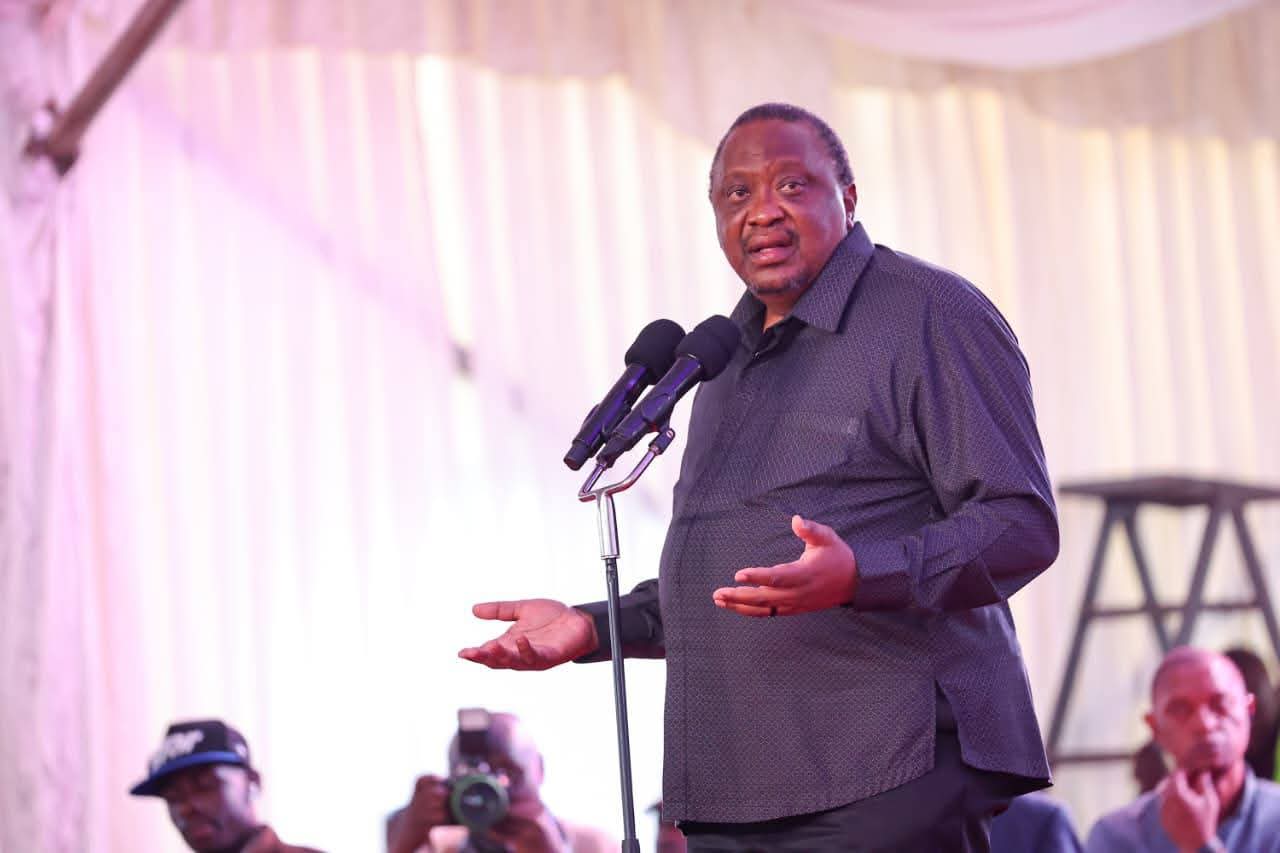
Retired President Uhuru Kenyatta has fired back at accusations from senior ODM leaders that he is meddling in the party’s internal affairs, using the burial of former Cabinet Minister Cyrus Jirongo in Lumakanda, Kakamega County, as a platform to defend his legacy and warn against attempts to weaken Kenya’s multi-party democracy. Speaking before mourners, Kenyatta eulogized Jirongo as a stalwart of democratic ideals and a political heavyweight who possessed the stature to become President, while cautioning that undermining rival parties for short-term gain would erode the very foundation of Kenya’s political system.
The former Head of State dismissed claims that he is destabilizing ODM through proxies, allegations that have been levelled against him by party officials including Chairperson Gladys Wanga and Minority Whip Junet Mohamed. Wanga accused Kenyatta of using “moles” to destabilize ODM, while Junet alleged that some members were “on the payroll” of the retired president. Kenyatta, however, insisted that he respects political parties and urged the current administration to focus on delivering its development agenda rather than engaging in political manoeuvres. In what appeared to be a veiled jab at President William Ruto, Kenyatta emphasized that issue-based politics and mutual respect must guide Kenya’s democratic competition.
The tensions within ODM reflect one of the party’s most serious internal struggles since its formation two decades ago. Analysts note that ODM, long dominated by Raila Odinga’s leadership, is grappling with generational shifts, factionalism, and external pressures that threaten its cohesion. The accusations against Kenyatta underscore the fragility of alliances forged during the handshake era, when Kenyatta and Odinga joined forces to stabilize the country after the contested 2017 elections. That partnership reshaped Kenya’s political landscape but left lingering mistrust among ODM loyalists who now view Kenyatta’s continued influence with suspicion.
Kenyatta’s remarks at Jirongo’s burial also carried symbolic weight. By invoking Jirongo’s legacy as a defender of multi-party democracy, Kenyatta positioned himself as a custodian of Kenya’s democratic traditions, contrasting his stance with what he implied were attempts by the current administration to weaken opposition parties. His call for respect and issue-based politics resonated with mourners but also served as a reminder that Kenya’s democratic experiment remains vulnerable to manipulation.
The broader context of Kenya’s political battles reveals a pattern of fluid alliances and contested loyalties. Ruto’s allies have seized on the accusations against Kenyatta to portray him as unwilling to retire from politics, reinforcing Ruto’s narrative of breaking away from dynastic politics. For ODM, the internal accusations highlight the party’s struggle to maintain unity amid external pressures. For Kenyatta, the silence of former allies such as Fred Matiangi and Jeremiah Kioni, who have not publicly defended him, raises questions about loyalty and the shifting sands of political survival.
Observers argue that Kenya’s democracy is at a crossroads. The accusations against Kenyatta, the internal divisions within ODM, and the broader contest between Ruto’s administration and the opposition reflect deeper tensions about the role of retired leaders, the resilience of political parties, and the future of issue-based politics. Kenyatta’s intervention at Jirongo’s burial was not merely a defense of his reputation—it was a warning that weakening parties for short-term gain risks dismantling the democratic framework that Kenya has fought to build since the 1990s.
The burial of Jirongo itself was a poignant reminder of Kenya’s political journey. Jirongo, remembered for his role in the Youth for KANU ’92 movement and later as a Cabinet Minister, embodied both the promise and contradictions of Kenya’s multi-party era. Kenyatta’s tribute to him as a defender of democracy was not only personal but political, linking Jirongo’s legacy to the current struggles facing Kenya’s parties. In doing so, Kenyatta sought to remind the nation that democracy is built on respect for institutions, not on their destruction.

The accusations from ODM leaders also highlight the growing influence of younger politicians within the party. Figures like Gladys Wanga represent a new generation eager to assert independence from the old guard, including Raila Odinga and his allies. Their criticism of Kenyatta reflects both internal frustrations and a desire to reposition ODM as a party free from external influence. Yet this generational shift also risks deepening divisions, particularly if accusations of infiltration and betrayal continue to dominate discourse.
Meanwhile, Ruto’s administration has capitalized on these tensions to strengthen its narrative of reform and independence. By portraying Kenyatta as meddling in opposition politics, Ruto’s allies reinforce the image of the current president as a leader breaking away from dynastic entanglements. This narrative resonates with Ruto’s “hustler nation” base, which views Kenyatta’s continued influence as emblematic of the old order they seek to dismantle.
The silence of Matiangi and Kioni, once vocal defenders of Kenyatta, adds another layer of intrigue. Their absence from the debate suggests either strategic caution or quiet distancing, leaving Kenyatta exposed to criticism without the shield of loyal allies. For Kenyatta, this silence is as damaging as open betrayal, reinforcing the perception that his political circle is shrinking.
The stakes of these battles extend beyond individual reputations. Kenya’s democratic experiment, built on the principle of multi-party competition, depends on the resilience of political parties. Attempts to weaken or infiltrate parties undermine this foundation, reducing democracy to a contest of personalities rather than ideas. Kenyatta’s warning at Jirongo’s burial was therefore not only about defending himself but about defending the integrity of Kenya’s political system.
As ODM prepares for internal battles in January, and as Ruto’s allies continue to press their advantage, Kenyatta’s words serve as both a defense and a challenge. He has reminded the nation that democracy is not about destroying rivals but about respecting them, competing with ideas, and protecting the integrity of political institutions. Whether his message resonates beyond the burial grounds of Lumakanda remains to be seen, but the stakes are clear: Kenya’s political soul is being contested not only in rallies and party meetings but in the very definition of democracy itself.
The coming months will test ODM’s ability to withstand internal divisions and external pressures. If the party fractures further, it risks losing its credibility as a unified opposition force. For Kenyatta, the challenge will be to maintain relevance without appearing to meddle, a delicate balance that requires both restraint and strategic engagement. For Ruto, the opportunity lies in consolidating power while projecting himself as the champion of reform.
Ultimately, the battle over ODM and Kenyatta’s role reflects a larger struggle about the future of Kenya’s democracy. Will parties remain resilient institutions capable of sustaining competition, or will they be weakened by infiltration and manipulation? Will retired leaders respect boundaries, or will they continue to exert influence? These questions will shape Kenya’s political trajectory in the years to come.
In the end, Kenyatta’s rebuttal was more than a denial—it was a declaration that democracy cannot survive on silence, suspicion, or sabotage, but only on respect, resilience, and the courage to compete with ideas rather than destruction.