
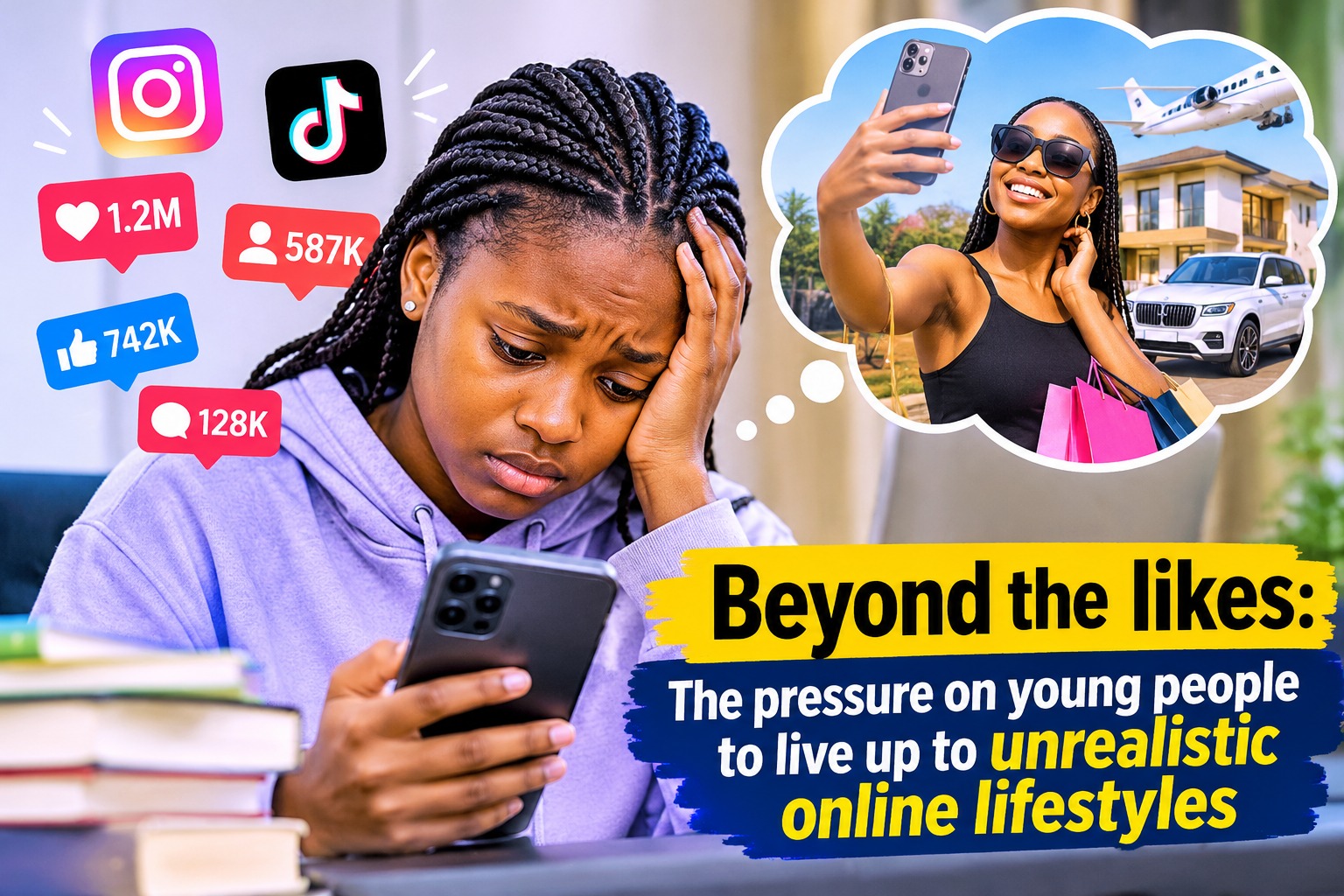
Social media’s curated perfection is pushing Kenya’s youth into debt, anxiety and a dangerous race to perform a life they cannot afford
By Faith Chepkoech
Social media has transformed how young people communicate, express themselves and understand the world around them — but beneath the entertaining videos, glamorous photographs and seemingly perfect lifestyles lies a growing and largely unexamined crisis.
Celebrities, influencers and reality television personalities occupy a considerable space in the lives of young people. Their expensive clothes, luxurious holidays, fashionable homes and apparently perfect relationships are presented as the natural markers of success. What audiences rarely appreciate is that what they see is almost always a curated selection — photographs staged, videos edited, and experiences packaged to attract attention rather than reflect truth. The gap between what is displayed online and what happens in everyday life is easily, and dangerously, forgotten.
The problem deepens when young people stop viewing such content as entertainment and begin treating it as a standard they are obliged to meet. A student who was previously content with their circumstances may begin questioning their appearance, finances or achievements simply because another person’s life appears more exciting online. Social media, in this way, quietly converts harmless admiration into corrosive comparison.
Peer pressure compounds the difficulty. Young people do not only measure themselves against celebrities — they compare themselves with friends, classmates and acquaintances who project expensive lifestyles on the same platforms they use daily. Nobody wants to appear left behind. Consequently, some feel compelled to buy clothes, phones and accessories they cannot comfortably afford. Others borrow money to fund outings or sustain an appearance of prosperity. What begins as a desire to belong can become a financial burden that crowds out more urgent needs.
In Kenya, where many young people are studying, seeking employment or working towards financial independence, the pressure to project a luxurious lifestyle carries a particular cost. Money spent to impress others is often money needed for transport, food, learning materials or savings. Borrowing to keep up appearances can convert a fleeting sense of belonging into a lasting obligation — one that follows a person well beyond the moment the photograph was taken.
The emotional toll is equally significant. When reality fails to match the expectations that online content creates, young people can experience disappointment, insecurity and a persistent sense of inadequacy. The core unfairness of these comparisons is rarely acknowledged: people routinely measure their private struggles against another person’s carefully selected highlights. A person may attract thousands of likes and still face difficulties their followers will never see.
None of this means that social media is entirely harmful or that every person who shares their achievements is being dishonest. Digital platforms can inspire, create opportunity, spread useful information and help young people discover their talents. The concern is not the ambition to improve one’s life — it is the belief that success must look a particular way to count as real. When the pursuit of admiration overrides personal well-being, young people risk losing sight of their own goals and circumstances.
Addressing this challenge demands a collective response. Parents, teachers and universities should create space for honest conversations about online influence, self-worth and financial responsibility. Young people need the tools to understand how digital content is produced and why every polished image deserves scrutiny rather than acceptance. Influencers and media producers carry a responsibility too — to avoid presenting material wealth as the only credible measure of achievement.
Schools and universities can build practical discussions about digital literacy and money management into their programmes. Recognising advertising, sponsorships and the selective nature of online posts equips young audiences to make more considered judgements. Conversations about mental well-being should also create room for students to speak openly about comparison and pressure, without shame. These steps will not eliminate every influence, but they can help young people engage with online content from a position of greater confidence.
Young people themselves must learn to find value in progress that attracts no public attention. Completing a semester, acquiring a new skill, setting aside modest savings or working through a personal difficulty are achievements that deserve recognition, even without an audience. There is no shame in wearing affordable clothes, using a modest phone or declining to participate in spending that exceeds one’s means. Financial responsibility and genuine personal growth are more durable than any image that cannot be sustained.
We must ultimately reconsider the version of success we ask young people to pursue. A society that celebrates appearances over substance risks teaching its next generation to perform happiness rather than cultivate it. No one should go into debt to look successful, pretend contentment to appear desirable, or feel diminished by an ordinary life simply because someone else’s highlight reel looks extraordinary. We have become so accustomed to displaying our lives that we risk forgetting a simple truth: a life does not need an audience to be meaningful.










1 Comment
This is truly inspiring