thousands in Kitengela in the most consequential pre-election rally yet — signalling that Kenya’s road to August 2027 will be intensely contested.
By James Mwangi
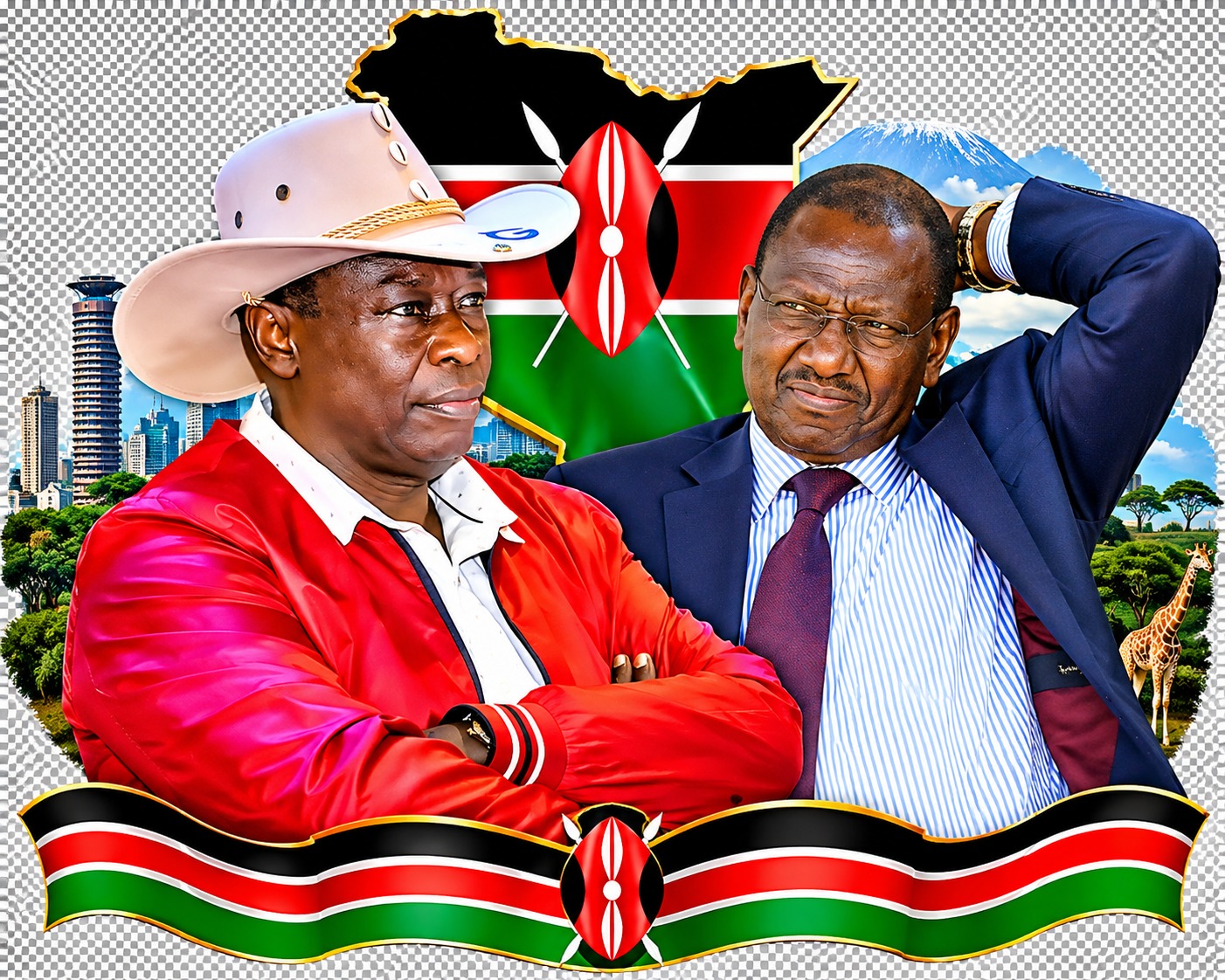
The two men who could reshape Kenya’s political landscape descended on Kitengela, Kajiado County, at the weekend for a rally that most observers agree was less a campaign event than a defining moment in the opposition’s bid to present a credible alternative to President William Ruto’s Kenya Kwanza administration ahead of the August 2027 general election.
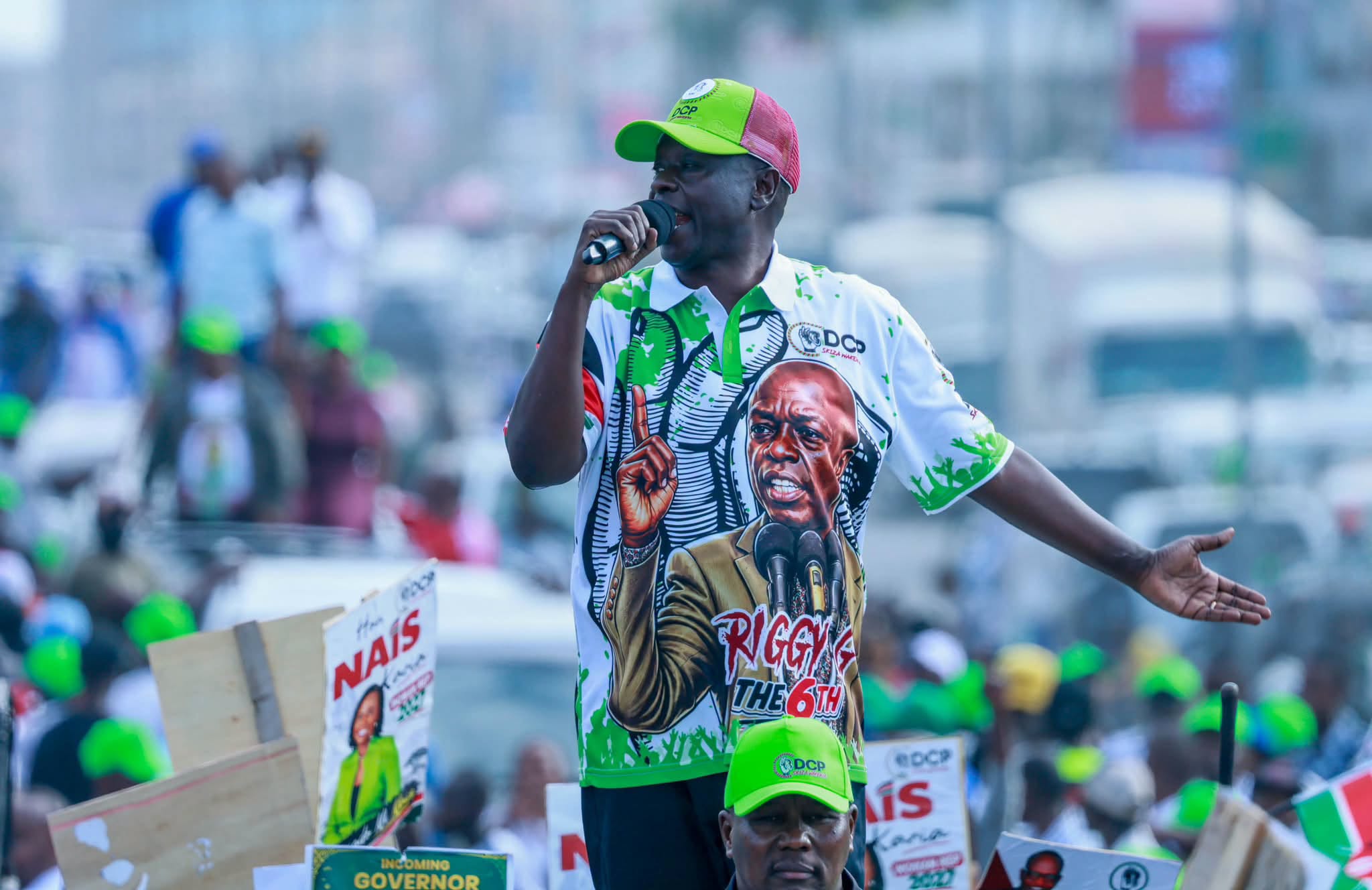
Rigathi Gachagua, leader of the Democracy for the Citizens Party (DCP), and Stephen Kalonzo Musyoka, the veteran Wiper leader and perennial presidential contender, shared a platform before tens of thousands under the banner of the United Alternative Government — the coalition’s most emphatic statement yet that the race to 2027 has effectively begun. The event, held in the heart of Kajiado County, demonstrated that the machinery to mount a serious electoral challenge against the incumbent is already in motion.
Kitengela has form. It was here in February that Nairobi Senator Edwin Sifuna’s Linda Mwananchi movement drew massive crowds, only for police to disperse them with teargas — an episode that dramatically amplified sympathy for the senator and helped project him from a regional figure into a national political brand. The return to Kitengela, now with the full weight of the United Alternative Government behind it, carried deliberate symbolism: the opposition was reclaiming a town that had become shorthand for the tension between state power and popular mobilisation.
Gachagua set the tone with characteristic directness. “In the end, we shall get our country Kenya on the right footing,” he told the crowd. “We have, as a nation, in the last four years been treated to lies, lies, lies, dictatorship, runaway corruption, extrajudicial killings, lawlessness — name it. But it is time to liberate our nation and the spirit of revolution is unstoppable. The idea is here; the time is now.” He added a second pledge that will define the coalition’s economic message: “Our first agenda when we form the sixth administration is to get back all the looted Kenyan resources by this unapologetic regime.” The language was unambiguous — an opposition leader speaking directly to what he frames as governance failure, and placing economic accountability at the centre of the coalition’s prospectus.
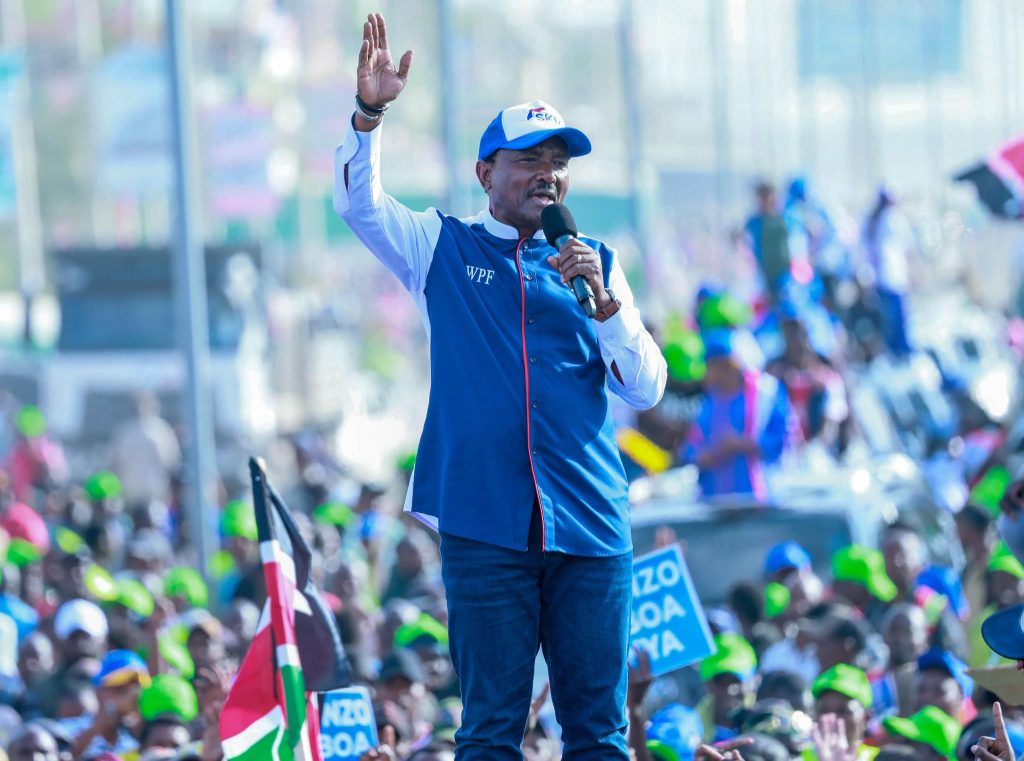
Kalonzo matched the register with a blend of constitutional argument and popular appeal that has long defined his political style. “Kenyans are united against a predatory regime that takes, steals and kills,” he said. He laid out a concrete manifesto: restoring the payslip, abolishing what he called slush funds — specifically naming the Affordable Housing Levy — and guaranteeing every child an education from primary school to university. “Together,” he said, “we shall restore and rebuild Kenya.” In a second address, he sharpened the urgency: “Our nation is on the brink of collapse. We cannot continue normalising corruption, massive looting of public resources, abductions and the systematic destruction of our institutions. Kenya deserves better. The time for liberation has come.”
Beyond the rally itself, the broader coalition arithmetic is what gives the United Alternative Government its structural weight. Gachagua has argued that the Gachagua-Kalonzo partnership alone could yield a combined 12 million votes — eight million from Mount Kenya and four million from Ukambani — creating a significant numerical advantage heading into 2027. That calculation forms the backbone of the coalition’s confidence, and it explains why the question of a single presidential candidate has become the dominant preoccupation of opposition politics.
Sifuna, though not present at the Kitengela rally, remains central to that calculation. His Linda Mwananchi movement has built demonstrable traction among younger voters in Nairobi and Western Kenya, and his eventual positioning within or alongside the United Alternative Government will materially shape the coalition’s reach. Gachagua has indicated his willingness to step aside and support another candidate from the United Alternative Government if he is not selected to carry the opposition ticket, while Kalonzo has pledged to support Sifuna if the senator is chosen as the coalition’s presidential candidate, saying simply: “He could very well end up being the sixth president.” The fluidity of those positions reflects a coalition still negotiating its internal architecture, but one that has agreed on a shared direction of travel.
The principals of the United Alternative Government have declared they are taking decisive steps towards consolidating unity and presenting Kenyans with a credible, democratic and transformative alternative government, and members of the coalition have signed a memorandum of understanding committing themselves to work together and support a common presidential candidate in 2027. These are structural commitments, not mere statements of intent.
The government has not been passive. President Ruto’s allies contend that the opposition coalition is built on contradictions too deep to survive an actual campaign, and that the ideological distance between its principals will widen under electoral pressure. UDA leaders in Kitui have urged Kalonzo to join the Ruto government, warning that his alliance with Gachagua risks leaving him politically marginalised. The Kenya Kwanza calculation is straightforward: Kenya’s opposition coalitions have historically fractured when patronage, ethnic arithmetic and individual ambition collide — and the presidency commands resources capable of accelerating precisely those pressures.
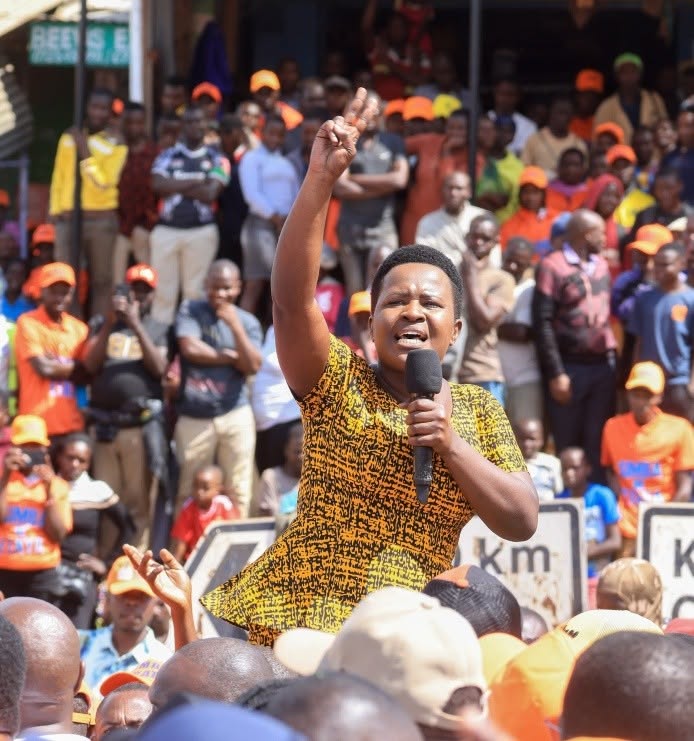
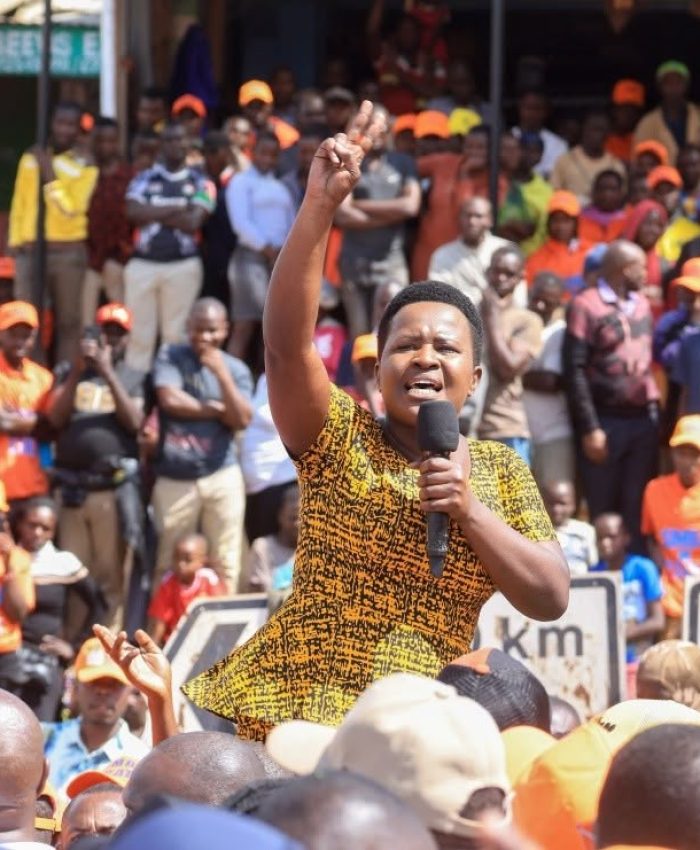
That history cannot be dismissed. But the energy in Kitengela pointed to something beyond transactional politics. The crowd was large, diverse and visibly animated — a cross-section of Kajiado County that reflected the coalition’s ambition to build a genuinely national constituency rather than a regional bloc. Whether that breadth survives the pressures of candidate selection, coalition management and the final months of campaigning remains the defining question of Kenya’s political season.
What Kitengela established, with clarity, is that the contest for Kenya’s sixth presidency is fully under way — and that the United Alternative Government has found in its Kajiado show of force a platform capable of sustaining a serious national challenge. With nine months to polling day, the question is no longer whether the opposition can compete. It is whether it can hold together long enough to prevail.
Similar Posts by The Mt Kenya Times:
- Gachagua to Ruto: You have done ZERO
- Ruto nominates Chelagat as Data Commissioner to lead Kenya’s privacy watchdog
- Mariga vows to fight on after FKF purge at stormy Meru SGM
- Essy Okenyuri declares 2027 Kisii Woman Rep bid
- Fuliza lawsuit: Are Kenyan mobile lenders protecting consumers or exploiting their vulnerability?