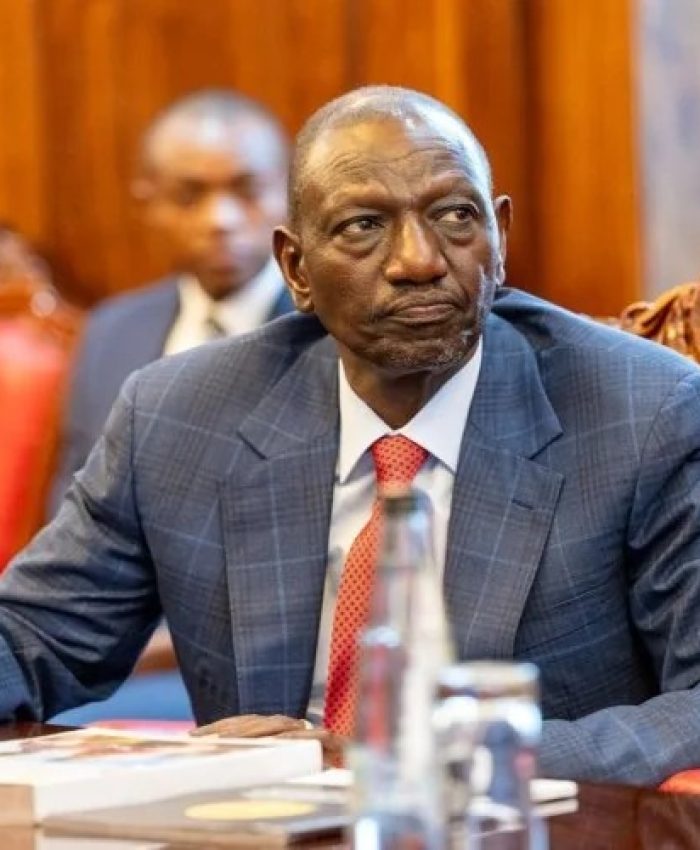
With polls showing public scepticism about the UDA-ODM alliance and the 2027 election looming, Friday’s State House meeting was as much about political consolidation as it was about development
By Janet Mwathi
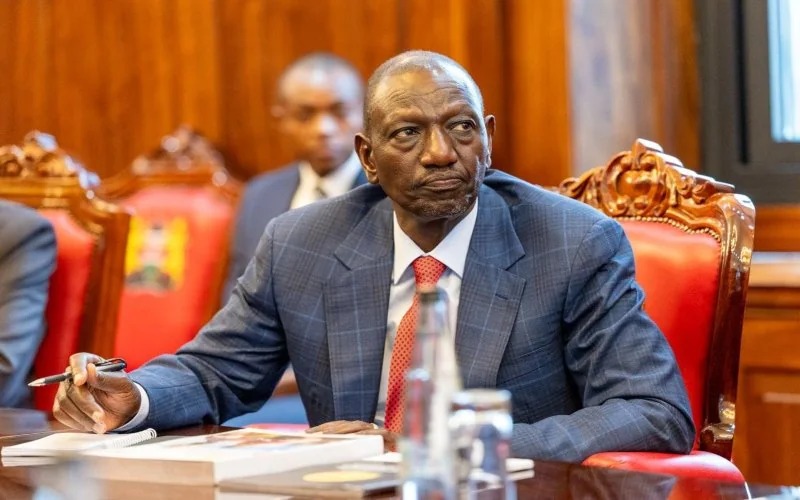
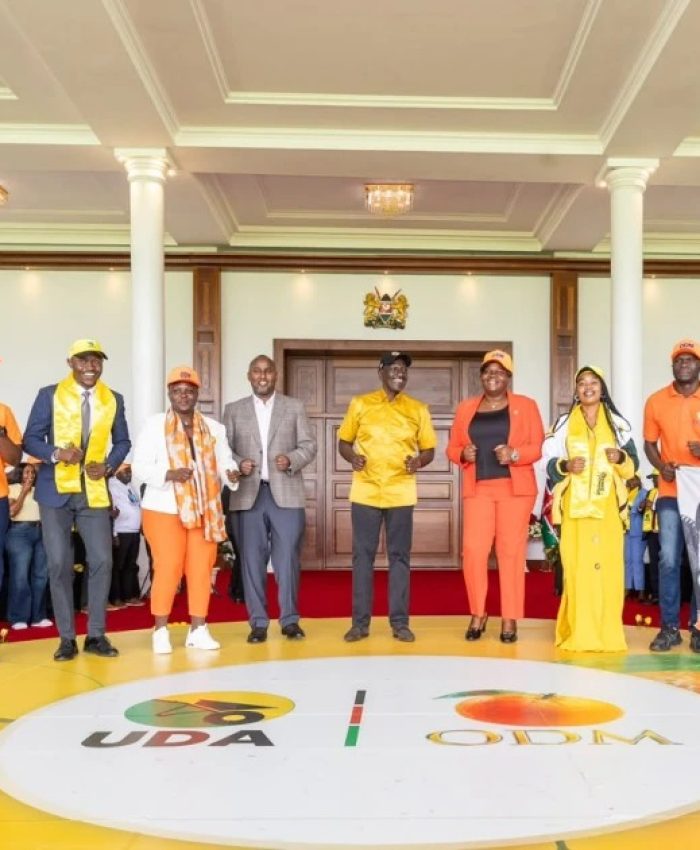
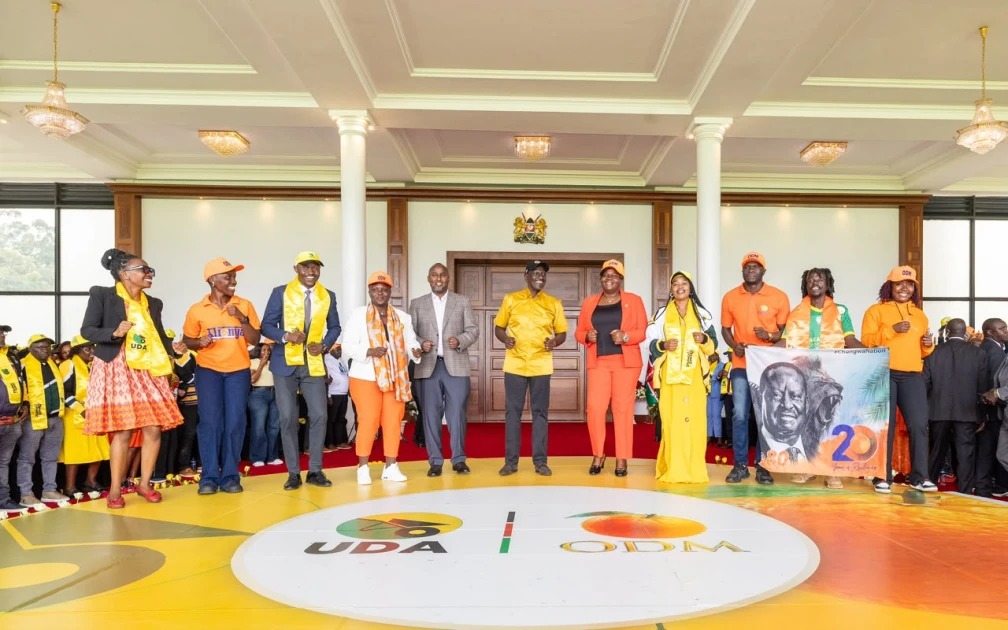
President William Ruto yesterday hosted leaders from Nairobi under the broad-based government arrangement at State House, announcing plans to accelerate affordable housing, modern markets, road development, drainage improvement, and water and sanitation expansion across the capital in what his administration framed as a coordinated push to make Nairobi more liveable and attractive to investors.
The meeting brought together leaders from the ruling United Democratic Alliance and the Orange Democratic Movement, whose March 2025 political cooperation agreement formed the foundation of the broad-based arrangement that has defined Kenya’s governing coalition for the past twenty months. That the two parties’ Nairobi delegates were seated together at State House on a Friday afternoon in November 2026 — nine months before the country goes to the polls — was not purely a matter of urban planning. It was a carefully staged demonstration that the alliance holds, at a moment when polling data suggests the public is far from convinced.
“We identified priority development programmes, whose implementation we agreed to accelerate, including affordable housing, modern markets and road development to ease traffic congestion,” Ruto said in a statement posted on his X account following the engagement. The priorities align with longstanding concerns among Nairobi’s residents and business community — a city of more than five million people whose infrastructure has struggled to keep pace with its growth, whose roads flood seasonally, and whose informal markets remain among the most congested and poorly serviced on the continent.
The ambition is not new. Successive administrations have promised Nairobi transformation, and the gap between announcement and delivery has historically been wide. What distinguishes the current moment is the political urgency that accompanies the promise. The 2027 general election is close enough to feel, and Nairobi — with its dense population, its media scrutiny, and its capacity to shape national political narratives — is a prize that no serious presidential contender can afford to concede.
Ruto appears acutely aware of this. The State House meeting follows a pattern of intensified engagement with key constituencies in recent weeks, and the choice to host Nairobi’s broad-based leadership collectively, rather than through separate party channels, reinforces the administration’s message that UDA and ODM are functioning as a unified governing force. Whether that message is reaching voters is a different matter.
A Trends and Insights for Africa poll released this month found that 43 per cent of Kenyans oppose the broad-based government arrangement, against 32 per cent who support it. The numbers carry a particular sting in Nyanza, historically ODM’s heartland, where 44 per cent of respondents opposed the arrangement and only 38 per cent backed it. For ODM leader Raila Odinga — currently serving as African Union Commission Chairperson — and for the party’s domestic leadership, those figures represent a genuine electoral liability. The base that has sustained ODM across five election cycles is sending a signal that its patience with the alliance is not unlimited.
This is the central tension the broad-based government must navigate between now and August 2027. The arrangement delivered political stability after the turbulence of the 2022 post-election period and gave both parties a platform for governance. But stability secured at the top of the political structure does not automatically translate into popular legitimacy at the grassroots. Voters in Kisumu, Siaya and Homa Bay who backed Odinga repeatedly on promises of opposition and change did not mandate their representatives to govern alongside the man their candidate ran against.
The Nairobi development agenda is therefore doing double duty. It is a genuine policy programme — Nairobi’s infrastructure deficit is real, its flooding a recurring public health crisis, its road congestion a daily economic drag — and it is a political instrument designed to demonstrate that the broad-based arrangement delivers tangible results for ordinary people. If the housing units are built, the markets upgraded and the roads dualised before the election, the administration will have a material argument to make. If they remain at the level of announced priorities without implementation timelines or confirmed budgets — and Friday’s statement specified neither — the optics risk reinforcing the scepticism the polls already capture.
The broader diplomatic context adds another dimension. On Thursday, Ruto hosted more than forty European Union heads of delegation and ambassadors at State House, in engagements marking fifty years of Kenya-EU diplomatic relations. The discussions covered trade, investment, job creation and market access — a signal that the administration is simultaneously pursuing international economic partnerships while managing domestic political consolidation. The two tracks are not unrelated: visible foreign investment in Nairobi’s infrastructure would strengthen the government’s development narrative considerably.
For ODM’s Nairobi leadership, the State House meeting represents a calculated bet — that association with a credible development programme in the capital will outweigh the cost of the alliance’s unpopularity in the party’s traditional strongholds. It is a bet that grows riskier the closer Kenya gets to polling day, and the TIFA numbers suggest the window for it to pay off is narrowing.
Ruto, for his part, has governed with enough political dexterity to understand that announcements without delivery are a gift to opponents. The question Friday’s meeting leaves unanswered — and the question Nairobi’s residents will be asking in the months ahead — is not what has been prioritised, but when the first foundation is poured, the first market rebuilt, and the first road widened. In an election year, the gap between a State House communiqué and a construction site is measured not in kilometres but in votes.
Similar Posts by The Mt Kenya Times:
- Mt Kenya Times ePAPER November 14-15, 2026
- Sifuna’s party rebrands to Linda Mwananchi
- Ruto commits to KSh38.7B Kiambu Road dualling and new Nairobi-Thika Expressway
- Khaminwa to receive Kenya’s historic first honorary degree from Kaimosi Friends University
- Who is the best artist? The question misses the point entirely