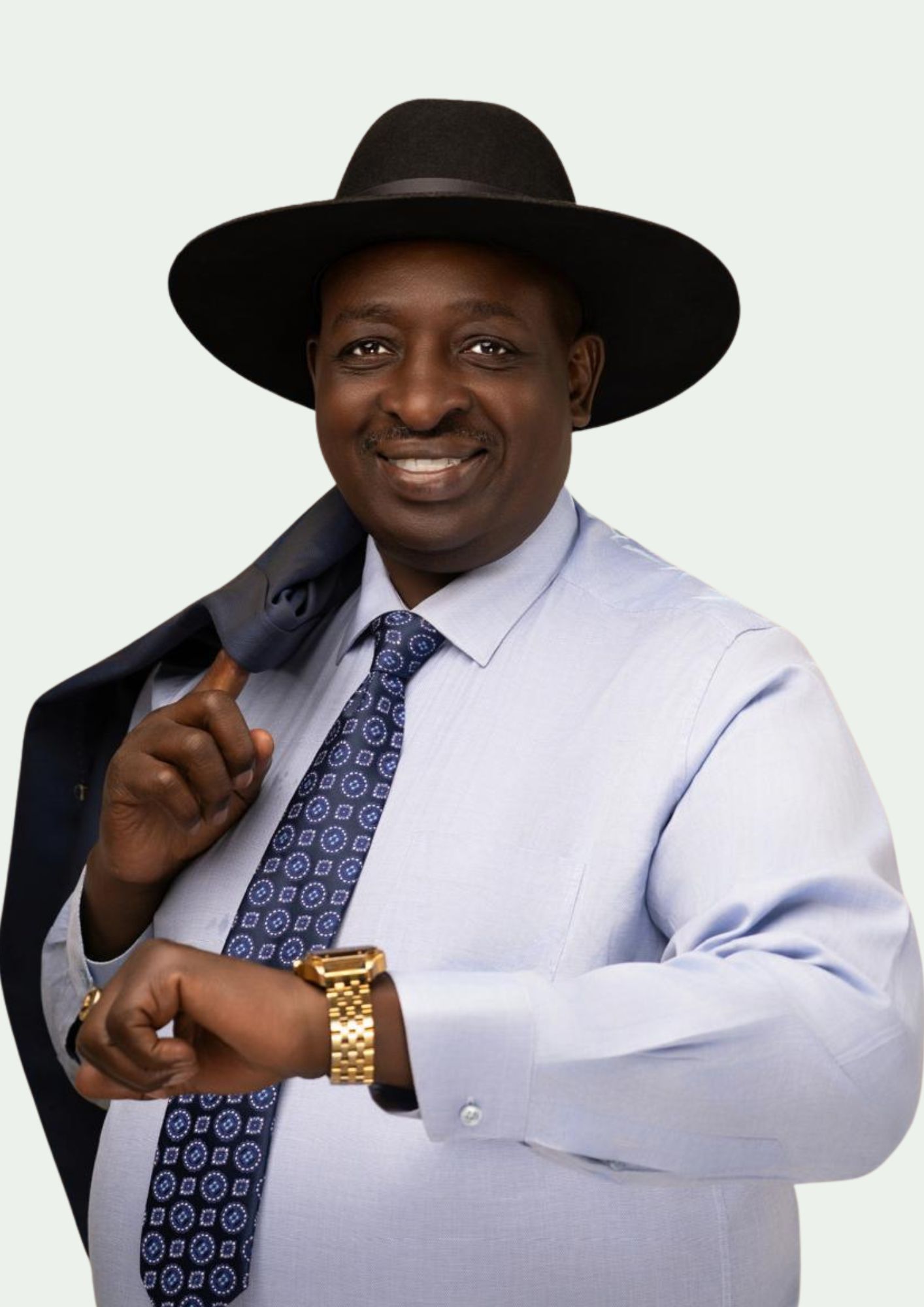
Ethnic arithmetic, party realignments and shifting business community loyalties are quietly reshaping who controls Kenya’s capital ahead of the 2027 general election
By James Mwangi
James Mwangi Gakuya, the Embakasi North Member of Parliament running under the Democracy for the Citizens Party, enters the Nairobi gubernatorial race as the candidate best positioned to exploit the ethnic and political fractures now visibly widening across the capital’s crowded political landscape, in what is shaping up to be the most consequential county election in Kenya’s recent democratic history.
Nairobi is not simply Kenya’s capital. It is the country’s most complex electoral battleground — a city of 2,743,155 registered voters drawn from virtually every ethnic community in the republic, governed by shifting loyalties, business interests, generational grievances and the perpetual calculus of who delivers and who merely promises. The 2027 gubernatorial contest is arriving at a moment of unusual political fluidity, with incumbents switching parties, newcomers making bold entrances and voters expressing open cynicism about the entire field. Against that backdrop, the ethnic arithmetic that has historically determined Nairobi’s political outcomes is once again asserting itself with quiet but decisive force.
The numbers tell a story that no serious candidate can afford to ignore. The GEMA bloc — comprising the Kikuyu, Embu and Meru communities — accounts for an estimated 40 to 45 per cent of Nairobi’s registered electorate, translating to between 1.1 and 1.2 million voters. Within that bloc, the Kikuyu community alone represents approximately 75 per cent of the total GEMA vote, concentrated in Roysambu, Kasarani, Dagoretti South, Starehe and the sprawling Embakasi constituencies. No candidate has ever won the Nairobi governorship without either carrying the GEMA vote or fracturing it sufficiently to build an alternative coalition. In 2027, that bloc is not only available — it is actively looking for a new political home.
The story of how that realignment happened begins with Johnson Sakaja. The incumbent governor, who won in 2022 riding a wave of GEMA support and cross-community goodwill, has made a move that political analysts are already describing as one of the most consequential miscalculations of his career. Last month, Sakaja defected from UDA — the party of President Ruto and the preferred political vehicle of much of the GEMA establishment — and joined ODM, the outfit most closely associated with the late Raila Odinga and historically regarded within Kikuyu political circles as the principal opposition. His stated aim is re-election. His actual challenge is that the community that elected him has not followed him through the door.
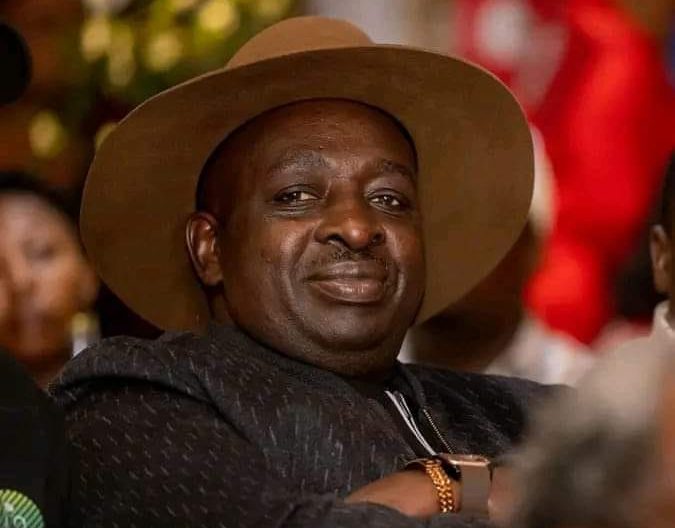
Nairobi’s Kikuyu business community, which wields influence disproportionate to its raw voter numbers, has grown deeply hostile to Sakaja’s county administration. Traders and entrepreneurs operating in markets, malls and commercial districts across the city have cited what they describe as punitive and poorly conceived business policies that have strangled rather than supported enterprise. For a community whose identity is profoundly tied to commerce and economic activity, that grievance is not abstract — it is felt at the till, in the licence renewal queue and at the county enforcement officer’s knock on the door. The result has been a remarkable political migration: Kikuyu business voters, long regarded as instinctively hostile to ODM, have in considerable numbers shifted towards the very party Sakaja has just joined — but their motivation is protest, not loyalty, and they are unlikely to follow him there. Sakaja finds himself in the paradoxical position of having joined the party his former supporters now flirt with, while those same supporters want nothing to do with him personally.
Ronald Karauri’s entry into the race introduces a different set of calculations. The Kasarani MP and former SportPesa chief executive joined UDA on Monday, with Majority leader in the National Assembly Kimani Ichung’wah stating publicly that President William Ruto had personally requested the move. Karauri arrives with a recognisable brand, a business pedigree and genuine name recognition across the city. His pledges to overhaul Nairobi’s infrastructure, improve service delivery and grow county revenue have been received with cautious interest. Yet his structural position is precarious in ways that his public profile does not immediately reveal.
Karauri is Meru — a community that sits within the broader GEMA family but represents a minority within Nairobi’s GEMA voting base. Meru voters in the capital are numerous enough to matter at the margins but insufficient to anchor a winning coalition on their own. More critically, Karauri now flies the UDA flag at the precise moment when the party’s standing among Nairobi’s dominant Kikuyu voters is deteriorating. The national government’s economic record, combined with what many Kikuyu business owners perceive as neglect of their commercial interests at the county level, has cooled enthusiasm for UDA in the communities where the party once commanded near-total loyalty. Karauri is therefore asking GEMA voters to trust a UDA candidate at a moment when GEMA is drifting away from UDA — a tension he will need to resolve with concrete policy commitments and community outreach if his campaign is to gain genuine traction.
Babu Owino, the combative and intellectually sharp Embakasi East MP, brings a different energy to the race. His base in the Luo community — estimated at between 15 and 18 per cent of Nairobi’s electorate, concentrated in Ruaraka, Kibra, Lang’ata and Dagoretti North — provides a solid foundation. ODM’s reach into Luhya-dominated wards, where the party commands between 13 and 15 per cent of registered voters across Kawangware, Makadara and parts of Embakasi, adds further weight. In a fragmented field, those numbers could theoretically be competitive. The problem for Owino is that Sakaja is now fishing in exactly the same pool. Both men are ODM, both are targeting overlapping constituencies and both cannot simultaneously maximise the same voters. The arithmetic for Owino tightens considerably the moment Sakaja’s name appears on the same ballot paper under the same party colours.
The Kamba community, holding between 10 and 12 per cent of Nairobi’s electorate and concentrated in Embakasi South and Kamukunji, and the Kisii bloc at six to eight per cent — primarily in South C, Kilimani and Embakasi East — represent the swing constituencies that will likely determine the margin of victory. Neither bloc has a candidate of its own in the leading tier, making both communities available to the candidate who offers the most credible governance agenda and the most persuasive coalition narrative.
Gakuya’s strategic advantage lies precisely in this landscape of fracture and vacancy. As the Democracy for the Citizens Party candidate, he is positioned to consolidate disaffected GEMA voters who have abandoned UDA but cannot bring themselves to embrace ODM, while simultaneously making a credible pitch to Kamba and Kisii voters who are evaluating candidates on delivery rather than identity. His Embakasi North base gives him deep roots in one of the city’s most populous and politically active sub-regions. If his campaign can translate structural advantage into organised ground-level mobilisation, the mathematics become compelling.
Voters themselves are watching with a mixture of interest and exhaustion. Across Nairobi’s markets, estates and commuter routes, the conversation about the governor’s race returns repeatedly to a single phrase: the race of the least evil. It is a damning indictment of a political class perceived to have prioritised personal ambition over public service. The candidate who breaks through that cynicism — who makes Nairobi’s voters believe, however cautiously, that something different is possible — will not merely win an election. They will have achieved something genuinely rare in Kenyan urban politics.
The 2027 Nairobi governor race is a microcosm of Kenya’s broader political realignment, and the numbers suggest that Gakuya is currently reading the board more clearly than his rivals. Whether his campaign can convert structural advantage into actual votes will define not only his political future, but the direction of Kenya’s most consequential city.
Similar Posts by The Mt Kenya Times:
- Mt Kenya Times ePAPER November 11, 2026
- Karua’s campaign team escapes injury in Kisii road accident
- Ruto and Gachagua trade blows as Kenya’s 2027 election battle turns brutal
- Kenya’s tax deadline shifts to April: Are ordinary Kenyans ready?
- Kenya closes Bern embassy and opens new missions in Azerbaijan and Congo