Nairobi’s diplomatic restructuring signals a strategic pivot away from established Western postings towards Central Europe and Central Africa, with Kenyans in Switzerland assured of continued consular cover
By Grace Wanja
Kenya is permanently closing its embassy in Bern, Switzerland, and opening new diplomatic missions in Baku, Azerbaijan, and Brazzaville, in the Republic of Congo, as part of a sweeping review of its global diplomatic footprint driven by shifting foreign policy priorities and constrained public finances.
Foreign Affairs Principal Secretary Korir Sing’Oei announced the changes yesterday in an official government statement, confirming that the restructuring — the most significant reorganisation of Kenya’s diplomatic network in years — would be implemented in phases to minimise disruption to Kenyans living abroad and to the country’s international partners. The announcement marks a deliberate recalibration of where Nairobi believes its diplomatic energy and resources are best deployed as Kenya positions itself for a more assertive role in emerging strategic corridors.
The closure of the Bern embassy is the most immediately consequential element of the first phase. Kenya established the resident mission in 2026, and retired President Uhuru Kenyatta formally commissioned the chancery in May 2022, making it one of the newer additions to the country’s diplomatic network. Despite that relatively recent investment, the government has concluded that maintaining a full bilateral mission in the Swiss capital is no longer justified against current foreign policy imperatives. Bilateral relations between Kenya and Switzerland — two countries that have maintained diplomatic ties since 1964 — will revert to being managed through the Kenyan High Commission in London, the arrangement that predated the Bern mission’s establishment.
Critically, Kenya’s Permanent Mission in Geneva, which handles the country’s engagement with the United Nations and the extensive constellation of international organisations headquartered in the city, will remain fully operational. The government was explicit that Kenyans resident in Switzerland would continue to receive consular assistance through the Geneva mission. “The government remains committed to the welfare of Kenyans in Switzerland, and the Permanent Mission in Geneva will provide consular services to Kenyans resident in Switzerland,” the statement read. The Kenyan Embassy in Bern had already notified citizens that its consular section would close on 30th November 2026, urging those with pending passport and document applications to collect their processed materials before that date.
The opening of missions in Baku and Brazzaville is the more forward-looking dimension of the restructuring, and it rewards careful reading. Azerbaijan has emerged in recent years as a consequential energy and transit hub, sitting at the intersection of European gas supply chains, Caspian trade routes and a rapidly evolving geopolitical landscape. Nairobi’s decision to establish a resident presence in Baku reflects an awareness that Central Europe — understood in its broader strategic rather than purely geographical sense — is becoming an arena of intensifying diplomatic and commercial competition, one in which African nations with global ambitions cannot afford to be absent. Kenya’s growing energy sector, its interest in attracting foreign direct investment, and its role as a continental voice on climate and development finance all argue for a seat at tables where Azerbaijan is increasingly a player.
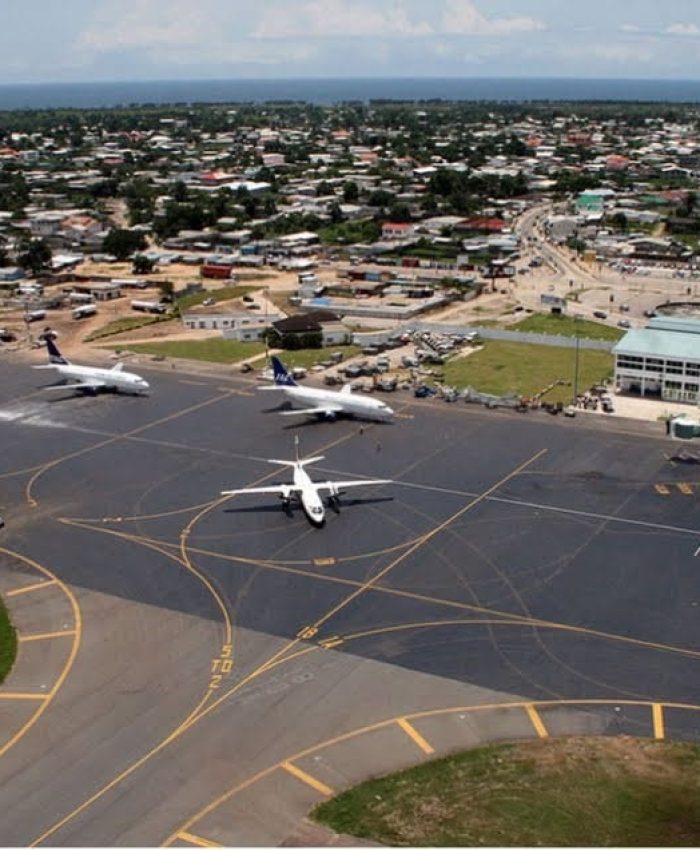
The logic of Brazzaville is different but equally coherent. The Republic of Congo — not to be confused with its larger neighbour, the Democratic Republic of the Congo — sits at the heart of Central Africa’s oil economy and is a member of the Economic Community of Central African States. Kenya has historically been more diplomatically active in East Africa than in the central and western parts of the continent, and the opening of a resident mission in Brazzaville signals an intent to deepen engagement across a region where trade, infrastructure investment and security cooperation are growing in importance. For a country that has positioned itself as a continental leader — most visibly through its non-permanent membership of the UN Security Council and its role in regional peace processes — a stronger Central African diplomatic presence is a logical and arguably overdue step.
The Bern announcement was not the only restructuring news confirmed yesterday. The government also disclosed that changes had already been implemented in the Caribbean. Kenya’s mission in Port-au-Prince, Haiti, has been relocated to Mexico City, while the mission in Havana, Cuba, has been moved to Kingston, Jamaica. Haiti’s ongoing security and governance crisis has made maintaining a functioning mission in Port-au-Prince increasingly difficult, and the relocation to Mexico City gives Kenya a more stable and strategically better-positioned base for its diplomatic engagement across the Americas. The move from Havana to Kingston reflects similar reasoning: Jamaica offers a more dynamic platform for engagement with the Caribbean community and the broader anglophone diaspora.
Taken together, the changes paint a picture of a foreign ministry under pressure to do more with less, but also one that is thinking carefully about where Kenya’s diplomatic investments will generate the highest returns. Sing’Oei acknowledged as much in his statement, framing the exercise not merely as a cost-cutting measure but as an alignment of Kenya’s global presence with its evolving strategic interests. The rationalisation, he said, would be implemented gradually, with further information communicated through the official websites of the affected missions.
That phased approach is sensible. Diplomatic restructuring, however well-conceived, creates transitional uncertainty for the citizens and partner governments it affects. Kenyans in Switzerland who depended on the Bern embassy for routine consular services will need time to adjust to new arrangements, and the government’s assurances about Geneva’s expanded consular role will need to be matched by adequate staffing and resources to deliver on that commitment.
What is clear is that Kenya’s foreign policy is no longer content to simply maintain the diplomatic map it inherited. It is redrawing it — closing doors where the returns no longer justify the costs, and opening new ones where the country’s interests are heading.
The question, as always with diplomatic ambition, is whether the resources will follow the rhetoric.
Similar Posts by The Mt Kenya Times:
- Mt Kenya Times ePAPER November 11, 2026
- Karua’s campaign team escapes injury in Kisii road accident
- Ruto and Gachagua trade blows as Kenya’s 2027 election battle turns brutal
- Kenya’s tax deadline shifts to April: Are ordinary Kenyans ready?
- Congo airport fees: What international travellers need to know before they fly