contradicts his own call for issue-based politics
By John Thuku Mwangi
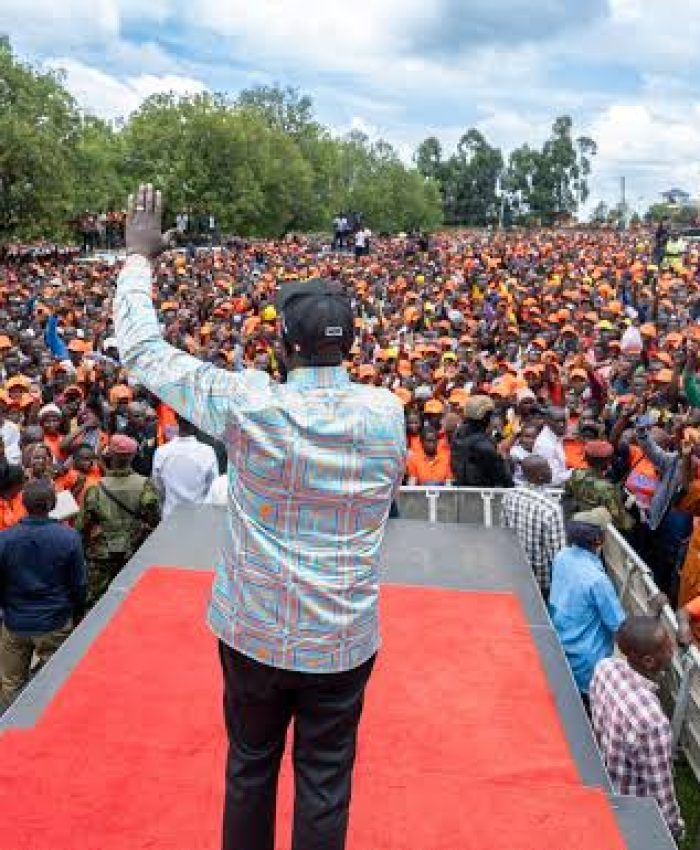
President William Ruto has a well-worn line on the campaign trail: the opposition, he insists, deals in insults, tribalism and hatred while his administration gets on with the work of governing. It is a compelling message. It is also, based on his own recent public appearances, difficult to reconcile with his conduct.
During a four-day tour through Gusii and an earlier swing through Western Kenya, Ruto did not confine himself to roads, hospitals or the cost of living. He called former Deputy President Rigathi Gachagua “Bwana Texas,” “master of hate,” “chief extortionist,” “a chronic liar, a conman, a fraud,” and compared him to the biblical King Herod. He branded Wiper leader Kalonzo Musyoka “Mr. 40.” He dismissed former President Uhuru Kenyatta as “a broker for selfish ends” who gets his information from bars and drinking dens. He mocked former Interior Cabinet Secretary Fred Matiang’i over his weight, telling him publicly to reduce his food portions.
In Nyamira on Sunday 8 November, he opened the Gusii leg not with a development agenda but with ridicule. “Those fellows have already scattered even before 2027 arrives. Have you seen how they are fighting each other?” he told the crowd. “They have no plan, no agenda, no policies, no vision. They are clueless.”
He repeated versions of the same line across multiple towns: “clueless about today, planless about tomorrow, visionless about the future.” In Busia and Kakamega he boasted: “I told those people they have no agenda for education, roads, electricity or jobs. Their only agenda is Ruto. I will beat them hands down.” In Elgeyo Marakwet and Baringo, he called them “useless.”
The tone was not new. At State House in July, he had already set the template, telling an audience in Kiswahili: “These people have no policies, no vision, no brains at all. I am not a fool — you are the ones without brains.”
None of this is to suggest that Ruto’s opponents occupy the moral high ground. Opposition leaders have called him Kasongo, Zakayo, Nabii and, more recently, Mr Taxes. The politics of ridicule has never been a one-party affair in Kenya. When both sides reduce public discourse to competitive name-calling, it is ordinary Kenyans — those waiting for lower food prices, functioning hospitals, and credible leadership — who are left to absorb the cost.
What makes Ruto’s conduct particularly striking is the explicit standard he has set for everyone else. He does not merely participate in insult politics while staying silent on the subject. He condemns it, repeatedly and loudly, while practising it at every podium. The gap between the sermon and the behaviour is not subtle — it is the central feature of his current political style.
There is an old Swahili observation that captures it precisely: Wanahubiri maji, lakini wanakunywa divai — they preach water, but they drink wine. A leader who demands issue-based politics from rivals while spending four days on the road dispensing nicknames and personal attacks is not setting a standard. He is demonstrating that the standard does not apply to him.
Kenya’s political culture will not improve through one-sided demands for civility. It will improve when leaders — beginning with those who hold the highest office — apply to themselves the same expectations they impose on others. The question of who is truly doing the politics of insults has been answered, in Ruto’s own words, across Western Kenya and Gusii. The harder question is whether anyone in a position of authority is prepared to stop.
Similar Posts by The Mt Kenya Times:
- Artificial Intelligence and Language Learning: A New opportunity for students around the world
- Think tank report highlights digital and green development in BRI cooperation
- Think tank report highlights Belt and Road role in open world economy
- Entertainment is not a luxury — it is essential
- Leadership is about improving what exists, not just creating what’s new