Political hate speech: Are we learning from our past, or walking into another dangerous chapter?
 The Mt Kenya Times
By Hadassah Karangu
Kenya has travelled a long and painful road in its democratic journey. Every election cycle brings renewed hope for change, but it also revives a familiar and deeply troubling concern: political hate speech. Once again, inflammatory rhetoric, ethnic profiling and divisive political statements are dominating rallies, television debates and social media platforms. As the country edges closer to the next General Election, one uncomfortable question refuses to go away. Have we truly learned from our past?
The Constitution of Kenya rests on one powerful principle: every citizen is equal before the law. It makes no distinction between the powerful and the ordinary. It grants no exemption to a politician on account of status, popularity or party affiliation. If the law is to command genuine public confidence, it must be applied fairly, consistently and without fear or favour.
Yet many Kenyans continue to ask difficult questions. Why do some political leaders find themselves under investigation almost immediately after making controversial remarks, while others appear to face little scrutiny after statements that are equally provocative? Whether or not that perception is entirely accurate, it should concern every institution charged with enforcing the law. Justice must not only be done — it must be seen to be done.
The danger of inconsistent enforcement is that it corrodes public trust. When citizens begin to believe that justice depends on political influence rather than evidence, confidence in national institutions erodes quietly but steadily. Laws lose their moral authority the moment people perceive that they apply differently depending on who is speaking.
This is precisely why institutions such as the National Cohesion and Integration Commission, the Directorate of Criminal Investigations, the Office of the Director of Public Prosecutions and the courts carry such enormous responsibility. Every complaint of hate speech must be investigated on its own merits, regardless of the speaker’s political party, ethnicity or position. Under Kenyan law, hate speech — words or actions that incite hatred, violence or discrimination against communities based on ethnicity, race, religion or nationality — carries significant penalties upon conviction.
The Independent Electoral and Boundaries Commission has also expressed concern over the rising tide of divisive politics. Rather than threatening to suspend elections, the commission has maintained that it is working closely with relevant institutions to prevent hate speech, political intolerance and violence during the electoral period. The objective is to protect free, fair and peaceful elections — not to undermine democracy.
History reminds us why these warnings matter.
Kenya has lived through painful moments when political competition curdled into ethnic suspicion and violence. Words spoken carelessly from political platforms have sometimes travelled faster than reason, leaving neighbours to mistrust neighbours and communities to fear one another. The scars of politically motivated violence have taken years to heal, and many families still carry those memories close.
That is why hate speech should never be dismissed as “just politics.” Words carry enormous power. They shape perceptions, inflame emotions and can either unite or fracture a nation. A single speech delivered before thousands of supporters can ignite tensions that spread far beyond the rally ground.
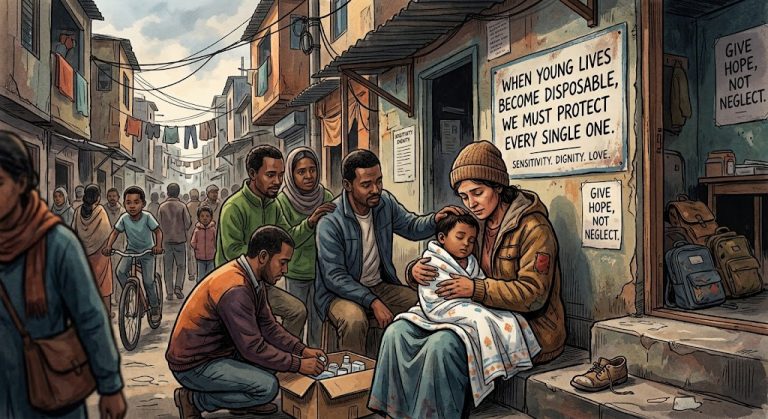
The greatest victims are rarely the politicians themselves. They are ordinary Kenyans trying to earn an honest living — traders forced to shut their businesses when violence erupts, students whose education is derailed by unrest, farmers cut off from their markets, families who flee their homes because they belong to the wrong community, and children who grow up witnessing fear instead of peace. Meanwhile, political leaders move on to the next campaign rally, while citizens stay behind to rebuild broken communities and shattered lives.
The rise of social media has made this challenge significantly harder to contain. A speech delivered in one county no longer stays there. Within minutes, video clips circulate across Facebook, TikTok, WhatsApp, X and YouTube. Edited footage, misleading captions and emotionally charged posts reach millions before the facts can catch up. Technology has amplified both political participation and political division in equal measure.
The responsibility does not rest with politicians alone. Citizens, bloggers, influencers, journalists and social media users all have a duty to verify information before sharing it. Every forwarded message has the potential either to build peace or to fuel unnecessary tension.
Kenya deserves politics built on ideas, not identity. Elections should turn on healthcare, education, agriculture, employment, economic growth, security and the cost of living. Too much political energy is still spent dividing citizens along ethnic and regional lines — a strategy that may deliver short-term victories but leaves long-term damage to national cohesion.
The real question confronting Kenya today is not whether hate speech exists. It clearly does. The question is whether every leader, regardless of affiliation, is prepared to reject it consistently — even when it comes from their own supporters.
The law cannot be selective. Condemnation cannot be partisan. Justice cannot bend to political convenience. If one politician is investigated for inflammatory remarks, every other politician accused of similar conduct must face the same legal process. Equality before the law is not merely a constitutional provision. It is the foundation upon which public confidence in justice is built.
As another election approaches, Kenyans face a defining choice. Will political competition continue to divide communities that have lived together peacefully for generations? Will elections remain seasons of fear rather than celebrations of democracy? Or will this finally be the moment Kenya chooses issue-based politics over tribal mobilisation?
The answer lies not only with political leaders, but with every citizen who refuses to be moved by dangerous rhetoric. A mature democracy is measured not by how loudly its leaders speak, but by how responsibly they wield the power of their words.
Kenya has overcome its darkest moments before. There is every reason to believe it can do so again — but only if truth replaces propaganda, accountability replaces impunity, and unity outlasts division.
The question that remains is simple, yet profound: when will Kenyan politics finally accept that elections are temporary, but the nation must endure long after the campaign slogans have faded?
Similar Posts by The Mt Kenya Times:
- Mt Kenya Times ePAPER September 19-20, 2026
- Kenya joins US and UK to put citizens on the terrorism frontline
- Kenya’s parliament races to tame the AI frontier
- Kalonzo calls Ruto to order over Uhuru attacks
- Gachagua takes his 2027 campaign to America
About the Author