The Mt Kenya Times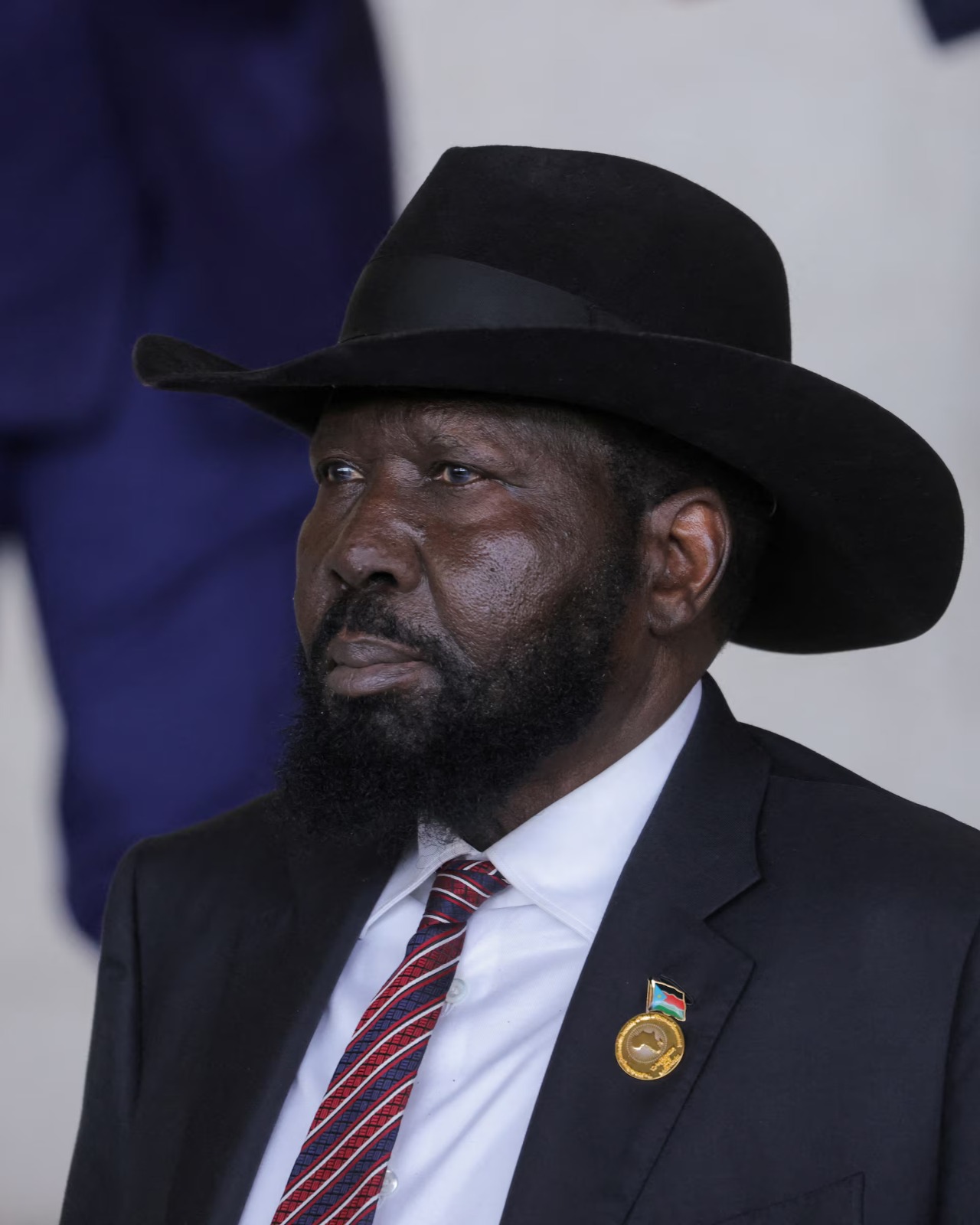
President Salva Kiir
Washington’s warning over humanitarian obstruction is not just a diplomatic signal — it is a question about governance, accountability, and what the state owes its citizens
By Dennis Wendo
South Sudan is approaching another defining moment, and this time the warning is coming with unusually strong language from Washington.
The United States has warned that it may impose sanctions and visa restrictions against individuals found to be obstructing humanitarian assistance in the country. The State Department’s Bureau of African Affairs says officials at national, state, and local levels have impeded humanitarian operations and treated assistance as a source of revenue.
The message is unmistakable: international patience with impunity surrounding humanitarian access is running out.
For South Sudan, however, this should not be viewed simply as another confrontation with a foreign power. It is a far deeper question about governance, accountability, and the responsibility of the state towards its own citizens.
South Sudan became independent in 2011 amid enormous international goodwill and high expectations. Years of conflict, political instability, and mass displacement have since left millions dependent on humanitarian assistance. The United Nations reported in June that more than 2.5 million people remained internally displaced across the country, including approximately 964,000 in camps and displacement sites. The war in neighbouring Sudan has added a further dimension, with more than 1.3 million people having crossed into South Sudan since 2023.
These are not merely statistics. Behind every figure is a family displaced from its home, a child unable to attend school, a patient waiting for medicine, or a community struggling to survive without reliable access to food, shelter, and basic services.
Humanitarian assistance in such circumstances is not a luxury. It is a lifeline.
That is why allegations that humanitarian organisations are being obstructed, subjected to unnecessary costs, or treated as revenue sources deserve serious attention. The United States — South Sudan’s largest humanitarian assistance provider — has made clear that its future decisions on foreign assistance will be shaped by how the transitional government treats organisations working to reach vulnerable populations. Washington has also linked the crisis to political violence and what it describes as the failure to deploy public revenue appropriately to provide basic services, meet humanitarian needs, and pay public-sector salaries.
The implications reach well beyond the bilateral relationship between Washington and Juba.
South Sudan sits at the centre of an interconnected Horn of Africa security and humanitarian environment. Instability in one country rarely stays contained within its borders. South Sudan shares borders and deep social, economic, and security ties with Sudan, Ethiopia, Kenya, Uganda, and the Central African Republic. Continued instability contributes to displacement, cross-border insecurity, trafficking, illicit financial flows, and mounting pressure on neighbouring communities and humanitarian systems.
For Kenya and Uganda in particular, the stability of South Sudan carries direct consequences. Both countries have hosted large numbers of South Sudanese refugees and remain important regional partners in humanitarian, diplomatic, and economic affairs. This makes the current situation a matter of genuine regional concern.
The African Union and the Intergovernmental Authority on Development therefore have an important role to play. Responsibility for South Sudan’s future cannot rest entirely with external powers. African institutions must continue pressing for accountability, humanitarian access, and implementation of the peace process — while ensuring that pressure on political actors does not translate into greater suffering for ordinary citizens.
The international community must also exercise care in the design and application of sanctions.
Targeted sanctions and visa restrictions can serve as instruments of accountability, but their effectiveness depends on credible evidence, clear targets, and careful implementation. They must distinguish between those alleged to obstruct humanitarian operations and the wider population that depends on international assistance. The objective should not be to punish South Sudanese citizens for the conduct of political or administrative actors. It should be to change that conduct.
That distinction is critical.
South Sudan cannot afford an environment in which humanitarian organisations must navigate political, administrative, and financial obstacles simply to reach vulnerable communities. Nor can the country indefinitely rely on international humanitarian assistance as a substitute for functioning public institutions.
The deeper challenge is governance.
A responsible state must progressively create the conditions in which citizens can access basic services without depending indefinitely on external relief. Public resources must be managed transparently. Public servants must be paid. Communities must be protected. Humanitarian organisations must be allowed to operate safely and independently. And political differences must not be permitted to translate into violence against civilians.
The urgency is sharpened by South Sudan’s political calendar.
The country is scheduled to hold elections in December, although serious questions remain about the political and security environment surrounding the process. The United Nations has warned that preparations are continuing amid fragile political trust and concerns over inclusivity and the conditions necessary for a peaceful and credible vote. Recent developments have only deepened those concerns. President Salva Kiir dismissed the chairperson of the National Elections Commission last week, just months before the scheduled election, prompting questions about the timing and legal basis of the decision.
This is why humanitarian access cannot be separated from the broader political transition.
A country preparing for elections while millions remain displaced and humanitarian operations face serious constraints requires extraordinary attention to civilian protection, institutional credibility, and political dialogue. The international community should maintain engagement rather than withdraw.
South Sudan needs humanitarian assistance — but it also needs stronger institutions, peacebuilding, accountable public finance, protection of civilians, and credible political processes. The international community should continue supporting the South Sudanese people while making clear that assistance cannot become a substitute for responsible governance.
There is also a responsibility on South Sudanese political leaders to recognise that sovereignty carries obligations. Sovereignty cannot mean immunity from accountability. Political transition cannot become a permanent justification for institutional failure. And humanitarian assistance cannot become a source of political leverage or private revenue.
The latest warning from Washington should therefore be treated as a moment for reflection rather than merely another diplomatic confrontation.
The United Nations continues to warn about the humanitarian and political consequences of instability. The African Union and IGAD carry a continuing responsibility to support peace and regional stability. But ultimately, the most important stakeholders are South Sudan’s own citizens — the people who have endured displacement, conflict, hunger, and uncertainty; whose lives are directly affected when humanitarian access is restricted; and who should be the primary beneficiaries when public resources are managed responsibly.
The Horn of Africa has already endured too many interconnected crises. Sudan’s war continues to generate enormous humanitarian consequences. Ethiopia continues to navigate complex internal and regional security challenges. Somalia remains confronted by persistent insecurity. Across the region, humanitarian systems are under pressure and communities are increasingly exposed to political and economic shocks.
Another prolonged crisis in South Sudan would carry consequences far beyond Juba.
The warning from Washington should become an opportunity for a broader African conversation about accountability. The question should not simply be how much international assistance South Sudan can attract. The more important question is whether the country’s political and institutional leadership is prepared to create an environment in which assistance reaches those who need it, public resources serve the public interest, and political differences are managed without violence.
South Sudan’s people deserve nothing less.
The country was born with the promise of a new beginning. The challenge now is to ensure that promise is not lost between political transition, humanitarian dependency, and institutional impunity.
The world is watching. The region is affected. And for millions of South Sudanese, the consequences are not diplomatic — they are lived.
Similar Posts by The Mt Kenya Times:
- Young Kenyans and the digital economy: Opportunity, access, and the road ahead
- Kindiki defends Kenya Kwanza record: Can projects alone define a government?
- Botswanan writer lands in Nairobi: Dr. Otukile visits the country that gave her first break
- Kakuzi birdwatching tour ends in triumph as Japanese royalty sights rare migratory birds
- KSh6.4 million up for grabs as MKU searches for its most impactful alumni
About the Author