A Woman at the Helm of the United Nations: Weighing the Call by President Nandi-Ndaitwah
 The Mt Kenya Times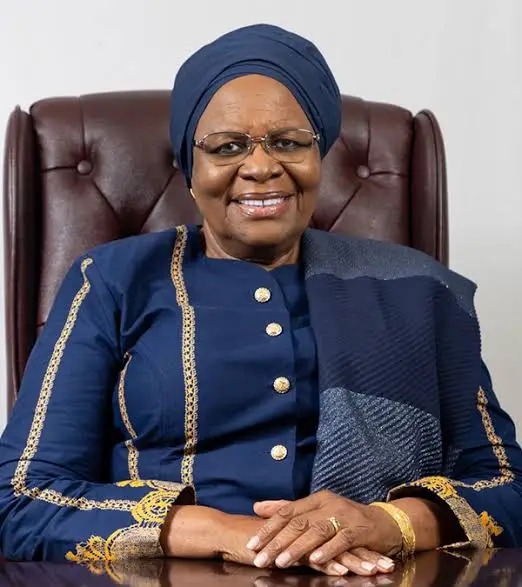
President Netumbo Nandi-Ndaitwah
At the 81st session of the General Assembly, the President of Namibia asked the world to end 81 years of male leadership at the United Nations. This analysis examines what her call means, whether it will be heeded, and which women could realistically take the post.
By Silas Mwaudasheni Nande
A Call Made at the Decisive Hour
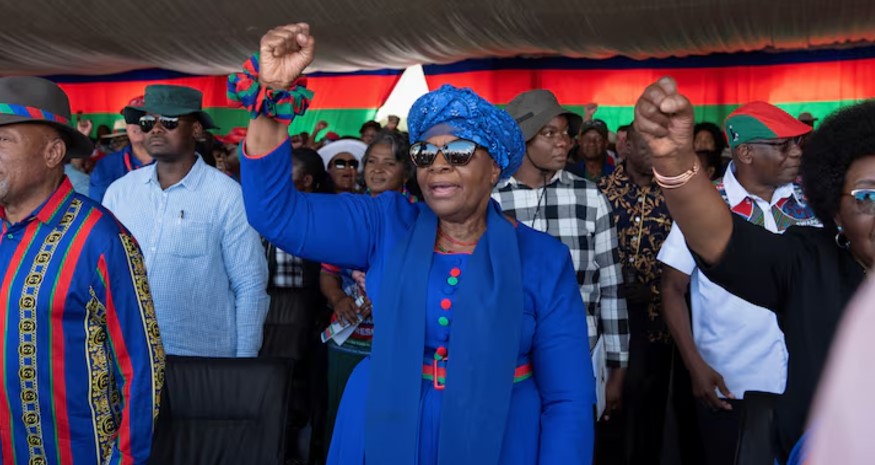
On Wednesday, 23 September 2026, President Netumbo Nandi-Ndaitwah stood at the rostrum of the United Nations General Assembly in New York. She used the national statement of Namibia to make a direct and unusual appeal. She asked member states to elect a woman as the next Secretary-General of the United Nations.
Her reasoning was simple. Since the founding of the organisation in 1945, no woman has held its highest office. She argued that the leadership of the United Nations has yet to reflect the gender equality it promotes across the international system. Namibia, she said, believes that “it is time that a woman is elected as secretary general of our organisation”.
The timing was deliberate. The second term of António Guterres ends on 31 December 2026, and his successor is due to take office in January 2027. The Security Council has already held three secret straw polls. No candidate has yet emerged as a clear favourite.
The call therefore landed in the middle of a live contest. It was not a ceremonial wish for a distant future. It was a political intervention in a process that could conclude within weeks. That fact alone makes it worth close examination.
This article examines the call from several angles. It considers what the President said and why she said it. It explains how the Secretary-General is actually chosen. It asks whether her voice carries real weight in that process. It then assesses what the call means for the United Nations, for world leaders and for women in senior leadership. Finally, it identifies the women who could realistically take the post.
What the President Said, and What She Did Not Say
The appeal did not stand alone. The President placed it within a wider address delivered under the session theme of restoring trust and managing transformation. Gender equality and the leadership of women sat at the centre of that address.
She reaffirmed the commitment of Namibia to gender equality and to Security Council Resolution 1325 on Women, Peace and Security. She also expressed solidarity with people affected by conflict in Sudan and the eastern Democratic Republic of the Congo. She argued that these conflicts show the need for a United Nations able to respond more effectively to threats against peace.
Other themes followed. She restated support for the Common African Position on Security Council reform, expressed through the Ezulwini Consensus and the Sirte Declaration. She called for reform of the international financial architecture. She also raised climate justice, noting that Namibia contributes less than 0.01 per cent of global emissions.
The speaker also mattered. Her official biography records that she first addressed the United Nations Committee on Decolonization in 1974. She did so as part of a SWAPO delegation (Office of the President, n.d.). More than five decades later, she returned to the same building as a head of state. Few leaders can claim so long a personal relationship with the organisation they now seek to reform.
Two features of the appeal deserve attention. First, the President tied the question to institutional credibility rather than to sentiment. Her argument was that an organisation which preaches equality must practise it at the top. Second, she pledged that Namibia would work with whoever succeeds Guterres. That pledge softens the edge of the demand. It signals a firm preference, not an ultimatum.
Equally important is what she did not say. Press reports of the speech do not indicate that she has endorsed any named candidate. She did not ask the General Assembly to reject a male nominee. She did not propose a procedural rule to guarantee the outcome. The call was a statement of principle, and it was deliberately left open.
Nine Men in 81 Years
The record the President challenged is stark. Nine people have led the United Nations since 1946, and every one of them has been a man. The Charter itself says nothing about the qualifications, gender or tenure of the office holder. Over time, member states have filled that silence with resolutions and practice.
The imbalance is not a new subject of debate. In 2016, under pressure from civil society and the General Assembly, the selection process became more transparent. Seven of the 13 candidates that year were women. Yet only Irina Bokova and Helen Clark reached the top five in the final straw poll, placing fourth and fifth.
Since then, the language of member states has hardened. On 5 September 2025, the General Assembly adopted resolution 79/327, which governs the present process. The joint letter that opened the 2026 contest noted with regret that no woman has ever held the position. It encouraged member states to “strongly consider nominating women as candidates”.
Analysts writing for Just Security described this as the first time the joint letter had used such explicit language. Their statements tracker found that, by mid November 2025, 145 countries had raised concern about the lack of gender balance in the leadership of the United Nations. That figure had risen from 97 countries in February 2025.
The President therefore did not invent a new cause. She added the voice of a sitting head of state to a coalition that already existed. Her distinctive contribution was to state the case plainly, from the podium, at the decisive moment.
How a Secretary-General Is Actually Chosen
To judge whether the call can succeed, one must understand the machinery. Article 97 of the Charter provides that the Secretary-General is appointed by the General Assembly upon the recommendation of the Security Council. The wording appears to share power between the two organs. In practice, the balance is uneven.
The Security Council controls the shortlist. Its 15 members hold informal and anonymous straw polls. In each poll, a member marks every candidate as encouraged, discouraged or without an opinion expressed. The results are not published, although they are often leaked.
A formal recommendation requires at least nine votes. It also requires that none of the five permanent members casts a veto. Those members are China, France, Russia, the United Kingdom and the United States. The General Assembly then makes the appointment.
The Assembly does hold the final word. In principle, it could reject a recommendation and ask the Council to reconsider. Diplomats, however, generally avoid such divisive steps. The practical power therefore rests with the Council, and above all with its permanent members.
This structure matters for the Namibian call. The General Assembly, where Namibia votes, has the numbers but limited direct power. Namibia is not among the elected members of the Security Council in 2026. It therefore casts no ballot in the straw polls that shape the result.
There is a further complication. The ballots used in 2026 have not distinguished the votes of permanent members from those of elected members. A single discouragement may therefore conceal a veto. Candidates and their sponsors often cannot tell whether they face a fatal objection or a mild reservation.
The State of the Race
Three straw polls have been held, on 30 July, 21 August and 18 September 2026. The figures that follow come from results obtained and verified with several diplomatic sources. They are reported figures, not official records.
In the third poll, Rebeca Grynspan of Costa Rica received nine encouragements, five discouragements and one abstention of opinion. Carolyn Rodrigues Birkett of Guyana followed closely with eight encouragements. Grynspan had led the first poll, and Rodrigues Birkett had led the second.
Rafael Grossi of Argentina fell to five encouragements against eight discouragements. Olara Otunnu of Uganda and Macky Sall of Senegal also received five encouragements each. María Fernanda Espinosa of Ecuador received three. Ivonne A-Baki received none.
Michelle Bachelet of Chile received one encouragement and 11 discouragements. She withdrew the following day. She said she did not regret the challenge. She added that “the time was not right” for the kind of candidacy she represented. Her departure left seven candidates, four of whom are women.
The arithmetic is revealing. The two leading candidates in the most recent poll are both women. PassBlue reported that sources suggested two of the discouragements against Grynspan may have come from China and Russia. If that report is accurate, she still faces a possible veto. The race, in short, remains open.
The pattern of abstention tells the same story. Security Council Report calculated that almost one third of ballots in the second poll expressed no opinion. The share of such ballots fell only marginally from the first poll, from approximately 34.3 per cent to 32.5 per cent. In 2016, by contrast, that share fell more sharply at the same stage.
Many Council members, in other words, have not yet committed themselves. That is precisely the audience a public appeal can reach. Undecided governments are more open to argument than those that have already chosen.
Transparency remains contested. Denmark, Greece and Latvia called for the straw poll results to be released publicly. Several other members opposed this, and the Council agreed by consensus to keep the results confidential. The outgoing President of the General Assembly, Annalena Baerbock, stressed in a September letter that the Council should be held accountable for a timely recommendation.
Comparison with 2016 underlines the uncertainty. António Guterres never fell below 11 encouragements in any straw poll that year. No candidate in 2026 has approached that level of consensus. A fourth poll may follow once the high-level week of the General Assembly ends on 28 September.
Can the President Be Taken Seriously?
The honest answer has two parts. She should be taken seriously as an authoritative voice on this question. She cannot, on her own, determine the result.
The Case for Her Credibility
Few serving leaders have a longer record on women in international affairs. Her official biography records that she served as Rapporteur General of the Fourth World Conference on Women in Beijing in 1995. It also records that she was chief negotiator for the African Group during the preparations for that conference.
Namibia also holds a special place in the history of Resolution 1325. The resolution was adopted unanimously on 31 October 2000, during the Namibian presidency of the Security Council. Sanam Naraghi Anderlini, one of the civil society leaders behind the resolution, recalls that Namibia took the lead in tabling it, with Bangladesh as cosponsor. The official biography credits the President with initiating the Council discussion that produced it.
Her legislative record at home points the same way. She served as the first Minister of Women Affairs and Child Welfare. Her biography credits her with championing the Married Persons Equality Act of 1996 and the Combating of Domestic Violence Act of 2003. These laws show that her advocacy on gender predates her presidency by decades. It is not a slogan adopted for a single speech.
Her domestic record lends further weight. She is the first woman to serve as President of Namibia. In her address to the 80th session of the General Assembly in 2025, she reported that the Namibian cabinet was 57 per cent women.
Her appeal also aligns with a large and growing bloc. A statement delivered for the Non-Aligned Movement in November 2025 acknowledged that there has yet to be a woman Secretary-General. France and the United Kingdom have taken strong positions in favour. China stated in November 2025 that it would be pleased to see female candidates presented. Namibia speaks with this current, not against it.
The Limits of Her Influence
Credibility, however, is not the same as leverage. Namibia casts no straw poll ballot and holds no veto. Its influence runs through persuasion, coalition building and the General Assembly. Those channels matter, but they are indirect.
The permanent members remain cautious. At a General Assembly meeting in February 2025, the Russian deputy permanent representative spoke on this point. He argued that “gender is one of the criteria, but it should not play a decisive role”. The United States, under the Trump administration, has pushed back against gendered language across the United Nations system.
Washington has nonetheless left the door open. In July 2026, Ambassador Dan Negrea told reporters in New York that the next leader “could be a woman, absolutely”. He did not indicate which candidate the United States favours. The position of Washington therefore remains decisive and unknown.
Africa itself is divided on the race. Macky Sall was nominated by Burundi rather than by his own country. An attempt to secure African Union endorsement through a silence procedure failed in March 2026, when 20 member states broke the silence. The Government of Senegal stated that it had not been associated with the initiative.
This background matters for reading the Namibian call. A demand for a woman implicitly favours the leading Latin American and Caribbean women over the two African men in the race. The President did not say so. Yet the logic of her statement points in that direction. It suggests that, in this contest, Namibia places the principle of gender equity above a narrow continental claim.
There is also a test of consistency. A leader who calls for equality abroad invites scrutiny at home. Critics will ask whether Namibian women enjoy the progress in security, economic opportunity and protection from violence that the President demands for the United Nations. That scrutiny is legitimate. It does not weaken the call, but it will shape how seriously others receive it.
The Verdict
The President is best understood as a champion of a norm, not a kingmaker. Her authority on this issue is moral and historical. Her power over the outcome is indirect. Her call adds weight to a trend that was already moving. It will not, by itself, persuade a permanent member to lift a veto.
Three Scenarios for the Coming Weeks
The effect of the call will depend on how the race unfolds. Three broad scenarios are plausible on current evidence.
In the first scenario, the Council gathers around one of the two leading women. Grynspan and Rodrigues Birkett have each topped at least one straw poll. If the reported objections from permanent members soften, one of them could secure nine votes without a veto. In that case, the Namibian call would be remembered as part of a successful chorus.
In the second scenario, the Council remains deadlocked. The permanent members may then look beyond the formal list for a late entrant. Whether that person is a woman will depend on which names states are prepared to nominate. Here, calls such as the one from Namibia could shape the search from the outset.
In the third scenario, the Council recommends a man. The General Assembly would then face a choice between accepting the recommendation and resisting it. The Just Security analysis argues that states wanting a woman should organise early, for example through indicative Assembly votes. In this scenario, the Namibian call would become a test of whether the Assembly majority is willing to act on its words.
What the Call Means for the United Nations
For the organisation, the call touches a nerve of legitimacy. The United Nations urges governments to include women in parliaments, cabinets and peace processes. Yet its own summit has remained male for 81 years. That contradiction weakens the moral authority of the institution whenever it lectures others.
The next Secretary-General will inherit an institution under severe strain. Earlier this year, Guterres warned member states of a looming financial collapse. Unpaid dues had reached approximately 1.57 billion United States dollars by the end of 2025. Guterres has also described the Security Council as close to paralysed by the vetoes of its permanent members.
In such a setting, a woman Secretary-General would not solve structural problems. The authors of the Just Security analysis caution against placing the burden of renewing the United Nations on a single leader. Gender is a question of representation and credibility. It is not a substitute for funding, reform or political will among the great powers.
Yet symbolism matters in diplomacy. The office of Secretary-General works largely through persuasion. Richard Gowan of the International Crisis Group told the Council on Foreign Relations that its influence rests on intangible factors. These include the pulpit the office provides, the willingness of states to follow its agenda and global public opinion. A historic appointment would enlarge that pulpit.
There is also a risk. If the first woman is appointed only after the institution has been weakened, she may be blamed for failures she did not cause. Member states that support a woman in the post must also support the resources she will need to succeed. Otherwise, the breakthrough could become a trap.
What the Call Means for World Leaders
For the permanent members, the call raises the political cost of a male nominee. The joint letter that launched the process carried the authority of both organs. It was signed by the presidents of both bodies. Rejecting every woman on the list would now require public explanation.
For the elected members of the Council, the call offers political cover. The Just Security analysis notes that if seven elected members insisted on a woman, they could block any candidate who failed that test. Denmark and Latvia, both elected members in 2026, have backed statements with very strong support for a woman Secretary-General.
For African leaders, the call is a reminder that the continent can shape outcomes without fielding the winner. Africa did not unite behind a single candidate this year. It can still act as a bloc on principles, including gender equity and Security Council reform. The President advanced both arguments in the same speech.
For leaders in Latin America and the Caribbean, the call converges with regional expectations. Only one Latin American, Javier Pérez de Cuéllar, has held the office. Gowan warned that dishonouring the regional claim this time could come back to haunt member states in future contests. Both leading candidates come from that region.
Leaders who share the view of the President have practical options. They can use bilateral meetings to press permanent members on their straw poll choices. They can coordinate positions within regional groups before the final Council vote. They can also nominate qualified women for the many other senior posts that the next Secretary-General will fill. Representation at the top is easier to defend when the pipeline beneath it is also balanced.
For all leaders, the call poses a simple test. Governments that sign resolutions on gender parity must now decide whether those commitments apply to the most senior post they collectively control. Their answer will be visible to their own citizens.
What the Call Means for Women in Senior Leadership
The broader data explain why the appeal resonates. According to the Inter-Parliamentary Union and UN Women, only 28 countries were led by a woman head of state or government on 1 January 2026. A total of 101 countries have never had a woman leader.
Women hold 27.5 per cent of parliamentary seats worldwide. That share rose by only 0.3 percentage points from 2025, the second consecutive year of the slowest growth since 2017. Women hold 22.4 per cent of cabinet posts, down from 23.3 per cent in 2024.
Women are also losing ground in parliamentary leadership. In January 2026, women held 19.9 per cent of Speaker posts, the first decline in 21 years. The same release reports that 76 per cent of women parliamentarians surveyed had faced intimidation by the public, compared with 68 per cent of men.
Portfolios remain sharply gendered. Women lead 90 per cent of gender equality ministries. Men continue to dominate defence, home affairs, justice and economic affairs. The same pattern appears at the global level. Women reach the social and humanitarian agencies more easily than the political summit.
Against this background, a woman Secretary-General would change the reference point for ambition. Girls from northern Namibia to the Andes would see a woman serving as the chief diplomat of the world. The appointment would not end discrimination. It would, however, remove the most visible exception to equality within the multilateral system.
The President herself embodies this effect. In her 2025 address to the General Assembly, she encouraged every girl and woman by affirming that their voice matters. Her call in 2026 extends that message from national leadership to global leadership.
The Women Who Could Take the Job
The call would be empty if no credible women stood ready. That is not the case. Four women remain formally nominated, and several others have been named in public speculation.
The Formal Candidates
Rebeca Grynspan is the strongest woman in the race on current evidence. She is a former Vice President of Costa Rica and the Secretary-General of UN Trade and Development. She frames her campaign around restoring confidence, prioritising peacemaking and delivering results. She was the first woman to lead that trade body and played a role in the Black Sea Initiative. Commentators note that peace and security have featured less prominently in her background.
Carolyn Rodrigues Birkett has served as Permanent Representative of Guyana to the United Nations since 2020. She previously served as Minister of Amerindian Affairs, Minister of Foreign Trade and International Cooperation, and Minister of Foreign Affairs. She topped the second straw poll. Her vision statement centres on core Charter principles, human rights and development. She would be the first Secretary-General from the Caribbean.
María Fernanda Espinosa is a former President of the General Assembly and a former Foreign Minister and Defence Minister of Ecuador. She knows the institution intimately. Her platform rests on peace and security, development, digital and energy transformation, delivery and credibility. Her polling has been modest, with three encouragements in September.
Ivonne A-Baki is a former Ecuadorian ambassador to the United States, France and Qatar. Tonga nominated her on 17 August 2026. Her vision emphasises preventing wars and rebuilding trust within the organisation. She received no encouragement in the third poll.
Women Outside the Formal Race
Nominations remain open until the Council makes its recommendation. PassBlue reported that member states are speculating about possible late entrants behind whom the Council could unite. Speculation is not candidacy. None of the women below has been formally nominated.
An analysis published by Inter Press Service in April 2026 named several women as possible late entrants. From Latin America and the Caribbean, it listed Alicia Bárcena of Mexico and Mia Mottley of Barbados. From beyond the region, it listed Amina Mohammed of Nigeria, the current Deputy Secretary-General, and Kristalina Georgieva of Bulgaria.
Each would bring distinct strengths. Mottley is a sitting head of government with a global profile on climate and development finance. Bárcena has long experience within the United Nations system and in Mexican diplomacy. Mohammed knows the Secretariat from the inside. Georgieva leads a major international financial institution.
Each would also face obstacles. These include national duties, regional rotation and the preferences of the permanent members. A late entrant would also need a nominating state and enough time to win support before the Council decides. Their names nonetheless show that the pool of qualified women is deeper than the formal list suggests.
Conclusion
The call by President Nandi-Ndaitwah was principled, timely and consistent with her long record. It adds a respected African voice to a global coalition that already spans more than 140 states. It does not change the formal rules, and it cannot override a veto.
Its real value lies elsewhere. It sets a public standard against which the Security Council will be judged. If the Council recommends a man despite strong women in the field, it will need to explain why. If it recommends a woman, the President of Namibia will be remembered among those who insisted that the moment had come.
For the United Nations, the question is no longer whether a woman can lead. Two women led the most recent straw poll. The real question is whether the permanent members will allow one to do so. The answer is expected within weeks, and the world will be watching.
Silas Mwaudasheni Nande is a school principal, a PhD candidate in Education at the International University of Management, Windhoek, and an analytical writer on African governance, education, public policy and international affairs.
Similar Posts by The Mt Kenya Times:
- Dr Esther Muchemi honoured among Africa’s top 100 leaders
- Mt Kenya Times ePAPER September 26-27, 2026
- The oath the court would not hear: An elder’s 40-year fight for land and justice
- Court upholds Affordable Housing Act
- Ruto heads to the coast with refinery launch and 200,000 title deeds
About the Author