Nairobi rejects demands to hold foreign travellers as it enters a 42-day countdown to being declared Ebola-free
By Yvonne Wambui
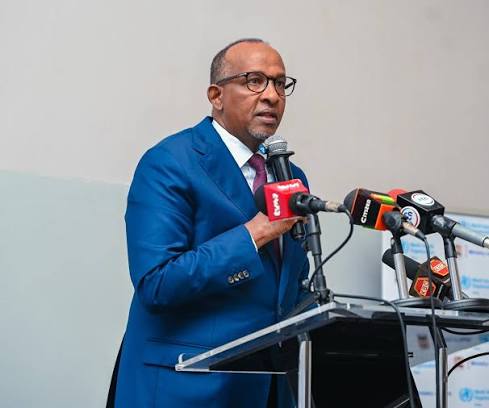
Kenya’s Health Cabinet Secretary Aden Duale yesterday ruled out plans to make the country a quarantine centre for foreign nationals suspected of Ebola exposure, dealing a direct blow to the United States and other governments that had sought to use Kenyan health facilities as holding points for travellers required to isolate before returning home.
Speaking at a press briefing at Afya House in Nairobi, Duale was unequivocal: Kenya would not allow foreign governments to use its facilities as transit quarantine centres, nor would it issue Ebola-free certificates or quarantine documentation to foreign travellers for international travel purposes. He argued that such certificates have no basis under the International Health Regulations — the globally agreed framework governing cross-border public health measures — and that Kenya had no obligation to absorb the quarantine requirements of other countries.
The announcement carries particular significance given the controversy surrounding the 50-bed Ebola isolation facility at Laikipia Air Base in Nanyuki, built through a partnership between Kenya and the United States. The facility had drawn fierce public opposition and legal challenge, with critics warning it could turn Kenya into a quarantine destination for foreign nationals exposed to the virus in neighbouring countries. Asked about the facility’s future, Duale declined to comment, saying the matter was before the courts.
His statements came as Kenya recorded a milestone in its response to the outbreak. The Ministry of Health confirmed yesterday that the last patient receiving treatment for Ebola had been discharged after making a full recovery — a development that now triggers the start of a critical 42-day monitoring period beginning today. If no new infections are reported during that window, Kenya is expected to be formally declared Ebola-free on 23 December 2026.
The outbreak, which gripped the country and prompted an international response, recorded nine confirmed cases in total, among them four healthcare workers who contracted the virus while treating patients. Seven people recovered; two died. The final 11 individuals who had been held under quarantine completed their monitoring period and were released to rejoin their families.
Yet Duale was careful to caution that the discharge of the last patient did not signal the end of the government’s response. Surveillance will continue, traveller screening at points of entry will be maintained, and all suspected cases will be investigated. The Ministry of Health is also preparing additional measures for Kenyans returning from Ebola-affected areas, particularly the Democratic Republic of Congo, which has experienced repeated outbreaks. Those measures are expected to include mandatory health declarations, arrival screening and 21 days of medical monitoring.
Duale used the briefing to sharpen his criticism of foreign governments that had imposed blanket travel and visa restrictions on Kenyan citizens since the outbreak began. He argued that Kenya had honoured every obligation under international health law — reporting infections promptly, sharing surveillance data and cooperating fully with international health organisations — and that it deserved recognition rather than punishment for doing so.
“Transparency must be rewarded, not punished,” he said, calling on affected countries to review and lift their restrictions without further delay.
The position represents a significant hardening of Kenya’s stance on international Ebola quarantine arrangements. Rather than accommodating external demands, the government appears determined to defend national interests while continuing to co-operate with other countries on public health matters through established frameworks. The balance is a delicate one: Kenya needs to reassure trading partners, tourists and international investors that the country remains open and safe, while resisting arrangements it regards as an imposition on its sovereignty and health infrastructure.
Duale’s message on that front was direct. Kenya, he insisted, remains open for business, tourism, trade and international travel. He urged citizens to remain vigilant as the country works towards an official end to the outbreak — a declaration that, if everything holds, will come just before Christmas.
The 42-day clock now running is not merely a public health formality. It represents Kenya’s best opportunity in months to close a difficult chapter, restore full confidence in its borders, and demonstrate that a country can manage a serious outbreak transparently and competently without being made to shoulder the quarantine burdens of wealthier nations. Whether those nations accept that argument — or quietly maintain their restrictions regardless — remains to be seen.
Similar Posts by The Mt Kenya Times:
- Drug abuse and Kenya’s youth: A threat to lives and the economy
- Behind the lens: The untold life of a photojournalist
- Three decades in the classroom: The teacher who believes the future belongs to those who never stop learning
- Beyond the likes: The pressure on young people to live up to unrealistic online lifestyles
- Investors Are Coming to Kenya’s Regions. Is the Middle of the Chain Ready?