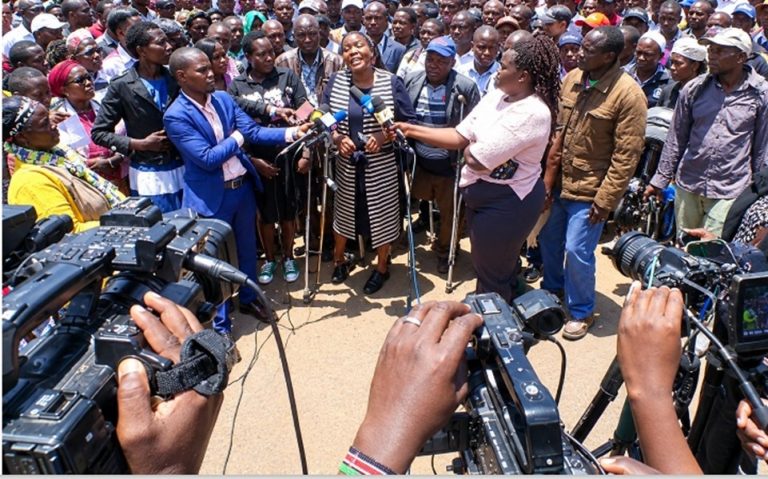
Former freedom fighters’ caucus urges Parliament to shield poor learners in education overhaul
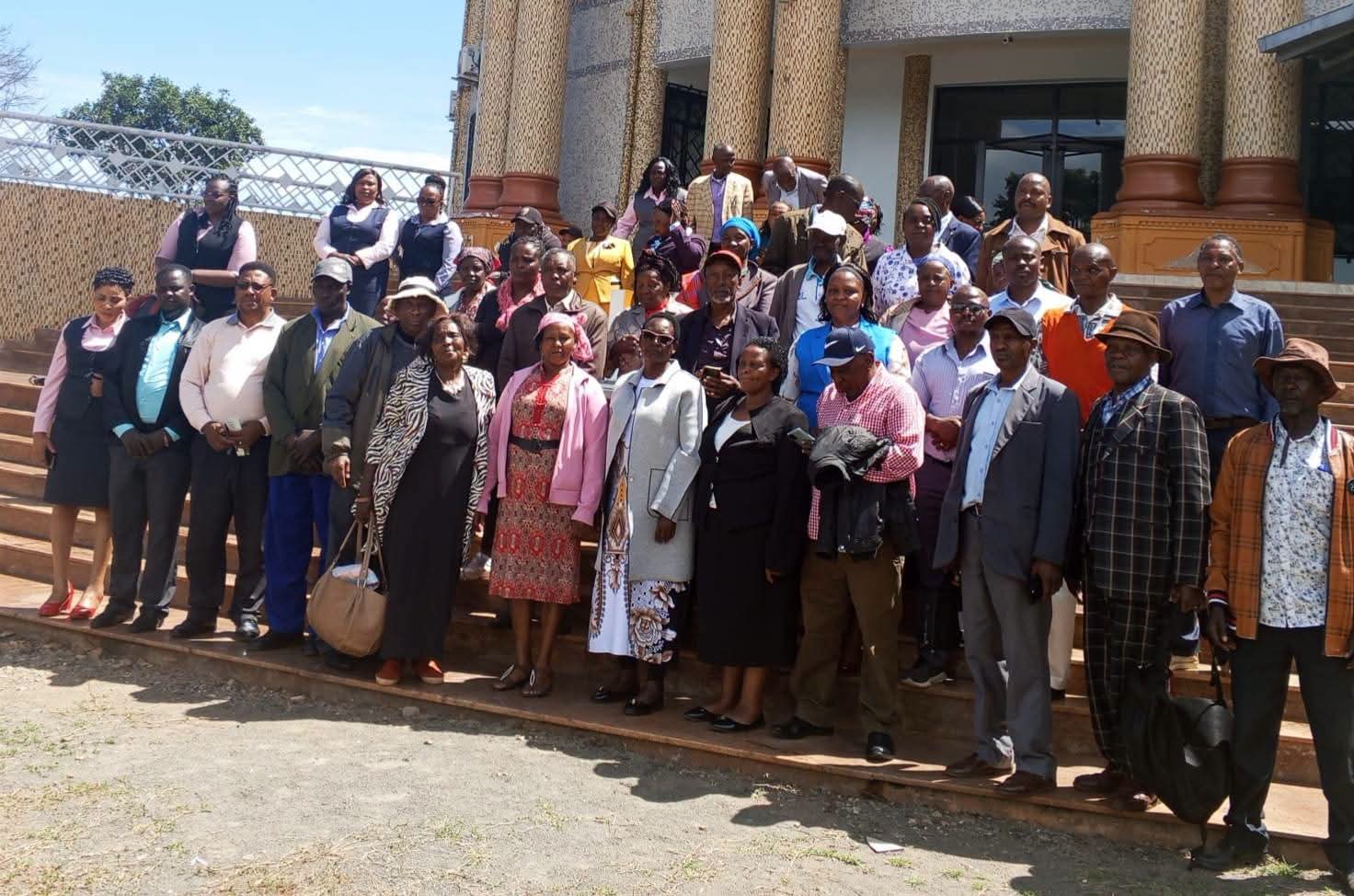
MMV Associates CLG team at Dedan Kimathi university after presenting their memorandum. Photos/Courtesy
MMV Associates CLG warns that six education Bills risk leaving behind Kenya’s most vulnerable students unless equity safeguards are built into the law
By Brian Gitonga
A caucus representing former freedom fighters and their descendants yesterday called on Parliament to ensure that sweeping proposed education reforms do not erect new barriers for learners from poor, marginalised and historically disadvantaged communities.
MMV Associates CLG made the appeal when its team, led by Chief Executive Officer Emmah Cherotich Kasis, presented a memorandum at a National Assembly public participation forum held at Dedan Kimathi University in Nyeri County. The forum forms part of nationwide public hearings on six education Bills seeking to reform Kenya’s education sector from basic schooling through to university and technical training.
The Bills under scrutiny are the Tertiary Education, Placement and Funding Bill, 2026; Basic Education Bill, 2026; Kenya National Educational Assessments Council Bill, 2026; Pre-Service Education and In-Service Training Bill, 2026; Kenya National Qualifications Framework (Amendment) Bill, 2026; and the Kenya Institute of Curriculum Development (Amendment) Bill, 2026.
In its memorandum to the Departmental Committee on Education, MMV urged Parliament to treat the six Bills as interconnected components of a single national education and human capital development framework rather than isolated pieces of legislation. While supporting the broad objective of strengthening Kenya’s education system, the organisation called for the proposed laws to promote accessibility, affordability, equity, transparency, competency-based learning and employment-oriented education.
On university and college placement, MMV called for transparent and equitable systems, funding mechanisms that reflect the actual financial circumstances of individual students and their families, stronger scholarships and grants for exceptionally vulnerable students, and safeguards to prevent learners from dropping out simply because they cannot meet fees and related costs. The organisation also cautioned against creating a funding structure that could saddle young Kenyans with unsustainable debt at the very start of their working lives.
On basic education, MMV urged Parliament to strengthen protections for children from poor households, marginalised and underserved areas, pastoralist and nomadic communities, informal settlements and those affected by displacement, insecurity or disasters. It called for adequate funding and proper equipping of schools with classrooms, laboratories, libraries, sanitation facilities, digital infrastructure, learning materials and qualified teachers.
The organisation argued that a learner’s potential should not be determined solely by performance in a single examination. It called for assessment systems that recognise practical skills, creativity, innovation, critical thinking and problem-solving, while providing appropriate support for learners with disabilities.
MMV further supported stronger pre-service teacher training and continuous professional development, including preparation in digital education, emerging technologies, inclusive education and modern teaching methodologies. It urged meaningful consultation with teachers before major reforms are implemented.
On the national qualifications framework, the organisation called for recognition of academic, technical, vocational and practical skills, along with clearer progression pathways between technical and vocational education and training institutions, universities and other accredited bodies. It also proposed that Kenya’s curriculum give greater attention to digital literacy, artificial intelligence, entrepreneurship, financial literacy, climate change, agriculture, civic education, Kenyan history and heritage, culture, innovation and practical employability skills.
MMV concluded by calling for sustainable financing, stronger accountability mechanisms, continued public participation, digital transformation and sensitivity to the unique needs of individual counties, urging Parliament to ensure that no child or young person is unnecessarily excluded from education because of poverty or geographical disadvantage.
Separately, MMV will today hold a general meeting at Blue Post Hotel in Thika to gather members’ views on proposed changes to Kenya’s national payment system and on draft regulations governing investigations into historical land injustices.
Kasis said the organisation, which counts about 185,000 members, will compile the views gathered into formal memoranda for submission through prescribed public participation channels. Members will consider the draft National Payment System Policy and National Payment System Bill, 2026, prepared by the National Treasury and the Central Bank of Kenya, which seek to establish a safe, efficient, affordable and inclusive payment system while promoting innovation, competition, financial inclusion, consumer and data protection and financial stability. The public has until 9 October to submit memoranda to the CBK Governor, with participation forums running from 28 September to 9 October at eleven venues representing all 47 counties.
The meeting will also examine National Lands Commission draft regulations on investigations into historical land injustices covering the period between 15 June 1895 and 27 August 2010, which seek to strengthen transparency, accountability and procedural fairness in the handling of claims. MMV Director General James Njuguna Mahuria will address members on several matters, including the ongoing verification of beneficiaries.
Similar Posts by The Mt Kenya Times:
- Uganda neyoha? We only fix what kills the famous
- Is the country drinking itself into trouble?
- A Critical Review of The Last Metaphor by Usman Ali
- When a promise becomes a march: Uasin Gishu PWDs demonstrate that unity can no longer be taken for granted
- Sanele Sigasa: Redefining mental health advocacy through faith, purpose and leadership
About the Author