By David Kimani
The High Court in Kerugoya has handed the State a critical six-month window to complete its ongoing formulation of a national artificial intelligence policy and legislative framework, while simultaneously dismissing a wide-ranging constitutional petition that sought to immediately halt the deployment of automated algorithmic systems across key public agencies.
In a landmark judgment delivered on November 12, 2026, Justice Edward M. Muriithi declined to issue prohibitory orders against state bodies—including the Social Health Authority (SHA), the Kenya National Examinations Council (KNEC), the Public Service Commission (PSC), and the National Transport and Safety Authority (NTSA)—ruling that the petitioners had failed to provide concrete proof that existing automated systems had violated constitutional rights. However, in a measured nod to the urgency of digital governance, the court held in abeyance the question of whether the Executive and Parliament have unreasonably delayed in enacting an AI statute, setting a mention date for May 13, 2027, to assess legislative progress.
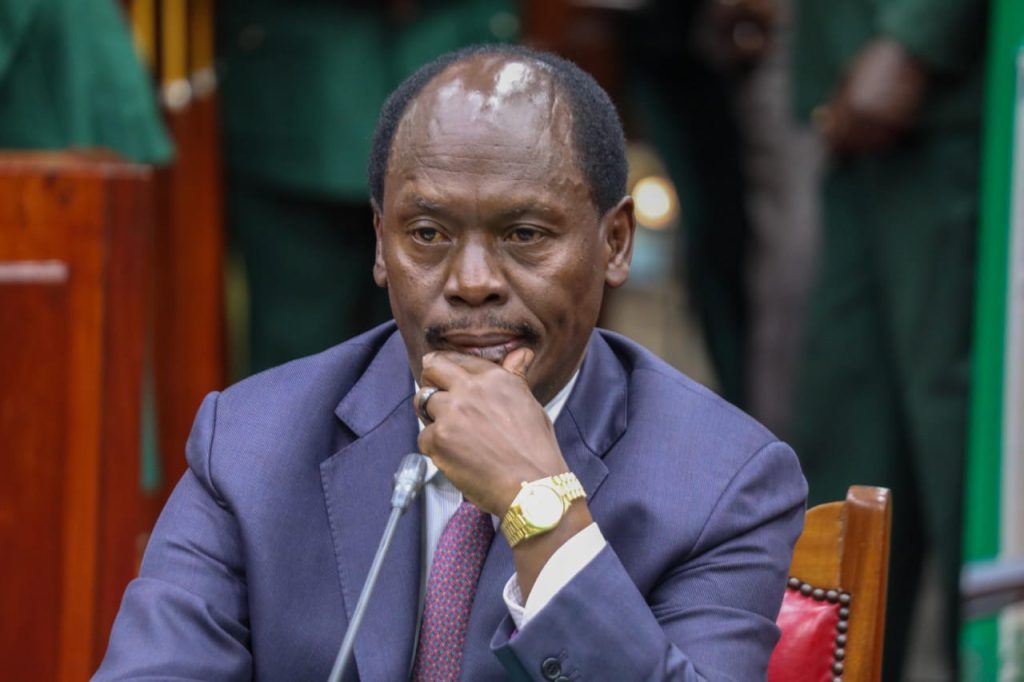
The constitutional petition, filed by John Wangai, Peter Agoro, and Dr. Antony Manyara, sought to compel the Cabinet Secretary for Information, Communications and the Digital Economy and the Principal Secretary for ICT to publish a draft national AI policy and table comprehensive governance legislation within 90 days. The trio argued that the State’s failure to establish a dedicated legal framework left Kenyans exposed to algorithmic discrimination, surveillance overreach, election interference, deepfakes, and unfair exclusions from essential public services.
Specifically, the petitioners targeted six high-stakes public sector applications. They asked the court to bar the SHA from using its Proxy Means Testing algorithm to determine household insurance premiums under the Social Health Insurance Fund; restrain KNEC from deploying automated AI marking or grading tools in national examinations; stop the PSC from using algorithmic shortlisting and interviewing tools; halt NTSA’s use of smart cameras and AI-linked biometric trackers for instant fines; prohibit the Inspector General of Police and the Ministry of Interior from operating real-time facial recognition CCTV and predictive policing algorithms; and block the Ministry of Education from applying AI-based poverty-scoring models to allocate bursaries, scholarships, school capitation, and Higher Education Loans Board (HELB) funding.
Opposing the suit, the State maintained that Kenya is neither operating in a legal vacuum nor dragging its feet on digital regulation. Through a replying affidavit sworn by ICT Principal Secretary John Tanui, the government outlined a structured, phased roadmap that began with the launch of the Kenya Artificial Intelligence Strategy (2025–2030) in March 2025. This was followed by multi-stakeholder consultation roundtables with academia, civil society, the private sector, and county governments in February 2026, culminating in the publication of the draft National AI and Other Emerging Technologies Policy for public participation on July 21, 2026. The State argued that the draft policy was slated for Cabinet approval before informing an AI and Other Emerging Technologies Bill, rendering the petitioners’ demand for a 90-day ultimatum overtaken by events and an intrusion into the constitutional doctrine of separation of powers.
Existing Safeguards and Evidentiary Gaps
In his analysis, Justice Muriithi dismantled the petitioners’ foundational premise that Kenyan law is entirely silent on automated decision-making. The court pointed directly to Sections 31, 35, and 41 of the Data Protection Act, which explicitly grant individuals the right not to be subjected to decisions based solely on automated processing that produce legal or significant effects. Under the Act, data controllers must conduct mandatory data protection impact assessments for high-risk operations, notify citizens in writing when automated decisions are made, and provide avenues for human reconsideration. Coupled with Article 47 of the Constitution on fair administrative action, the judge noted that robust statutory guardrails already exist, meaning any litigant challenging a specific state algorithm must plead and prove precise violations of those existing laws rather than relying on generalized fears.
The court found stark evidentiary gaps across the petitioners’ claims against individual agencies. Regarding the Public Service Commission, CEO Paul Famba swore that all recruitment, shortlisting, and interviewing processes remain strictly manual and human-led—an assertion the petitioners failed to rebut. Similarly, the court noted there was zero evidence that KNEC had deployed or was about to deploy AI marking systems for national exams, nor was any proof presented showing how alleged poverty-scoring models in the Ministry of Education had infringed upon the rights of specific learners or institutions.
The closest scrutiny fell on the Social Health Authority’s Proxy Means Testing system, which SHA CEO Dr. Mercy Mwangangi acknowledged is actively used to assess household contributions based on Kenya National Bureau of Statistics household survey datasets. While the petitioners argued the algorithm lacked transparency and human oversight, the court observed that the system is anchored in Section 27 of the Social Health Insurance Act and its accompanying regulations. Notably, internal SHA audit records placed before the court revealed that 20,282 members had appealed their initial algorithmic assessments via the *147# USSD code or the Afya Yangu portal, resulting in downward contribution revisions from a combined Sh58.51 million to Sh54.56 million—a reduction of nearly Sh3.95 million. Justice Muriithi observed that while the successful appeals highlighted initial inaccuracies in the model’s assessments, they simultaneously proved that an accessible, functioning human review mechanism exists to correct errors, making a total shutdown of the system disproportionate.
Respecting the Separation of Powers
On the broader constitutional question of whether the State had breached its positive obligations under Article 21(2) to enact protective legislation, Justice Muriithi drew on comparative global timelines and constitutional principles. Observing that modern AI governance only gained global momentum over the past five years—citing the European Union’s AI Act, which was proposed in 2021, enacted in 2024, and only began taking full effect in August 2026—the judge ruled that Kenya’s trajectory from a 2025 strategy to a July 2026 draft policy did not constitute undue delay. Invoking the Supreme Court’s jurisprudence on separation of powers and the Commonwealth Latimer House Principles, the court declined to issue a writ of mandamus dictating a 90-day legislative timetable to the Executive and Parliament, emphasizing that courts must not overreach into the core law-making domain of the Legislature while active policy processes are underway.
Even so, Justice Muriithi left the door firmly open for both institutional accountability and individual redress. By holding the legislative delay prayer in abeyance for six months rather than dismissing it outright, the court signalled that judicial patience is finite. Furthermore, the judge explicitly clarified that the dismissal of this broad public interest suit does not bar any individual citizen or group from petitioning the courts for relief if they suffer concrete rights infringements from a state-deployed algorithm. As Kenya navigates the delicate balance between rapid digital transformation and constitutional safeguards, the ball now rests squarely in the court of the Executive and Parliament to translate draft policies into enforceable law before the May 2027 deadline.
Similar Posts by The Mt Kenya Times:
- Diaspora Times Global Nov 14 – Nov 20, 2026
- Israel’s post-election crisis: Netanyahu and Eisenkot clash over national unity government as nuclear threat looms
- IsiDonodono wins double awards in a landmark week for isiNdebele literature
- Mahlangu turns 91: A legacy of resilience, art and grace in Mpumalanga
- The role of artificial intelligence in the modern world