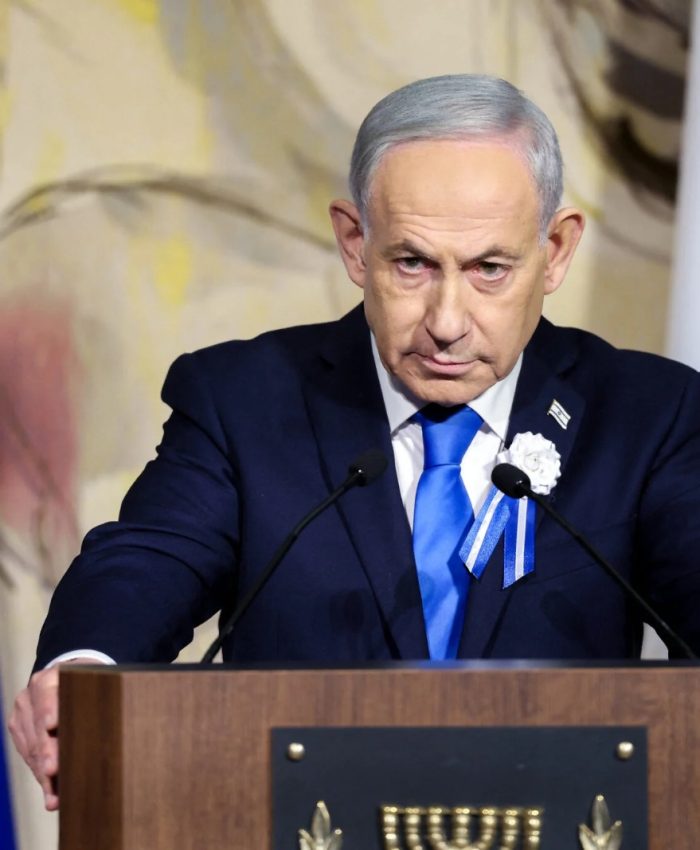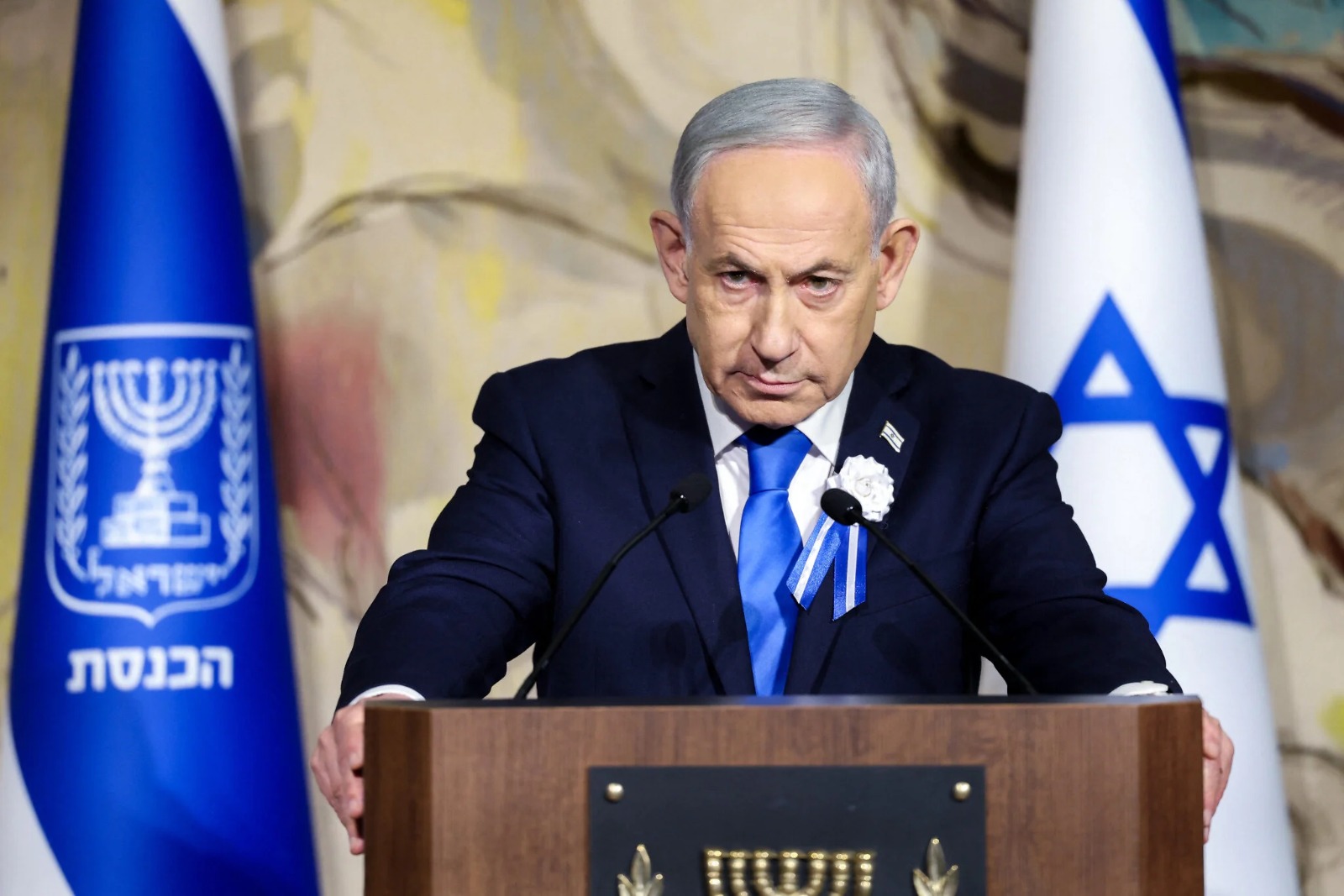
Benjamin Netanyahu and Gadi Eisenkot trade public accusations over coalition negotiations, exposing deep divisions in Israeli politics ahead of a critical government formation deadline.
By David Kimani
Benjamin Netanyahu and Gadi Eisenkot, two of Israel’s most prominent political figures, are engaged in a sharp and increasingly public dispute over the formation of a national unity government, with both men accusing the other of bad faith as the country enters one of its most consequential political periods since the last general election. The confrontation, playing out on social media and in the Knesset, cuts to the heart of Israel’s post-election reckoning — a nation navigating fractured politics, an existential security threat from Iran and a population exhausted by division.
The stakes could scarcely be higher. Israel heads into the critical government formation period with no settled coalition, a contested Knesset speakership and a former prime minister who, by Eisenkot’s account, lost the election but refuses to accept its full political consequences. For observers of Israeli politics, the standoff is both familiar and newly dangerous — familiar because Netanyahu has survived every previous political crisis through tactical manoeuvre, dangerous because the geopolitical context in which this one unfolds is unprecedented in its severity.
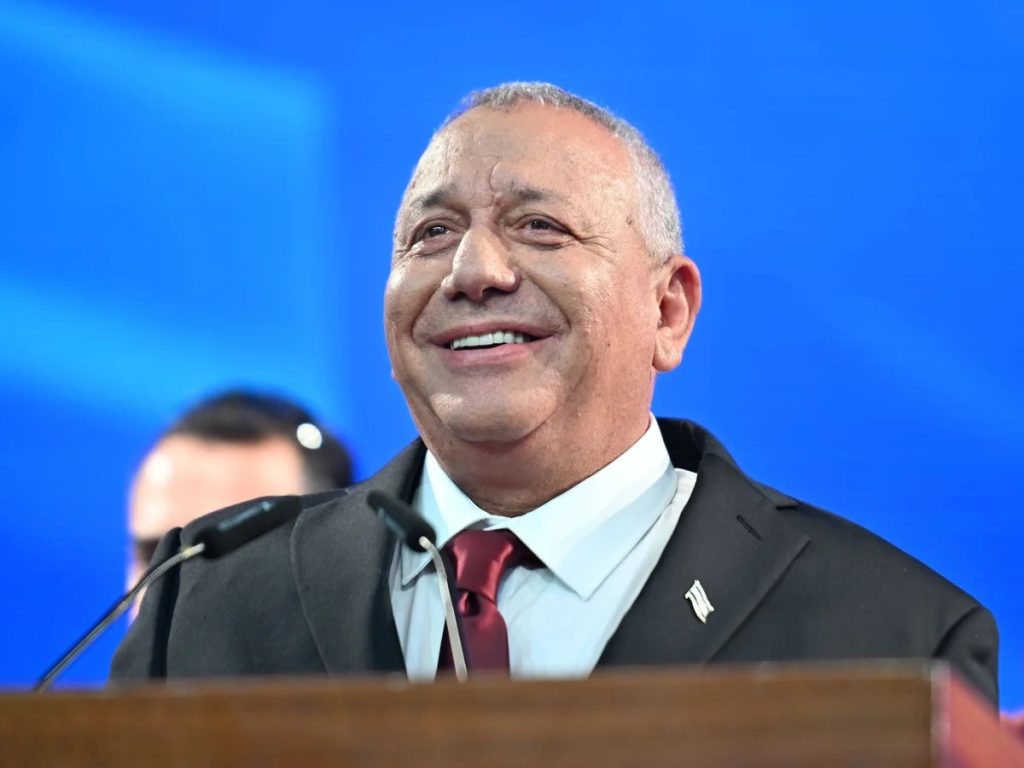
Eisenkot, a former Chief of Staff of the Israel Defence Forces and now leading the charge to form an alternative government, did not mince his words. He dismissed Netanyahu’s public call for immediate coalition negotiations as a calculated distraction. “Netanyahu calls for negotiations after they have already been scheduled,” Eisenkot said in a statement posted to his official social media account. “He claims he wants unity, but disgraces a state ceremony in the Knesset and divides and incites as if there were no tomorrow.” Eisenkot was explicit about his conditions for any power-sharing arrangement under his leadership: acceptance of his stated principles and a complete break with what he described as extremist political partners.
Netanyahu, for his part, framed the conversation in dramatically different terms. In his own public statement, he described a recent meeting with Eisenkot in warmer language, invoking years of professional acquaintance stretching back to Eisenkot’s tenure as IDF Chief of Staff. “This meeting only strengthened my understanding of how essential it is to establish a national unity government,” Netanyahu said, arguing that only a broad coalition encompassing all parties committed to Israel as a Jewish state would be capable of confronting the security challenges ahead. He made no reference to preconditions.
The centrepiece of Netanyahu’s public argument was Iran. He warned with striking directness that the Iranian regime, which he characterised as one that “did not hesitate to murder many thousands of its own people,” was once again seeking to advance its nuclear programme. “It will use nuclear weapons against us the moment it manages to resume uranium enrichment and the accelerated development of nuclear weapons,” he said, invoking the codenames “Am Kelavi” — meaning Brave People — and “Shaagat Ha’ari” — meaning Lion’s Roar — as examples of past operations that had, in his account, averted immediate threats. A narrow government, or one dependent on parties he characterised as supporters of terrorism, would, he argued, be incapable of meeting that threat.
The language of existential danger has long been part of Netanyahu’s political vocabulary, but analysts who follow Israeli politics closely note that the current moment is not merely rhetorical. Iran’s nuclear ambitions remain a live and unresolved threat. Israeli military and intelligence services have repeatedly identified uranium enrichment acceleration as a red line. Whether or not one accepts Netanyahu’s framing of the coalition arithmetic, the underlying security concern he raises is widely shared across the Israeli political spectrum, including by Eisenkot himself.
What divides the two men is not the diagnosis but the prescription. Eisenkot contends that a unity government built around Netanyahu and his current allies — particularly those from the Religious Zionism bloc — would not be a government of genuine national reconciliation but rather a continuation of the same political configuration under a different name. His conditions, he has made clear, are not negotiating positions but prerequisites. The Tuesday Knesset vote to appoint Matan Kahana — a former lieutenant colonel, squadron commander and Sayeret Matkal commando — as Knesset speaker represented, in Eisenkot’s framing, an immediate and concrete test of Likud and Religious Zionism’s stated commitment to democratic cooperation. “If they are indeed committed to genuine political partnership, as they claim, they must allow a proper democratic process to take place on schedule,” he said.
The Knesset speakership is not a ceremonial matter. Control of the speaker’s chair shapes legislative agendas, determines which motions reach the floor and, in a parliament as finely balanced as Israel’s, can materially affect a government’s ability to function. The contest over that position is therefore not a sideshow — it is a direct proxy battle for the larger coalition struggle being waged in public statements and behind closed doors simultaneously.
Netanyahu’s appeal to unity carried an emotional register as well as a strategic one. He invoked the image of ordinary Israelis — naming individual citizens, Elisha Midan alongside Elisaf Peretz, Talik Gvili alongside Shira Shapira — joining forces across their differences in service of a shared national future. It was language designed to reach beyond the political class, to appeal directly to a public that, by most polling measures, is deeply fatigued by years of electoral instability and political polarisation.
Israel has held multiple elections in recent years without producing durable governing majorities. The country’s proportional representation system, combined with an increasingly fragmented party landscape, has made coalition-building a prolonged and painful exercise in which ideological distance between potential partners is frequently enormous. The current impasse fits that pattern — but the external environment gives it an urgency that previous formations did not carry to the same degree.
What comes next will be determined not by the volume of public statements but by whether the gap between Eisenkot’s conditions and Netanyahu’s position can be bridged in negotiations. Both men have declared their willingness to govern together in principle. Whether that principle survives contact with the specifics of power-sharing remains the defining question of Israeli politics today — and its answer will shape not only who governs Israel, but how capable that government will be of confronting the threats it faces.
Similar Posts by The Mt Kenya Times:
- Diaspora Times Global Nov 14 – Nov 20, 2026
- IsiDonodono wins double awards in a landmark week for isiNdebele literature
- Mahlangu turns 91: A legacy of resilience, art and grace in Mpumalanga
- The role of artificial intelligence in the modern world
- Water problems in the modern world: a global threat to the future of humanity