
By Elizabeth Angira
Technical and vocational education and training (TVET) institutions have been challenged to translate research and innovations into practical solutions that address societal challenges, create jobs and boost economic development.
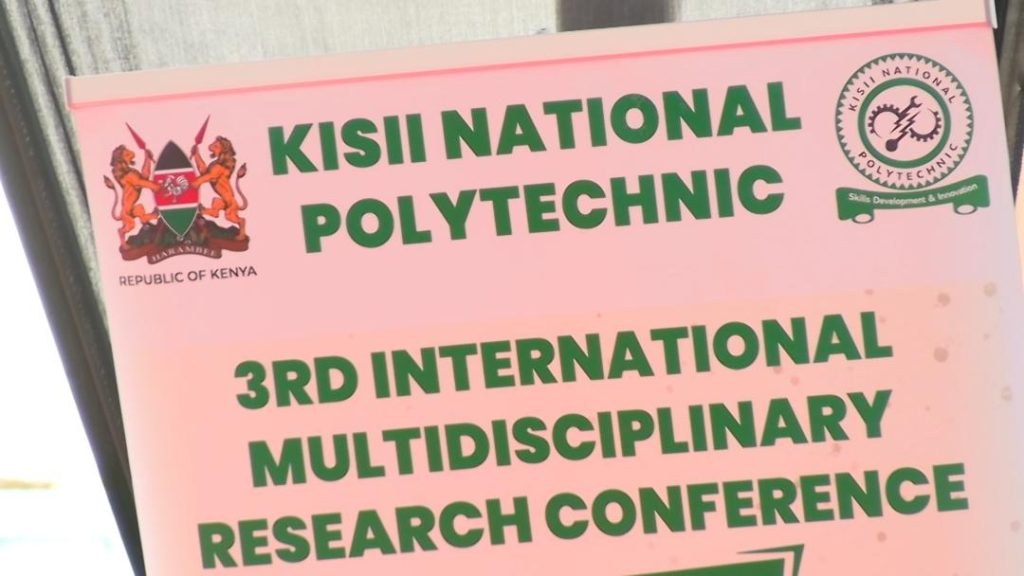
Speaking during the 3rd International Multidisciplinary Research Conference at Kisii National Polytechnic, Principal Secretary for TVET Dr Esther Muoria said research should go beyond academic publications and presentations to deliver solutions that can be implemented and commercialised.
Muoria said the conferences provide an important platform for learners, researchers, academicians and technical institutions to exchange ideas, identify challenges and develop innovations that respond to the country’s needs.
She emphasised the need for stronger collaboration between research institutions, policymakers, Parliament, county governments and industry players to ensure research findings reach the communities and people who need them most.
“Research should not continue to remain on the shelves. We must translate our findings into practical solutions and involve everybody, from policymakers and parliamentarians to industries and communities, so that we can have end-to-end solutions for this country,” she said.

Muoria cited agriculture as one of the sectors where research can make a significant contribution to food security, noting that findings from universities and technical institutions should be translated into practical knowledge that farmers can apply to improve production
She also highlighted innovations emerging from TVET institutions, including the development of a cooking stove that uses waste oil, demonstrating how learners can transform locally available materials into practical solutions.
According to Muoria, such innovations demonstrate the importance of linking research with practical skills, production and entrepreneurship.
She further called on institutions to work closely with the Kenya Industrial Property Institute (KIPI) to patent their innovations and protect young innovators from having their ideas copied or exploited without recognition.
The PS urged researchers to make their conferences more inclusive by bringing together scientists, young innovators, farmers, manufacturers, small and medium-sized enterprises and other industry players.
She said research findings should be communicated in language that ordinary people can understand and apply, rather than being confined to complicated academic presentations.

Chief of Staff and Head of Public Service Felix Koskei also challenged researchers and technical institutions to make their conferences more inclusive by involving decision-makers, politicians, consumers, industry players and other stakeholders.
Koskei said researchers should move beyond presenting findings to fellow academics and deliberately engage people responsible for making policies, allocating resources and implementing proposed solutions.
He urged institutions to make their research discussions relevant to ordinary citizens, noting that involving policymakers and Parliament could help secure the support and resources needed to implement promising innovations.
Koskei also emphasised the importance of succession management in research and innovation, urging senior researchers and professors to mentor young innovators instead of limiting their opportunities.
In her remarks, Muoria linked the conference theme, Science, Technology, Innovation and Future Green Jobs, to the objectives of Competency-Based Education and Training (CBET), which seeks to equip learners with practical skills to solve problems, develop innovations and create economic opportunities.
She said TVET institutions must ensure that research produces solutions that benefit society while creating opportunities for commercialisation.
Muoria noted that the Government’s green TVET agenda was already delivering results, with 91 TVET institutions having adopted solar energy solutions, reducing electricity costs by approximately 50 per cent.
She said institutions were also embracing renewable energy, waste management and resource efficiency as part of efforts to integrate green competencies into training programmes.
Muoria commended Kisii National Polytechnic, researchers, innovators and trainees for participating in the conference, urging them to ensure that its outcomes translate into practical projects, enterprises, employment opportunities and economic value.
She challenged institutional leaders to ensure that investments in training, research and technology deliver measurable results and contribute to the country’s development agenda.
Similar Posts by Elizabeth Angira:
- Mt Kenya Times ePAPER November 14-15, 2026
- Sifuna’s party rebrands to Linda Mwananchi
- Ruto gathers Nairobi’s broad-based leaders at State House to accelerate housing, roads and markets
- Ruto commits to KSh38.7B Kiambu Road dualling and new Nairobi-Thika Expressway
- Khaminwa to receive Kenya’s historic first honorary degree from Kaimosi Friends University