Nuclear energy debate must begin with public trust and shared responsibility
Kenya’s planned nuclear town hall at Maseno University offers a rare chance to build the informed, honest national conversation that a decision of this magnitude demands
By James Kilonzo Bwire
The planned Nuclear Energy Town Hall Debate at Maseno University on October 30 represents something Kenya has rarely managed on complex national questions: a deliberate effort to bring government, academia, industry and citizens into the same room before major decisions are made, not after.
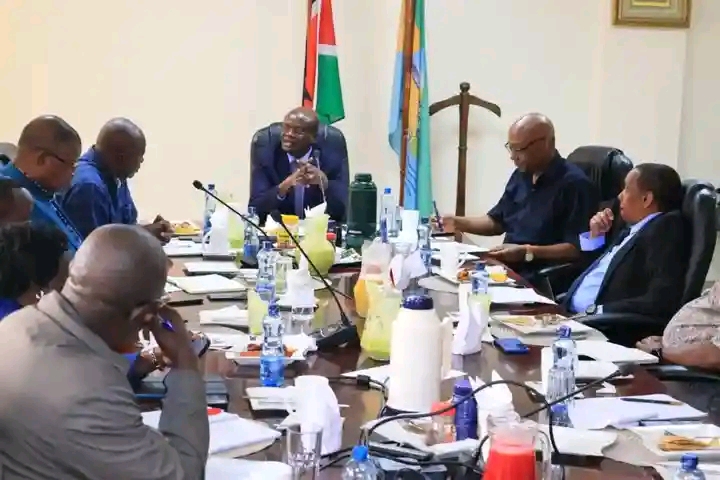
The courtesy call by representatives of the Nuclear Power and Energy Agency, KenGen, Maseno University and civil society organisations to the Vice Chancellor should therefore be understood as more than a preparatory meeting. It signals an intention to treat public participation as a genuine part of the decision-making process — not a communication exercise designed to secure approval for conclusions already reached elsewhere.
That distinction matters enormously. Nuclear energy cannot be managed as a matter for one government agency or one technical department. It raises questions that cut across energy planning, public policy, economics, environmental management, safety regulation, land use, waste management, public health and intergenerational responsibility. It also raises the deeper question of what kind of development Kenya seeks to pursue and whether the institutions required to manage complex technology responsibly are in place. A serious national conversation must involve people with different forms of knowledge and different accountabilities to the public.
For nuclear energy specifically, public dialogue is not optional — it is structurally necessary. Many Kenyans will encounter the subject through political statements, social media or international news coverage of nuclear accidents and disputes. Others may associate nuclear power with weapons rather than electricity generation. Some will have genuine concerns about radiation, plant safety, radioactive waste, emergency preparedness and environmental consequences. Those concerns should not be dismissed as ignorance or reflexive opposition to development. They should be addressed through clear explanations, credible evidence and respectful engagement.
Public confidence in a national nuclear programme cannot be demanded. It must be earned through transparency, demonstrable competence and consistent accountability. The public must understand why nuclear energy is being considered, what problem it is expected to solve, how it will complement Kenya’s existing electricity mix and what safeguards will govern its development. Public education must also avoid presenting nuclear energy as an automatic answer to every energy challenge. Honest communication about both opportunities and limitations is the only foundation on which durable public trust can be built.
Maseno University’s role in this process deserves particular attention. As an institution of higher learning, it carries a responsibility to promote evidence-based inquiry and independent thought — not simply to provide a venue. Its involvement should ensure the debate is not controlled entirely by official or industry perspectives. Researchers from engineering, environmental science, law, economics, public health and social sciences should each have space to examine nuclear energy from different angles. The university’s co-ownership of the initiative implies a shared commitment to honest discussion, not a managed communication outcome.
Universities also have a responsibility to make complex issues genuinely accessible. Academic knowledge confined to specialised publications serves limited public purpose. Through student participation, public lectures and accessible research communication, Maseno and its peers can help communities understand both the technical and social dimensions of what is being proposed. The partnership between the university and other stakeholders should therefore extend well beyond the town hall itself.
KenGen’s participation brings institutional experience in electricity generation and energy infrastructure. Its involvement can help the public understand nuclear power within the context of Kenya’s broader electricity system — existing and planned generation sources, transmission requirements, demand growth and affordability. Nuclear energy should not be discussed in isolation from those realities. The debate should clarify whether nuclear generation is being considered as a complement to other sources or as a replacement for them, and on what timescale.
Industry participation must, however, be balanced by independent scrutiny. The public needs to hear from technical operators, but it must also have access to experts who can examine claims, identify risks and ask difficult questions. A credible forum is not one designed to produce automatic approval. Its purpose is to improve public understanding and enable citizens to evaluate the programme on the basis of evidence. Public acceptance built on incomplete information will not provide a stable foundation for a long-term national commitment of this scale.
Civil society organisations bring a distinct and necessary perspective. They carry questions of accountability, environmental protection, social justice and community rights into spaces that might otherwise remain purely technical. Their involvement can help ensure that engagement reaches groups who may not ordinarily participate in such forums. Responsible criticism, when taken seriously, improves public policy by identifying weaknesses before they become costly problems. Government agencies, universities and industry should regard civil society as a partner in accountability, not as an obstacle to progress.
The debate must also cover the complete life cycle of nuclear energy — not merely electricity generation and economic projections. Site selection, construction, plant operation, emergency preparedness, decommissioning and the long-term management of radioactive waste each carry specific responsibilities and risks. Citizens should be clearly informed about how regulatory, promotional and operational functions will be separated, and why that separation matters. A regulator that lacks independence from the institutions it oversees provides no meaningful protection.
Emergency preparedness deserves direct and detailed attention. Communities near any future facility need to understand the systems designed to protect them, the roles of different institutions during an emergency and the information they would receive. That preparedness must be developed, tested and publicly explained well before construction begins, not after.
The question of radioactive waste requires equal honesty. The public is entitled to know how radioactive materials will be handled, stored, transported and monitored across their entire operational life. Long-term responsibilities must be clearly assigned, and any uncertainty in this area should be acknowledged and addressed through research and international cooperation, not smoothed over with general assurances.
Affordability and financial accountability are equally important. Nuclear power projects require major long-term investment and strong institutional management. The public should be informed about how such a programme would be financed, how costs would be controlled and how consumers would be protected. Economic claims about future electricity prices and employment should be supported by clear assumptions and subjected to independent review.
Communication will determine whether the engagement succeeds or becomes another missed opportunity. Technical language must be explained in accessible terms without sacrificing accuracy. Questions raised during the debate should be recorded and answered publicly. The organisers should communicate clearly what was learned, which issues require further work and how public contributions will inform subsequent decisions.
The media carries its own responsibility here. Journalists and editors should report nuclear energy accurately, avoiding sensational treatment of technical or safety issues. Public understanding weakens when complex matters are reduced to political claims or isolated incidents. Good journalism can help prevent both unnecessary alarm and unjustified confidence.
Students at Maseno and across Kenya should be active participants, not passive observers. They are the future engineers, regulators, journalists, public officials and community leaders who will live with the consequences of decisions being taken now. Their questions and concerns deserve to be taken seriously.
A single town hall cannot resolve a question of this magnitude. It should mark the beginning of a sustained national engagement programme involving universities, schools, professional bodies, county governments, media institutions and local communities across the country. The public must be able to follow developments, examine new information as it emerges and hold institutions accountable for the commitments they make.
Kenya has an opportunity to demonstrate that decisions about complex technology and long-term national development can be handled with genuine openness and shared responsibility. The involvement of NuPEA, KenGen, Maseno University and civil society provides the institutional foundation. What matters now is ensuring that the spirit of cooperation shown during the courtesy call continues through the debate, beyond it and into the years of difficult, consequential work that follows.
The October 30 debate at Maseno should not be judged by how many people leave supporting nuclear power. It should be judged by how much better they understand the question — its possibilities, its risks and the shared responsibilities it carries for this generation and the next.
Similar Posts by The Mt Kenya Times:
- Diaspora Times Global Sep 26 – Oct 2, 2026
- RS South Africa supports next-generation edge AI with NVIDIA Jetson Orin Nano 2
- AFRICLOUD opens Lagos region and local-currency payments across African markets
- Fine Spinners targets Kenya’s US apparel supply chain with $5m investment
- Kenyans abroad: Is the American dream turning into an immigration nightmare?
About the Author