Rights Advocate Rejects Kindiki’s Nomination For Deputy Presidency
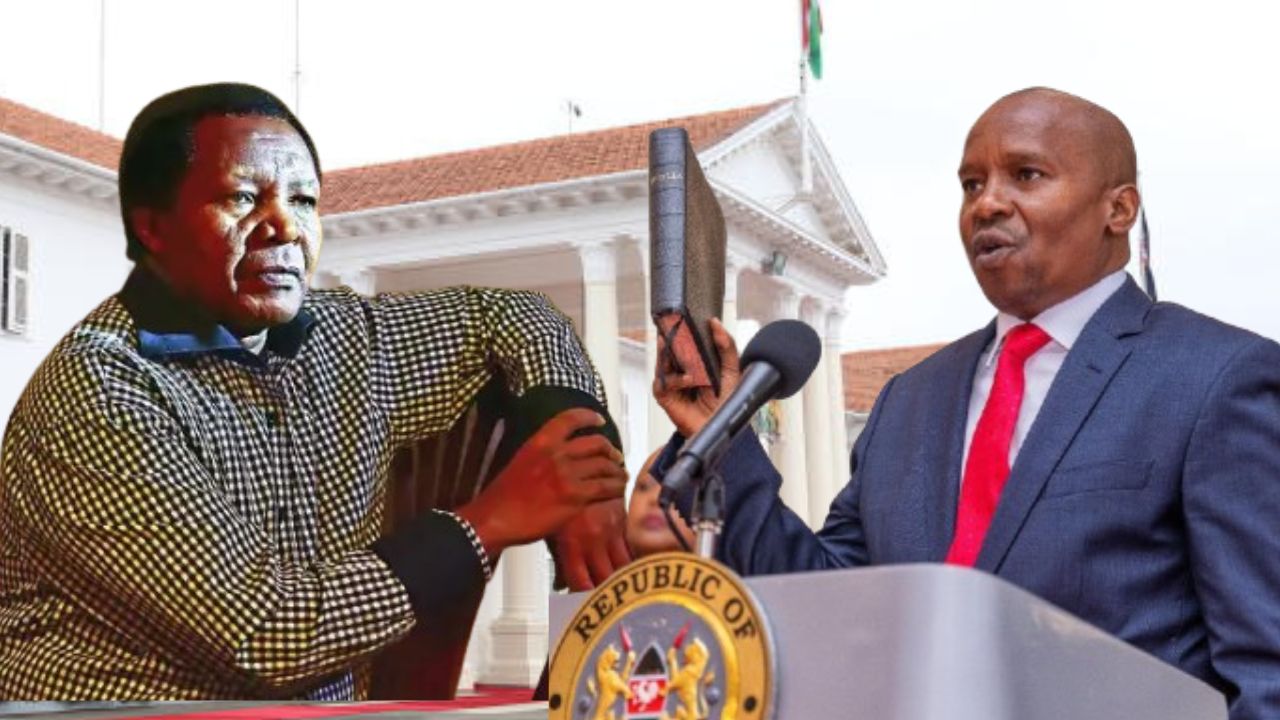
A photo montage of Dr Kinity and Professor Kindiki

By Suleiman Mbatiah
A human rights crusader has expressed deep concerns over the recent appointment of Professor Kithure Kindiki as Kenya’s Deputy President, highlighting his history of suppressing peaceful protests and alleged human rights violations.
President William Ruto appointed Kindiki, the Interior Minister, on Friday, but a court has temporarily blocked his ascension pending a hearing on a case challenging the impeachment of Kindiki’s predecessor, Rigathi Gachagua.
The Senate’s vote on Thursday to uphold the impeachment charges against Gachagua marks a historic moment, as it is the first time a Kenyan deputy president has been removed from office through impeachment.
The rights advocate believes that Professor Kindiki played a crucial role in the violent crackdowns on protests related to the Finance Bill and the youth-led Gen Z demonstrations earlier this year. They accuse him of being a key architect behind Ruto’s oppressive policies.
More than 40 people died in clashes with the police and at least 300 others were wounded, but Kindiki lauded the officers for exercising “restraint” while enforcing law and order. He also denied any shoot-to-kill orders were issued.
Dr. Isaac Newton Kinity remarked that Kindiki’s rapid rise to the Deputy Presidency is a “reward” for his execution of Ruto’s repressive orders, particularly the violent suppression of youth-led demonstrations that resulted in numerous casualties.
Dr. Kinity is a former Secretary General of the Kenya Civil Servants Union who was forced to flee Kenya in 1998 after being targeted by the late former President Daniel Moi’s regime due to outspoken criticism of rampant corruption, political harassment, and the brutal killings.
“Professor Kithure Kindiki has been instrumental in executing Ruto’s orders, and his appointment signals even harsher measures on the horizon now that President Ruto is uncertain of his re-election for a second term,” Kinity stated in a media statement.
This was not surprising, as he had long been a close ally of the president, having served as his lawyer over a decade ago in a case before the International Criminal Court (ICC). At that time, Ruto, then an MP, faced accusations of crimes against humanity related to the violence that erupted after the 2007 election, which resulted in the deaths of more than 1,200 people.
He expressed growing fears of rising authoritarianism in Kenya’s political landscape, drawing parallels to the regime of the late former President Moi, during which government dissidents were tortured, and some were killed.
Dr Kinity noted, “The arrest of cultural elders during a prayer session at Mt. Kenya and the controversial arrests of landowners in Gilgil serve as clear evidence of Kindiki’s involvement in politically motivated crackdowns.”
Professor Kindiki has asserted that the deaths recorded during protests cannot be attributed to the police. Speaking before the National Assembly Committee on Administration and Internal Security, he stated that while police are permitted to use lethal force under certain circumstances, this should not automatically imply that they are responsible for the deaths.
He further emphasized that the presence of a bullet wound in an individual does not necessarily mean that the police are to blame. “The fact that someone has been shot is not conclusive evidence that they were shot by a police officer,” Kindiki remarked.
Similar Posts by The Mt Kenya Times:
- Dr. Ekrah Ndung’u wins TVET advocacy award after 12 years
- Mt Kenya Times ePAPER October 17-18, 2026
- Ruto bets billions on Kerio Valley — with one eye on 2027
- Ruto’s health ministry kills Murang’a’s digital hospitals
- Kenya bets on Mount Kenya to drive a billion-shilling tourism revival
About the Author