The movement bars media from its National Delegates Conference today as it formalises its transition from The Equitable Party and ratifies a leadership structure built around Nairobi Senator Edwin Sifuna.
By James Mwangi
The Linda Mwananchi Movement today holds its National Delegates Conference behind closed doors, with journalists barred from proceedings as the political outfit formalises its transition from The Equitable Party and ratifies a leadership structure intended to anchor its 2027 General Election campaign. The conference, whose venue has not been made public, is restricted to delegates drawn from members registered under The Equitable Party at the time the NDC notice was published, with each county allocated a fixed number of seats based on registered membership.
“Kindly note that today’s NDC will be a closed-door meeting, with no media coverage,” said Pauline Njoroge, the movement’s Head of Communication, confirming the decision yesterday. The movement described the gathering as a statutory requirement under the Political Parties Act, necessary to approve the party’s name change and ratify the resolutions needed to complete its transition. “We ask for your understanding and cooperation as we undertake this important process,” its official notice stated.
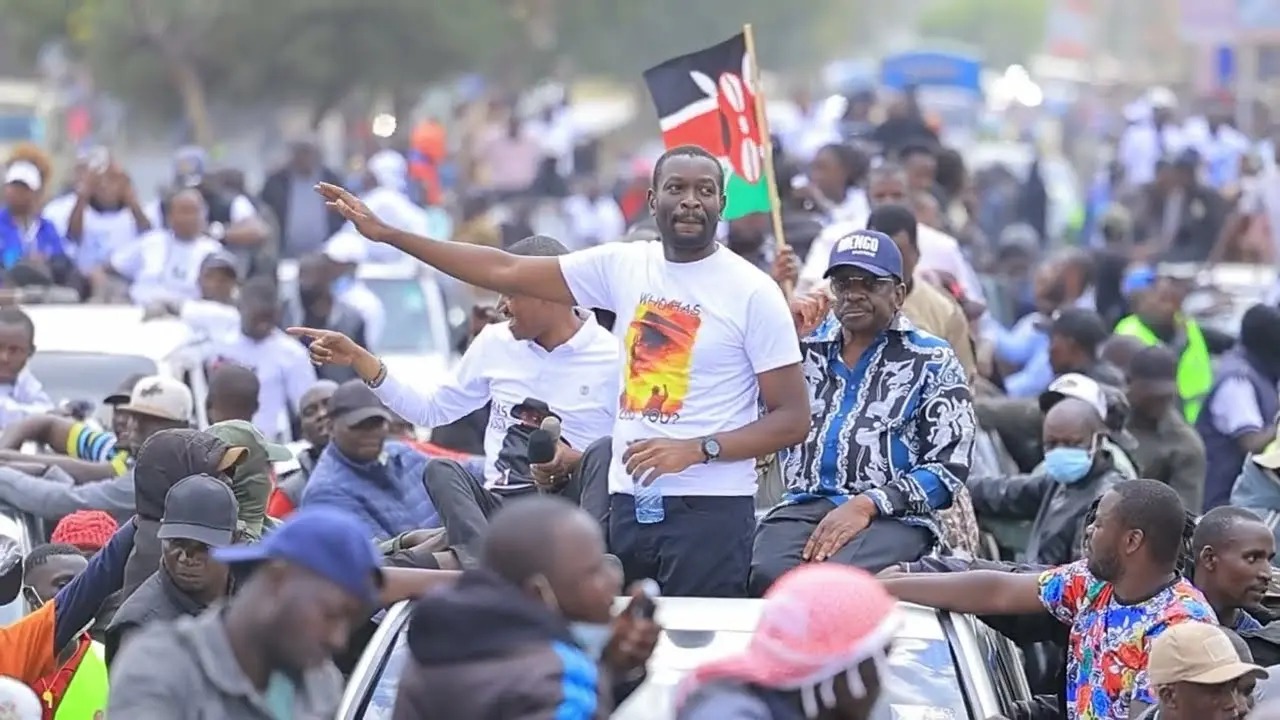
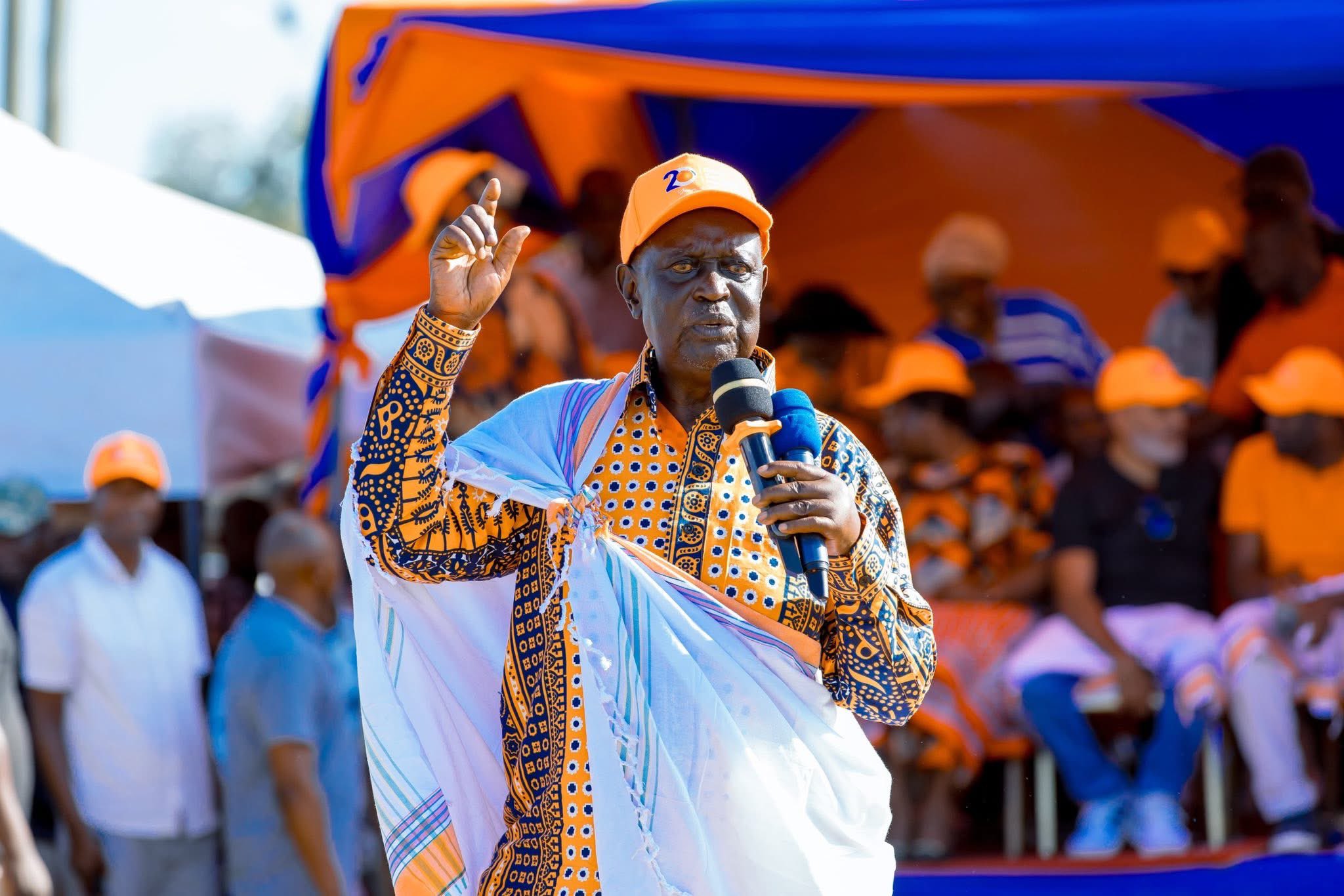
The decision to exclude the media is unusual for a political movement seeking national visibility ahead of a general election, and it has drawn attention precisely because of what the conference is being asked to approve. At the movement’s public launch on 30 October, Nairobi Senator Edwin Sifuna was unveiled as the proposed party leader — a role that, once ratified today, would give him a formal institutional platform from which to prosecute his 2027 ambitions. Former Meru Governor Kawira Mwangaza, former Law Society of Kenya president Faith Odhiambo, and Mavoko MP Patrick Makau were named as proposed deputies. Vihiga Senator Godfrey Osotsi was proposed as chairperson, Suba South MP Caroli Omondi as secretary-general, and Njoroge as deputy secretary-general. Trans Nzoia Governor George Natembeya was unveiled as head of the movement’s presidential campaign — a signal that the Linda Mwananchi Movement intends to field a presidential candidate rather than serve as a junior coalition partner.
The path to today’s conference has not been straightforward. The movement faced legal challenges at the Political Parties Disputes Tribunal, where party member Emmanuel Willyngtone Khamala filed a petition seeking to block the NDC over alleged irregularities in leadership appointments, delegate selection, and internal decision-making. Khamala argued that officials had been appointed without elections or adequate member involvement, and that the party had not conducted grassroots elections to establish the branch and county structures from which legitimate delegates could be drawn. He also challenged the process through which Sifuna and other officials had been positioned for party roles, questioning whether it complied with the party’s constitution and the Political Parties Act. The tribunal dismissed the petition, clearing the way for the conference to proceed — but the complaints it raised about procedural regularity did not disappear with the ruling. They remain live questions about the legitimacy of the structure delegates are today being asked to endorse.
That tension sits at the centre of a broader story about how Kenyan opposition politics is being remade in the nine months remaining before the August 2027 ballot. The Linda Mwananchi Movement is one of several vehicles being assembled or reconfigured by politicians who sense that the post-Raila Odinga landscape has created an opening that did not exist before. Odinga’s departure from domestic electoral politics removed the singular force that had organised opposition energies for more than two decades, leaving a vacuum that multiple figures are now racing to fill with varying degrees of institutional credibility and popular support.
Sifuna’s calculation is distinctive. Where others have sought to inherit Odinga’s mantle by positioning themselves as continuity candidates within the Orange Democratic Movement’s structures, Sifuna has chosen to build a separate vehicle — one that he controls from the top, that bears no inherited obligations to rival factions, and that can be deployed as either an independent presidential platform or a negotiating asset in coalition talks. The Linda Mwananchi Movement, if today’s conference proceeds as planned, gives him that instrument. The question of whether it also gives him a credible path to State House is considerably harder to answer.
His networks span both Luo Nyanza and Western Kenya, and his profile as a combative, media-savvy senator has made him one of the opposition’s most recognisable voices. But recognition and organisation are different currencies in Kenyan electoral politics, and the movement’s decision to operate today’s conference without public scrutiny — undisclosed venue, no media, restricted delegate lists — sits awkwardly alongside any claim to represent a new, transparent political culture. Movements that begin by closing their doors invite the question of what they are protecting.
The wider opposition landscape into which the Linda Mwananchi Movement is launching remains unsettled. The Ukombozi Alliance, co-chaired by Siaya Governor James Orengo and former Interior Cabinet Secretary Fred Matiang’i, is attempting to construct a unified front, while Stephen Kalonzo Musyoka’s Wiper Patriotic Front insists that his presidential ambitions must carry genuine weight in any coalition arithmetic. Rigathi Gachagua’s Democracy for the Citizens Party is simultaneously building its own national structures, with this week’s fresh questions over his formal registration status at the Registrar of Political Parties adding a new complication to his consolidation efforts. TIFA Research polling released this week shows President Ruto’s UDA recovering ground at 25 per cent national support — a figure that underscores how much the opposition’s fragmentation is currently benefiting the incumbent.
Against all of that, today’s closed-door conference in an undisclosed location is either a disciplined operational decision by a movement that knows exactly what it is building, or an early warning about the transparency deficits that could limit its appeal when the campaign reaches full intensity.
The delegates inside that room today will ratify a leadership structure. Whether the movement they are formalising can translate organisational form into genuine electoral force is the question that will define Sifuna’s next twelve months — and Kenya’s opposition politics along with it.
Similar Posts by The Mt Kenya Times:
- Linda Mwananchi tops Nairobi as TIFA poll reshapes Kenya’s 2027 political map
- Oburu Oginga returns to Senate after two months of illness
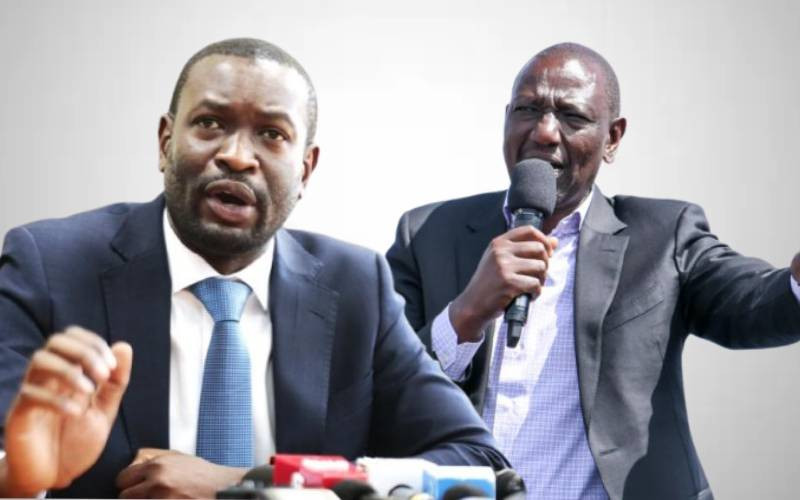
- Ruto and Sifuna tied at 31% as Kenya’s 2027 race sharpens into a two-horse contest
- Kalonzo takes Kenya’s opposition campaign to Washington ahead of 2027 election
- Missing Nairobi lawyer Abshir Abdi found dumped in Marsabit after eleven days