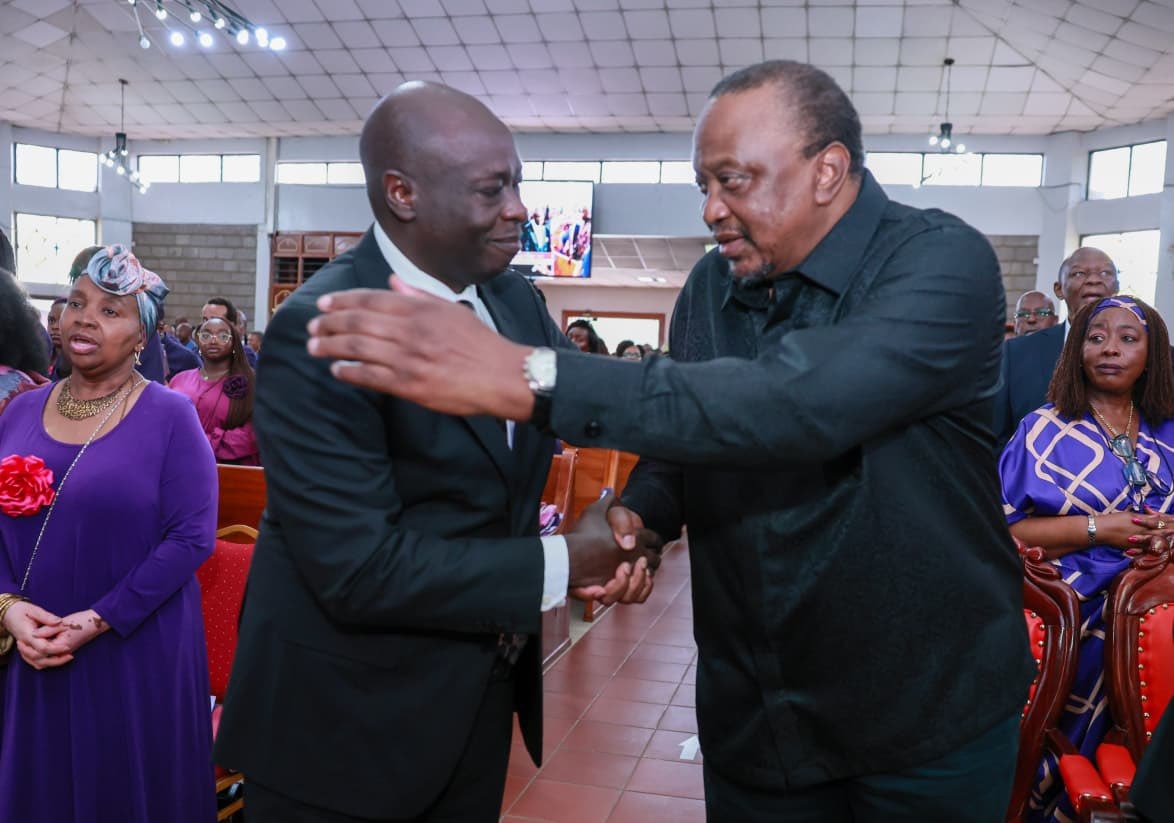
At a Nairobi funeral, Kenya’s former president delivered his clearest signal yet that the opposition must consolidate — or concede the election before it begins
By David Kimani
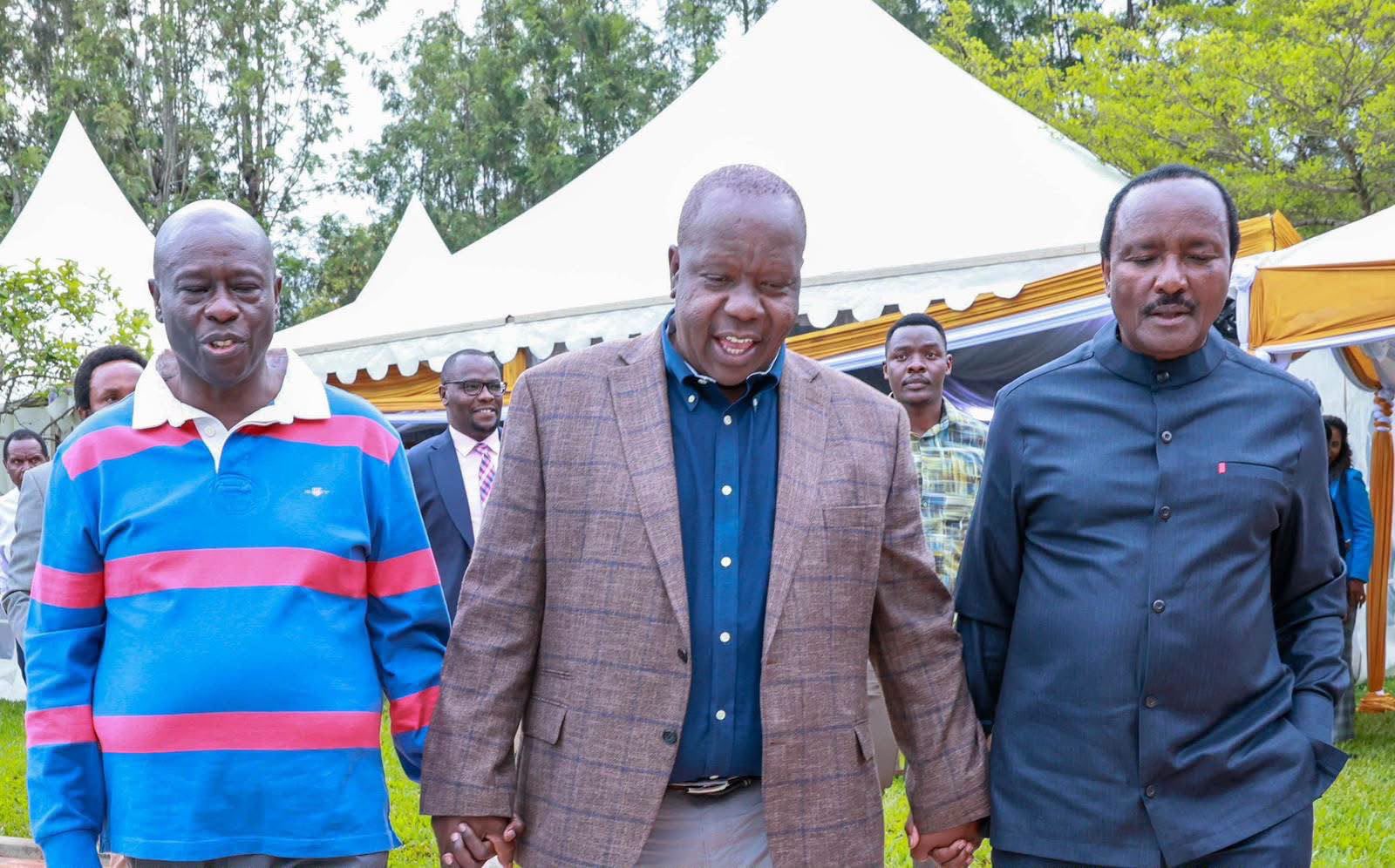
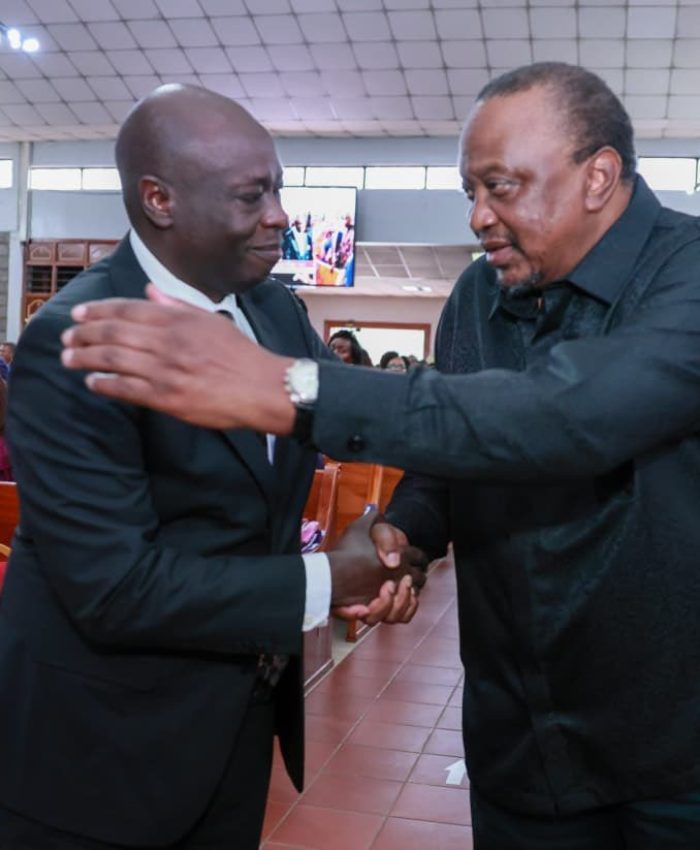
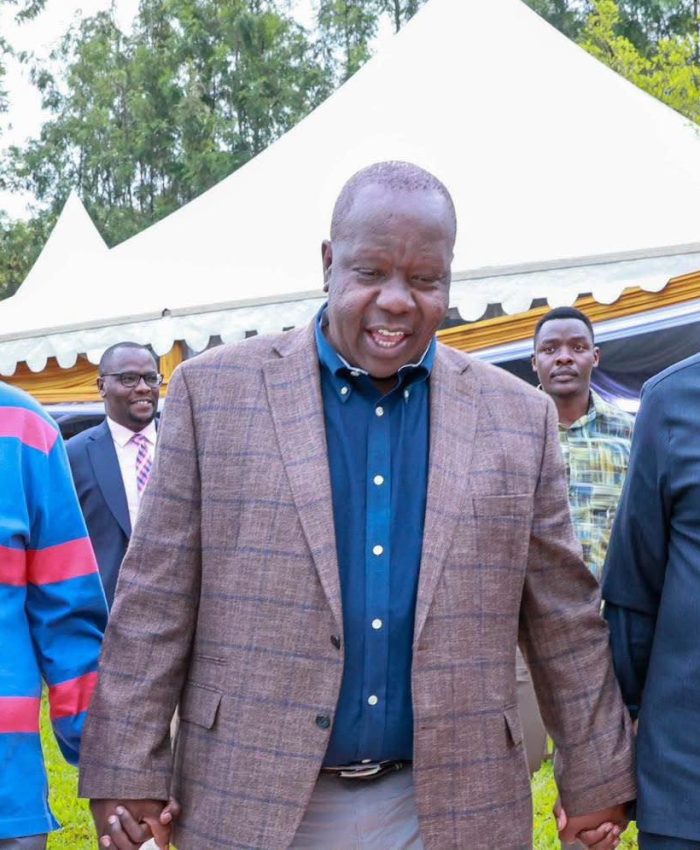
Former President Uhuru Kenyatta yesterday used the funeral service of Beatrice Wambui Muturi at PCEA Nairobi West to deliver his most direct public message to opposition leaders yet, urging Rigathi Gachagua, Stephen Kalonzo Musyoka, Eugene Wamalwa and others to set aside personal ambitions and present a united front ahead of the August 2027 general election.
The occasion carried the particular weight that Kenyan funerals often do — a convergence of grief and politics, of personal history and public calculation. Wambui, described by those present as a towering figure in both family and national political circles, had been close to Kenyatta’s mother, Mama Ngina, since her marriage to founding President Jomo Kenyatta. “She welcomed her into my father’s home when she got married to my father, and our extended family has lost one of its greatest pillars,” Kenyatta said in tribute.
But the former president’s most consequential remarks were directed not at the departed, but at the living — and specifically at the men seated around him who harbour varying degrees of presidential ambition.
“What happened in the past is in the past. What should concern Kenyans is where we are going,” Kenyatta said, before addressing Gachagua, Kalonzo and Wamalwa by name. “As I keep telling my brothers here — Steve, Rigathi, Eugene and others — only one person can occupy the presidency at a time. I also listen to the ground; my ears are not closed.” He said ordinary Kenyans, encountered during his own movements across the country, were sending an unambiguous message. “People want to see our leaders stand together. Our leaders must organise themselves and unite to fulfil what Kenyans want.”
Kenyatta’s intervention is significant for several reasons. Having largely withdrawn from front-line politics since leaving office, he has re-entered the public conversation at a moment when the opposition landscape remains fluid and the question of who will carry a unified challenge to President William Ruto remains unresolved. His framing — that unity is a public demand, not a political favour — gives the message a popular legitimacy that a purely partisan call would lack. “And I am sure that is what you will deliver for us, with justice. There can be no peace without justice,” he added.
The event also produced one of the more candid exchanges in recent Kenyan political memory. Gachagua, speaking ahead of Kenyatta, made a remarkable public admission: that he had spent KSh1.5 million given to him by Wambui to support Kenyatta’s 2017 repeat presidential campaign on personal needs. “When our election was nullified by the Supreme Court in 2017, we were so disappointed and did not even have money. She found me and gave me money in a nylon bag to help Uhuru win the repeat election — but I had my own needs. That KSh1.5 million, I confess, I spent on myself,” he said, to audible reaction from those gathered.
Kenyatta’s response was characteristically dry. “I have retired, but I will go to Wamunyoro to claim my campaign money back,” he said, drawing laughter and underscoring the renewed warmth between two men whose relationship had visibly strained during the final turbulent period of the Jubilee administration.
Gachagua was equally direct about the reconciliation. Recounting how he and Wambui had worked together to support Kenyatta’s first presidential bid, he said their relationship had subsequently been damaged by third parties. “Together with her, we worked to make Uhuru Kenyatta president during his first attempt. Someone came between me and Uhuru to divide us — but are we not together now?” he said. “Let me say this: nobody will ever succeed in coming between me and former President Uhuru Kenyatta again.”
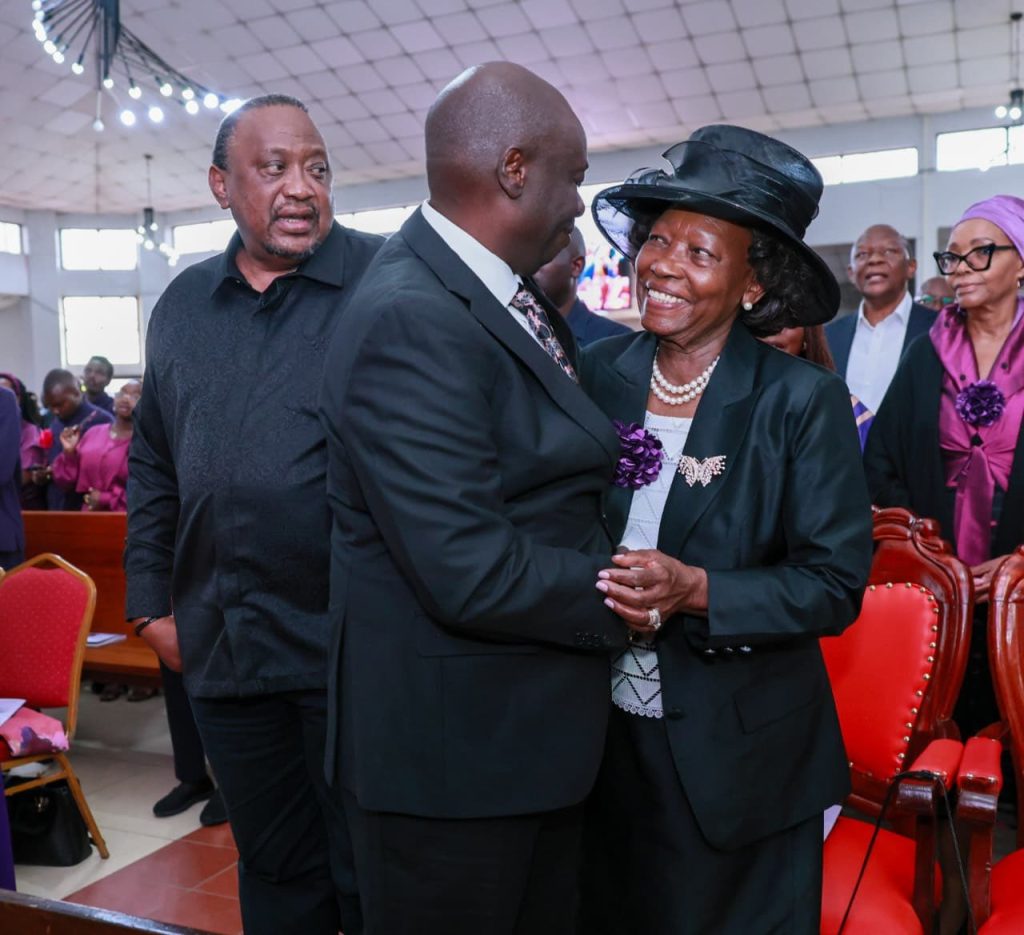
The DCP leader also employed an extended allegory — speaking in Kikuyu — involving a herder, a hyena and missing sheep, a thinly veiled reflection on his removal from the Deputy Presidency and what he characterised as a failure of oversight that allowed harm to occur. He asked, pointedly, whether he would receive support in addressing the problem without destroying what remained. The allegory drew nods and murmurs from an audience that understood its political architecture precisely.
Kalonzo, for his part, struck a tone that balanced personal tribute with political assertion. He defended Kenyatta’s continued presence in national discourse, noting that retirement from office did not extinguish the right to political opinion. “We wanted Uhuru to stay out of this as we transform the country, but he is entitled to his opinion and still has the right to contribute to national discourse,” Kalonzo said.
The Wiper leader also addressed the political energy among younger Kenyans directly, criticising remarks attributed to those in government that advocated shooting protesters. “When somebody says, ‘Shoot Gen Z in the leg,’ that is a presidential fear. This is why Kenyans are united in calling for one term. Young Kenyans have the right to express their political opinions. Next year, they will go to the ballot and say: you wanted to shoot us in the legs — we will shoot you at the ballot.”
The gathering at PCEA Nairobi West was, on the surface, a farewell to a woman who had lived at the intersection of Kenya’s founding generation and its contemporary politics. Wambui had, by multiple accounts, been a quiet but consequential presence — supporting campaigns, facilitating connections and maintaining relationships across the political spectrum with a discretion that formal political figures rarely manage.
But the conversations her funeral hosted were anything but quiet. With nine months to the election, every public gathering of this magnitude carries a subtext, and yesterday’s was not particularly sub. Kenya’s opposition figures are circling a question that only one of them can answer affirmatively: who leads the challenge, and on what terms does everyone else fall in line?
Kenyatta’s message was clear. The ground is ready. The public is waiting. The seat can hold only one.
Similar Posts by The Mt Kenya Times:
- Opposition leaders visit Gachagua to offer condolences after sister’s death
- Rising Stars strike late to sink Ivory Coast and edge closer to Olympics dream
- The theatre of déjà vu: Pochettino dreams again at Old Trafford
- Kenya’s Ebola battle: Is the country finally winning the fight against the deadly virus?
- Education is the key to a brighter future