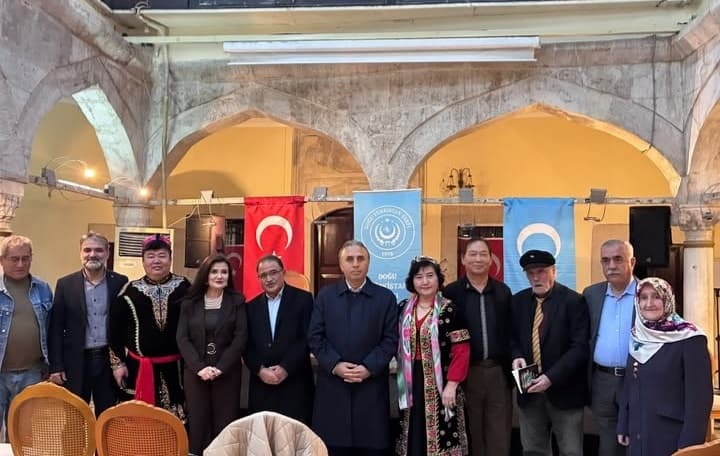
Istanbul’s literary community gathered to honour one of contemporary Uyghur literature’s most distinguished voices
By Shafiga Rahimli
Abduşükür Muhammet Kumtur, one of the most distinguished figures in contemporary Uyghur literature, was honoured in Istanbul on Saturday in a tribute programme that brought together poets, academics and intellectuals from across the Turkic world under one roof.
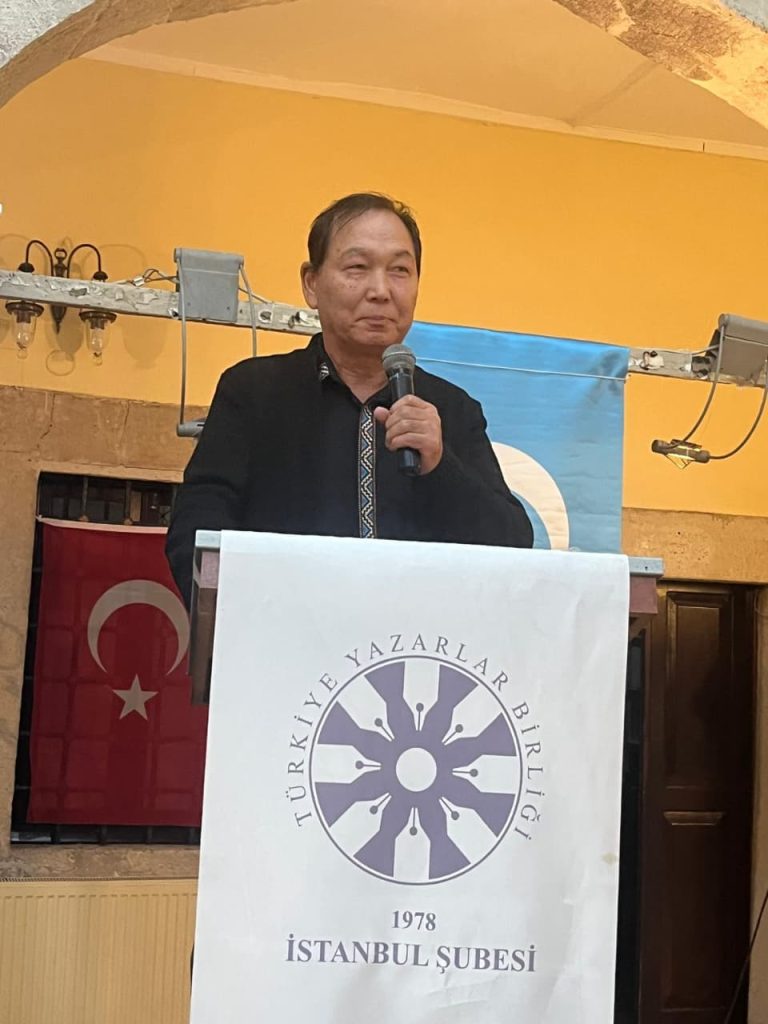
The event, held on 7 November at the Istanbul Branch of the Writers Union of Turkey, was jointly organised by the branch and the East Turkestan Foundation. Hosted by Mustafa Durmaz, it opened with welcoming addresses from Mahmut Bıyıklı, president of the TYB Istanbul Branch, and Prof. Abdulhamit Avşar, president of the East Turkestan Foundation. Both speakers framed the occasion as more than a literary celebration — transferring national memory, shared culture and literary heritage to future generations, they said, is a historical responsibility.
The academic centrepiece of the programme was delivered by Prof. Terane Turan Rehimli, a poet, writer and scholar of the Turkic world, who presented a paper titled “Fatherland, National Memory, and Identity in the Creativity of Abduşükür Muhammed Kumtur.” Her analysis offered a detailed and nuanced reading of Kumtur’s poetry, tracing the profound tragic themes that run through his work — exile, forced migration and the struggle to preserve national identity in a rapidly globalising world.
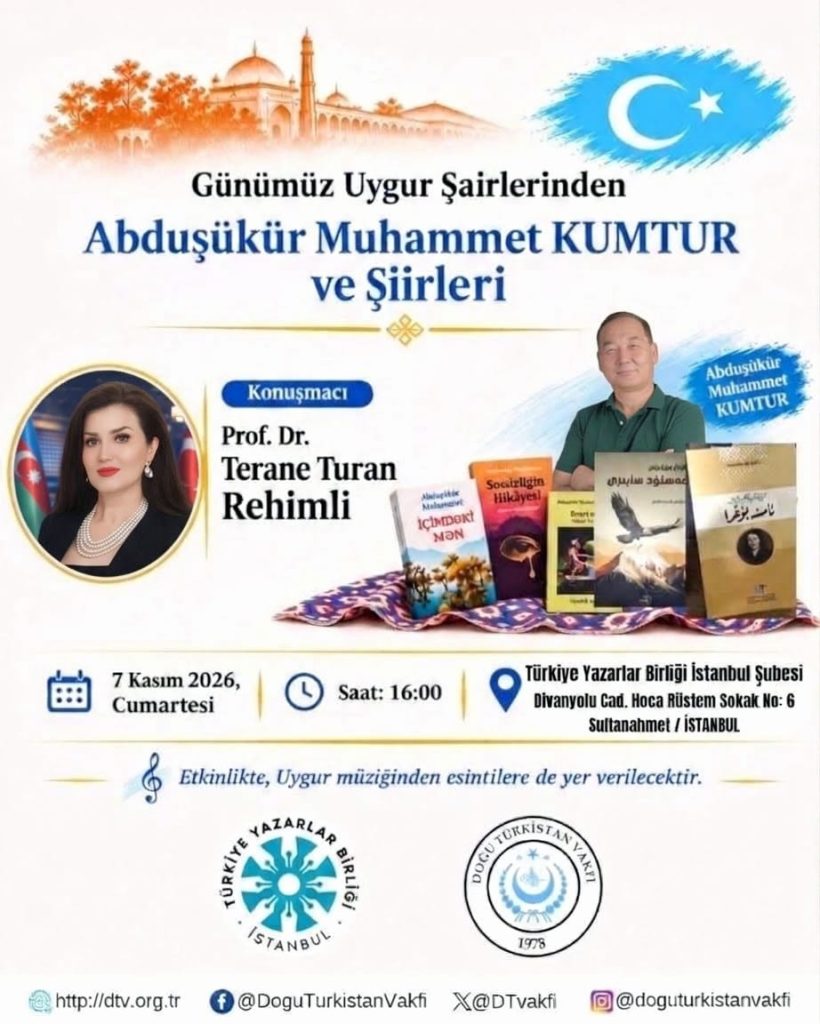
Rehimli argued that the concept of fatherland in Uyghur poetry extends well beyond physical geography, becoming instead a symbolic fortress of collective identity and cultural survival. She drew compelling comparisons between Kumtur’s poetic world and the work of monumental Turkic literary figures including Chingiz Aitmatov, Cengiz Dağcı and Bahtiyar Vahapzade, highlighting the deep typological and emotional bonds that connect them across borders and generations. At the audience’s request, she closed her contribution by reciting her own poem, “The Battle of Gallipoli,” which moved many in the hall.
Kumtur himself then took the stage, sharing reflections on his artistic journey and reading selections from his own poetry. His words carried the quiet weight of a writer who has spent decades keeping alive the memory of a homeland under pressure. He spoke of the pride he takes in his Uyghur identity, the nourishment he draws from his people’s traditions and the sense of purpose that drives his writing — to serve the cause of East Turkestan and ensure that awareness of its culture and history does not fade.
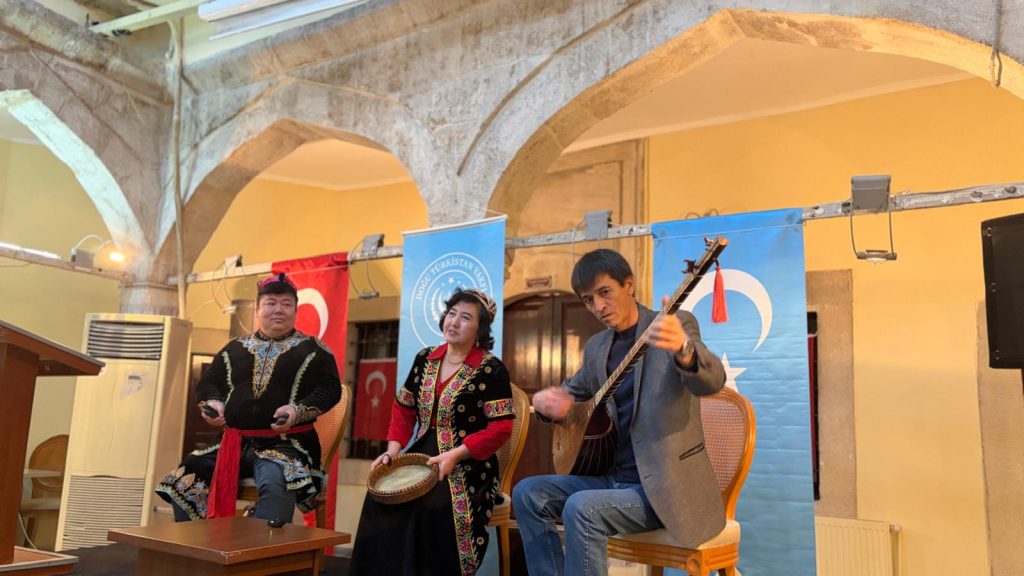
The programme concluded with a concert of traditional Uyghur music performed by East Turkestani artists Dr. Gülzade Tanrıdağlı, Kaharjan and Rustam Niyazov, whose selections carried the audience from the literary into the musical dimensions of Uyghur heritage. The performance included an excerpt from the “Tomur Halipa” epic, a piece that resonated with particular power given the evening’s themes of memory, identity and endurance.
The East Turkestan Foundation and the TYB Istanbul Branch expressed their gratitude to all who contributed — a gathering that demonstrated, with quiet eloquence, that culture remains one of the most resilient forms of resistance a people can sustain.
Similar Posts by The Mt Kenya Times:
- Mt Kenya Times ePAPER November 14-15, 2026
- Sifuna’s party rebrands to Linda Mwananchi
- Ruto gathers Nairobi’s broad-based leaders at State House to accelerate housing, roads and markets
- Ruto commits to KSh38.7B Kiambu Road dualling and new Nairobi-Thika Expressway
- Khaminwa to receive Kenya’s historic first honorary degree from Kaimosi Friends University