From the Margins to the Centre: Governor Kadiva Hamutumwa, her first sixteen months in office, and an agenda for a lasting Ohangwena legacy
 The Mt Kenya Times
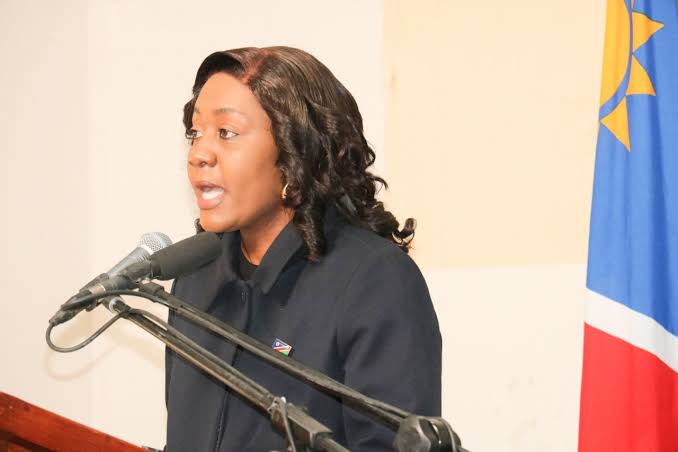
Governor Kadiva Hamutumwa
By Silas Mwaudasheni Nande
Principal, Kornelius Combined School, Ohangwena Region | PhD Candidate in Education, International University of Management
Introduction
For decades, Ohangwena has carried a heavy label. National conversations often described it as poor, remote and slow to develop. The numbers tell a different story about its importance. According to the 2023 census, the region is home to 337 729 people. That makes it the second most populous region in Namibia, with about 11.6 per cent of the national population (Ohangwena Regional Council, n.d.).
Ohangwena stretches along a long northern frontier with Angola. It lies on the Cuvelai basin and sits above one of the most important groundwater systems in the north. It has produced generations of teachers, nurses, soldiers and political leaders. Yet the gap between this potential and the daily reality of many households has long defined regional politics.
On 1 July 2025, Her Excellency, the President, Dr Netumbo Nandi-Ndaitwah appointed Kadiva Hamutumwa as Governor of Ohangwena. She became the first woman and the youngest person ever to hold the office in the region (Haihambo, 2025a). Many in the region believe the President chose well. Sixteen months later, it is fair to test that belief against the record.
This article attempts that test. It draws on State of the Region reports and verified press coverage. It credits what has been achieved. It also names what remains unfinished. Finally, it proposes a set of agendas that could turn a promising start into a permanent legacy for the people of Ohangwena.
The Region She Inherited
Any assessment of a governor must begin with the conditions she inherited. Ohangwena covers about 10 703 square kilometres, roughly 1.3 per cent of the land area of Namibia. It is a long and narrow region along the southern border of Angola. It borders the Cunene and Cuando Cubango provinces of Angola to the north (Ohangwena Regional Council, n.d.).
The landscape is flat and semiarid. Annual rainfall ranges from about 480 millimetres in the west to 600 millimetres in the east. The western part lies within the Cuvelai network of oshanas, which brings seasonal floodwater from the Angolan highlands. The eastern part is covered by Kalahari woodland (Ohangwena Regional Council, n.d.). This geography explains a recurring paradox. The region can suffer floods in one season and severe water shortages in the next.
The social indicators are equally demanding. The regional council reports a fertility rate of 4.6 children per woman. It also reports life expectancy of 45 years for women and 43 years for men (Ohangwena Regional Council, n.d.). These figures should be verified against the latest national health data as there was no such records during this article is going for print. Even so, they point to a young and fast growing population with heavy needs in health, education and employment.
In short, the new governor did not inherit an empty canvas. She inherited a large, young and largely rural population. She also inherited high expectations, scarce water and a fragile labour market. These conditions frame every achievement and every shortfall discussed below.
A Governor Appointed for Delivery
The context of the appointment matters. Hamutumwa was one of seven governors appointed on 1 July 2025. The appointments completed the team of fourteen regional governors under the Eighth Administration (Jason, 2025). At State House, the President set a demanding standard. Governors would be judged on the implementation of the Sixth National Development Plan, not on promises. Unemployment, especially among young people, was named as a central concern (Jason, 2025).
Hamutumwa came to the office from outside the usual political pipeline. At the time of her appointment, she was an executive at the Namibia Water Corporation (NamWater). She was also president of the Namibian Exile Kids Association (Jason, 2025). Both roles proved relevant. Her work at NamWater gave her direct knowledge of water infrastructure. Her leadership of an association of children born in exile gave her experience in organising young people around economic participation.
At the handover ceremony in Eenhana, she confronted the old label directly. She acknowledged that Ohangwena had often been described as poor and underdeveloped. She answered with a statement of conviction: “I believe in the power of our people” (Haihambo, 2025a). She also warned councillors that she had no time for gossip or retrogressive attitudes.
The outgoing governor, Sebastian Ndeitunga, listed the challenges she inherited. These included access to clean water, poor roads, flood management and complicated land questions. He also pointed to weak infrastructure for attracting investment (Haihambo, 2025a). From the first week, therefore, the terms of the assignment were clear. The region needed water, roads, jobs and investment. It also needed a style of leadership that could mobilise people rather than wait for Windhoek.
Listening Before Leading
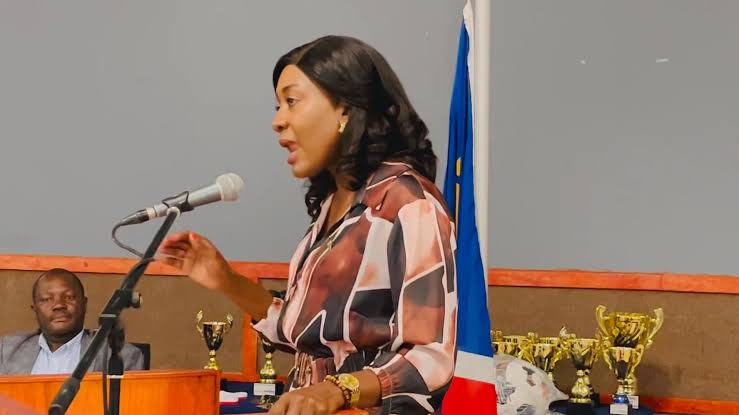
Hamutumwa began with consultation rather than announcement. In her first months, she paid courtesy visits to the Oukwanyama, Ondonga and Uukwambi Traditional Authorities. She also visited former President Hifikepunye Pohamba at his home in Okaghudi Village (Shuuya, 2025). Pohamba urged her to confront poor roads and water shortages in remote communities. He also warned firmly against the theft and misuse of public resources.
She described these engagements as part of a broader strategy to consult stakeholders across the region. Her guiding slogan, #ByUsForUs, promotes local ownership of development (Shuuya, 2025). She then undertook familiarisation visits to the constituencies of the region.
This sequence was more than ceremony. In rural northern Namibia, traditional authorities play a central role in communal land allocation. They also shape community attitudes towards new projects. A governor who wants land for green schemes, factories or schools must work closely with them. By opening her term in their courts, Hamutumwa built the relationships that later projects would require.
The visits also produced evidence for policy. Hamutumwa later explained that the tours revealed a dual reality. Local innovation was alive, but it was held back by poor infrastructure and limited access to markets (Kambowe, 2025). That diagnosis became the foundation of her investment agenda.
Water as the Foundation of Everything
No issue defines Ohangwena more than water. Speaking at State House on the day of her appointment, Hamutumwa said her NamWater experience would help secure supply from the Ohangwena Aquifer. She linked water directly to food production and to local manufacturing (Namundjembo, 2025). She later called for the urgent development of the aquifer for domestic, agricultural and industrial use. She also proposed earth dams to capture rain and floodwater as a regional water security strategy (Windhoek Observer, 2025).
The record since then shows concrete movement. In October 2025, she commissioned the rehabilitation of an old earth dam in Oshikunde Constituency. The project aimed to improve water storage for people and livestock, especially during dry seasons (MICT Ohangwena, 2025).
Her 2026 State of the Region Address reported broader progress for the 2025/26 financial year. Eighteen boreholes worth N$4.6 million were drilled across several constituencies. Five further water projects worth more than N$13.2 million were at various stages of implementation. Solar pumps were installed at rural water points, and livestock dams were rehabilitated and expanded (Haihambo, 2026b).
The largest milestone was the completion of the Omashaka–Eenhana Bulk Water Supply Scheme. It includes more than 200 kilometres of pipeline, three reservoirs and six elevated storage tanks. Its reverse osmosis plant can produce 1 000 cubic metres of potable water per day. Once fully operational, the scheme is expected to meet projected demand of about 10 million litres a day by 2037 (Haihambo, 2026b).
In addition, consultants have been appointed for the Ohangwena Aquifer Climate Resilient Water Supply Project. The project provides for six mini desalination plants in the Epembe, Omulonga and Oshikunde constituencies (Haihambo, 2026b).
A fair analyst must add a caution. Bulk water schemes take years to plan, fund and build. The Omashaka–Eenhana scheme did not begin in July 2025. Much of this record belongs to the wider government system and to earlier administrations. What a governor contributes is focus, coordination and persistent follow-through. On that measure, Hamutumwa has kept water firmly at the top of the regional agenda.
Opening Ohangwena for Business
The most distinctive feature of her term is the investment agenda. In December 2025, she opened a workshop in Eenhana to develop the Ohangwena Regional Investment Strategy and Action Plan. She described Ohangwena as “a region of extraordinary untapped economic potential” (Kambowe, 2025).
Her office worked with the Namibia Investment Promotion and Development Board to establish a Regional Investment Committee. The committee includes professionals, youth representatives and members of the Oukwanyama and Ondonga Traditional Authorities (Kambowe, 2025). She argued that government alone cannot supply the scale of investment the region requires. She also aligned the strategy with the Sustainable Development Goals and the African Continental Free Trade Area.
In September 2026, this work reached a public milestone. Hamutumwa launched the Ohangwena Regional Investment Map and Action Plan at the Helao Nafidi Expo (Shuuya, 2026). The Minister in the Presidency, Dr Charles Mubita, spoke at the launch. He reminded the audience that “No region develops by accident” (Shuuya, 2026). The map identifies opportunities across economic sectors. It seeks investment that creates jobs, develops skills, supports local enterprises and retains value within the region.
There are early signs of traction. The 2026 State of the Region Address reported that investors had been secured for projects in textile manufacturing, healthcare and the creative industries (Haihambo, 2026b). The committee continues to market opportunities in agriculture, tourism, hospitality and manufacturing. She later visited a Chinese agricultural project that has operated at Eenhana for about twenty years. There, she stated that the region is ready to make land available for food security and employment (Nepembe, 2026d).
In February 2026, she set out four strategic projects for the year (Haidula, 2026). The first was a textile manufacturing factory. The second was a large agricultural project at Ekoka. The third was the start of construction of a Namibia University of Science and Technology (NUST) campus in Eenhana. The fourth was the intensification of water supply projects. These are bold commitments. Their completion will be the true test of the investment agenda.
Education: Dignity for Teachers, Hope for Learners
For readers in the education sector, her most tangible achievements may lie in schools. In 2025, she visited Helao Nafidi Combined School in Oshiti shaHaihonya village, deep in the Okongo area. Teachers there lived in corrugated iron shacks. The school had a single teachers’ house shared by several staff members.
In October 2025, she handed over the construction site for an eight-bedroom teachers’ house, estimated to cost N$1.4 million (MICT Ohangwena, 2025). By April 2026, the house was complete. It was sponsored by AffluentGen Group as a pilot project and was built with the help of workers from the local community (Wakudumo, 2026). She explained the project as a case of “listening to the concerns on the ground and responding with urgency” (Wakudumo, 2026).
The acting principal described the change as life-changing. She noted that many young teachers had avoided rural postings because of such conditions (Wakudumo, 2026). This matters far beyond one school. Teacher housing is one of the quietest drivers of rural learning outcomes. Where teachers cannot live with dignity, schools lose experienced staff and struggle to fill posts. A single house will not solve that problem. It does, however, demonstrate a model of partnership that can be repeated.
A similar instinct appeared at Mawila Primary School in Ekokofi Village. Parents there had built corrugated iron shelters for children who walk up to six kilometres to school. Hamutumwa donated 20 beds and 17 mattresses to the community hostel. She also pledged to mobilise funding for proper hostel facilities (Nepembe, 2026b).
The broader education data reported in her 2026 address are encouraging. Learner enrolment rose from 130 479 in 2025 to 136 279 in 2026. The number of teachers rose from 4 661 to 4 906. Schools offering the Namibia Senior Secondary Certificate Advanced Subsidiary level increased from 11 to 16 (Nampa, 2026).
The region ranked fourth nationally at Advanced Subsidiary level, with 70.76 per cent of learners attaining quality symbols. It improved to sixth place at Ordinary level, with 37.36 per cent. In the 2025 Grade 3 assessment, literacy rose from 44.5 per cent to 47.35 per cent. Numeracy rose sharply from 25.51 per cent to 43.08 per cent (Nampa, 2026).
Honesty again requires a caveat. These gains belong first to teachers, principals, parents and the regional education directorate. A governor does not teach classes. Yet a governor can create conditions, mobilise partners and keep education visible among regional priorities. Hamutumwa has done this consistently.
Serious gaps remain. About 1 750 learners dropped out of school in Ohangwena in 2025, and boys accounted for 65 per cent of them (Nepembe, 2026a). At an engagement with the First Gentleman, Hamutumwa called for collective support for boys. She stated that “Supporting boys is not in competition with supporting girls” (Nepembe, 2026a).
The region also recorded more than 10 000 teenage pregnancies between 2021 and 2025 (Nepembe, 2026c). Learners with disabilities face a severe shortage of specialised schools. The only specialised school in the region, Usko Nghaamwa School, currently serves learners with hearing impairments only (Haihambo, 2026a). These problems will determine whether the recent education gains prove durable.
Youth, Skills and the Jobs Question
Unemployment is the most serious threat to regional stability. The labour force results of the 2023 census are sobering. Unemployment in Ohangwena rose from 33.3 per cent in 2018 to 47.2 per cent in 2023. This was among the largest increases in the country (The Brief, 2025).
Hamutumwa has used her platform to connect young people with national instruments. In October 2025, she addressed 610 graduates of the NEV TVET Hub, a partnership of the Nakayale, Eenhana and Valombola vocational training centres. She urged them to apply to the National Youth Development Fund (Haihambo, 2025b).
It is important to be precise about this fund. It is a national instrument, launched in September 2025 and capitalised with more than N$257 million (Haihambo, 2025b). It is not a regional fund created by her office. Her contribution has been to promote it, mobilise applicants and encourage young people to think as entrepreneurs.
Her message to graduates was direct. “Namibia needs you, not just to be job seekers, but job creators,” she said (Haihambo, 2025b). She also welcomed the upgrading of vocational training centres into Technikon colleges. She argued that the future belongs to plumbers, electricians, builders, technicians and hospitality professionals.
This emphasis on technical skills is sound. Ohangwena does not need more young people waiting for scarce public service posts. It needs young people who can build, repair, process, market and export. The challenge is to ensure that skills, finance and markets meet in the same place. A young welder in Okongo needs more than a certificate. He needs startup capital, a workshop, reliable electricity and customers who can pay. A young farmer in Okadidiya needs water, inputs, storage and a buyer. The regional role is to bring these elements together so that national funds produce local enterprises that survive.
Agriculture and Food Security
Agriculture remains the backbone of the regional economy. The 2026 address reported that the government ploughed about 3 635 hectares for 1 817 crop farmers. More than 6 500 farmers received improved seed varieties and fertiliser. Fourteen livestock auctions generated more than N$5.7 million for 168 farmers (Haihambo, 2026b; Nampa, 2026).
At the Ekoka green scheme, three production boreholes were drilled during the year. About 130 hectares were cultivated, creating temporary work for 200 people. The project produced sorghum, pearl millet, maize, cowpeas and about 7 000 bales of hay (Nampa, 2026). Livestock marketing also received attention. A permanent weighing scale was installed at the Ndevahoma Auction Kraal, and three mobile scales were procured with European Union support. Four tractors and implement sheds were provided at agricultural development centres in Omauni, Ongula ya Netanga, Endola and Epembe (Nampa, 2026). These are modest numbers for a region of this size. They are, however, a foundation on which a larger agricultural economy can be built.
Governance, Integrity and Social Protection
Development without integrity does not last. In February 2026, Hamutumwa told public servants that appointments must rest on competence and integrity, not favouritism. She demanded zero tolerance for corruption. “The people of Ohangwena expect results – not promises; action – not explanations,” she said (Haidula, 2026). She cited the discipline of the Singapore public service as an example and called for consequence management for underperformance.
Institutional indicators support this message. The Ohangwena Regional Council obtained clean audit opinions for the 2023/24 and 2024/25 financial years. It also launched a five-year strategic plan for 2024/25 to 2029/30, which aims to make Ohangwena a smart region (Haihambo, 2026b). The Communal Land Board handled 196 illegal fencing cases during the year under review.
Housing also moved forward. The National Housing Enterprise disburs
million (Haihambo, 2026b). These figures reflect the work of several institutions, but they belong to the regional picture the Governor coordinates.
Her social agenda has been visible. She has spoken against gender based violence and called for stronger protection of people with disabilities. She has also championed the preservation of cultural heritage. In January 2026, she was named among the 100 Most Reputable Africans 2026 under the Humanity and Social Impact pillar (Business Express, 2026). Such lists should be read with care, because their methods vary. The recognition nonetheless reflects the public profile she has built.
An Honest Assessment
How should the first sixteen months be judged? Three conclusions appear fair.
First, Hamutumwa has given the region a clear development narrative. She has replaced the language of poverty with the language of potential. That shift matters, because investors, partners and young people respond to confidence.
Second, she has shown a practical and responsive style of leadership. The teachers house at Helao Nafidi, the beds at Mawila and the Oshikunde earth dam are small in scale. Together, however, they reveal a governor who listens, responds and mobilises partners quickly.
Third, the largest promises remain unfulfilled. The textile factory, the NUST campus in Eenhana, the full use of the aquifer and large-scale job creation are not yet realities. Unemployment, teenage pregnancy, school dropouts, crime and recurring malaria remain serious. A governor also works within real limits. Regional governors represent the President and coordinate central government at regional level. They do not control most of the budgets that deliver services.
A further observation concerns method. Many of her visible results came through partnerships rather than through new public budgets. The teachers’ house was privately sponsored. The investment committee draws on traditional authorities and private professionals. This approach stretches scarce public resources. It also carries a risk. Partnerships depend on goodwill, and goodwill can fade. Lasting gains will require these arrangements to be written into plans, agreements and budgets.
The fair verdict, therefore, is a promising beginning rather than a completed record. The next phase will decide whether the energy of the first year becomes lasting change.
Agendas for a Permanent Legacy
What could make that change permanent? The following proposals are the views of this writer. They build on priorities the Governor has already named. Each is designed to outlast a single term of office.
- Make the aquifer a public and measured programme. The Ohangwena Aquifer should be developed under a published regional water master plan. The plan should set annual targets for boreholes, pipelines, desalination plants and earth dams. A public dashboard should show progress by constituency. Water policy that people can see is water policy that they will defend. The plan should also protect the aquifer from overuse. Groundwater that is mined faster than it recharges becomes a short-term gain and a long-term loss.
- Build an agricultural processing corridor. Ohangwena grows mahangu, sorghum, cowpeas and livestock. Much of the value is lost because produce leaves the region unprocessed. A corridor linking Ekoka, Eenhana and the Oshikango border could host milling, feed production, meat processing and packaging. The African Continental Free Trade Area and the Angolan market make such a corridor commercially rational. Cooperatives and young entrepreneurs should hold a meaningful share of the businesses in the corridor. Otherwise, processing will create value for the region without creating ownership within it.
- Adopt a Rural School Infrastructure Compact. The Helao Nafidi model should become a regional standard. Every remote school should reach a minimum package: decent teacher housing, safe hostels, clean water, electricity and internet connectivity. Corporate partners, constituency offices and traditional authorities could each adopt schools. A public register would show which schools have reached the standard and which still wait. Connectivity deserves special emphasis. Rural learners cannot compete in a digital economy if their schools remain offline. The goal of becoming a smart region must begin in the classroom.
- Launch a Learner Retention Initiative. Dropout among boys and teenage pregnancy among girls are two faces of the same crisis. One regional programme should address both. It could combine mentorship, school feeding, life skills, health education and early warning systems for learners at risk. Schools, churches, clinics, parents and traditional leaders should share responsibility for its results.
- Expand specialised and inclusive education. The region needs more than one specialised school. Earlier proposals for specialised schools at Okongo and Nafidi should be revived and funded (Haihambo, 2026a). Teachers in mainstream schools also need training in inclusive education. A society is measured by how it treats its most vulnerable children.
- Turn Eenhana into a learning town. The planned NUST campus should be linked to vocational centres, schools and local industry. Its programmes should match regional needs in agriculture, water engineering, health, education and digital skills. Graduates should be able to study, work and build businesses without leaving the region. Every graduate who stays adds skills, spending power and leadership to local communities.
- Open the northern trade gateway. Oshikango and Helao Nafidi already form a commercial hub with Angola. The Governor has also proposed developing the Eenhana airstrip into a full airport (Windhoek Observer, 2025). An integrated plan for roads, border facilities, storage and air access is now needed. Such a plan would position Ohangwena as a trade corridor within the Southern African Development Community.
- Develop cultural and heritage tourism. Ohangwena holds a rich liberation history, traditional crafts and royal heritage. Heritage routes, craft markets and an annual regional festival could create income for rural communities. They would also preserve knowledge that ageing custodians still carry. Schools could partner with elders to record oral histories, crafts and traditional knowledge before they disappear.
- Institutionalise accountability. An annual public scorecard should report on every major regional commitment. It should show what was promised, what was spent and what was delivered. This would turn the demand for results over promises into a permanent system rather than a personal style.
- Set measurable health targets. Malaria outbreaks and adolescent health remain recurring concerns in the region. A regional health partnership should set clear targets for malaria control, antenatal care and adolescent health services. Progress should be reported publicly, alongside the education and water scorecards.
None of these agendas requires a governor to act alone. Each requires coordination of ministries, regional and local authorities, traditional leaders, churches, business and civil society. That coordinating role is precisely where a governor can add the greatest value. A governor cannot build every pipeline or classroom. A governor can, however, convene the people who will, hold them to account and keep public attention on results.
Conclusion
Leadership is not measured only by the projects a leader opens. It is measured by the systems a leader leaves behind. Governor Kadiva Hamutumwa has opened her term with energy, visibility and a clear sense of direction. She has consulted widely and championed water and investment. She has also responded directly to teachers and learners in remote schools.
The people of Ohangwena have good reason to feel encouraged. Their region now speaks about itself with confidence. That confidence must now be converted into factories, campuses, pipelines, hostels and jobs. The responsibility does not rest with the Governor alone. Councillors, traditional leaders, principals, business owners, churches and young people all share it. The slogan #ByUsForUs will mean most when every citizen treats it as a personal commitment.
If the coming years deliver even part of the agenda outlined here, Ohangwena will no longer be described as a region at the margins. It will be recognised as a region that chose its own future. That would be a legacy worth leaving.
About the author: Silas Mwaudasheni Nande is an analytical writer on African governance and public policy. He is the school principal of Kornelius Combined School in the Ohangwena Region and a PhD candidate in education at the International University of Management. The views expressed are his own.
Similar Posts by The Mt Kenya Times:
- Mt Kenya Times ePAPER November 7-8, 2026
- Karua demands Lissu’s release as Tanzania court conviction draws regional condemnation
- Jubilee accuses UDA of stealing its slogan as 2027 election battle lines sharpen
- Kenya’s green service passport: What it is, who qualifies and why it matters
- Rigathi Gachagua mourns elder sister Eunice Nyangari Gachagua, 77, the family’s guiding light
About the Author