Zaripova Mavluda Jumaniyaz

By: Zaripova Mavluda Jumaniyaz
Worth Noting:
- Uzbek national costumes are mainly made of silk, adras, khonatlas, silk satin, velvet, bekasam and a number of similar fabrics. The proportion of bright colors in them is similar to the nature of our country, and the freedom of the shape and easy falling are suitable for our hot and dry climate.
- They are used in embroidery, folds, pearls, dice and many other types of decoration. The type of material used, the pattern solution is selected depending on the fashion direction.
- It is known that the Uzbek people dress differently in their national ceremonies. At a marriage or khatna wedding, the dresses of the bride and groom are divided into the dresses worn by the child.
Clothing is a concept that expresses a person’s appearance, as well as his spiritual world, aesthetic taste, moral qualities and mental potential. It is one of the main signs of human cultural level. Dressing culture reflects a person’s views on beauty, sophistication, elegance, and manners. Depending on a person’s clothing, it is possible to determine not only his spiritual and cultural level, but also his material condition, profession, position, nationality, customs, social relations and even religious beliefs.
A cultured, spiritual person observes dress code. Ignoring the culture of dressing can cause self-doubt, as well as embarrassing a person who does not fit in with the wrongly chosen appearance. A person who follows the culture of dressing is a person who understands his identity.
Clothes are inextricably linked with the history of each nation and reflect the national identity. Clothes were created depending on the geographical environment, economic form, social relations, customs and other factors of each nation. For this reason, each nation has its own national costumes, and below we will focus on the national costumes of some nations.
Uzbek national costumes
Uzbek national costumes are mainly made of silk, adras, khonatlas, silk satin, velvet, bekasam and a number of similar fabrics. The proportion of bright colors in them is similar to the nature of our country, and the freedom of the shape and easy falling are suitable for our hot and dry climate. They are used in embroidery, folds, pearls, dice and many other types of decoration. The type of material used, the pattern solution is selected depending on the fashion direction.
It is known that the Uzbek people dress differently in their national ceremonies. At a marriage or khatna wedding, the dresses of the bride and groom are divided into the dresses worn by the child. Women’s national costumes consist of underwear, outerwear and personal clothing. Outerwear: a vest, a light robe (shirt, shorts), sleeveless pants. Paranji was also considered a women’s outerwear, consisting of a tunic and a chachvan made of black horsehair. The veil consists of a long veil with false sleeves, a veil woven from the hair of a horse’s tail is attached to the face, and the veil is closed over it. Traditional men’s clothes consisted mainly of an upper shirt or jacket, a coat, a hat on the head or a scarf on the sides of the oasis, and boots on the feet.
Indian national costumes
Ancient Indian men’s and women’s clothing was mainly made by wrapping a piece of cloth around the body using tapestry. Examples of this are unstitched shoulder clothes, orkhni, dupatta, chunni, and unstitched loincloths such as dhoti, sari, nivi.
As a result of the introduction of Islam to India from Central Asia and the migration of other peoples to this region, it became a custom to wear a dress. The tradition of wearing unstitched clothes is still preserved among ordinary people. Western culture has influenced the development of Indian clothing. This is especially evident in men’s clothing. In the 19th century, the British brought coats, trousers and even a hat – a pilotka – to India. The approach to European fashion was also evident in the changes in the silhouette of Indian women’s clothing. Despite this, women still maintain their faith in traditional Indian clothing.
In ancient times, Indian outerwear was wrapped around the body or slung over the shoulders. A piece of Indian national dress is a men’s unstitched loincloth – dhoti. Dhoti was worn in different styles. It was also in the form of trousers and a peshband, a 2-5 meter length of cloth was tied around the hips, tied in the front (a knot was formed) and fastened at the back by passing the end hanging forward between the legs. A dhoti can be wrapped in several ways. The outer garment of Indian men is a dupatta covering, which consists of a rectangular piece of cloth. The dupatta is usually draped over the shoulders, cut across the front and draped back over the shoulders.
Saree is another integral part of Indian clothes. It consists of a fabric 4.5-9 m long and 1 m wide. It is specially woven with stripes and a border. A short blouse with short sleeves is worn over the saree. One end of the sari is attached to the skirt and wrapped around the waist 2 times. Usually, its lower part is sewn like a skirt, sometimes in the form of long or short pants. There are some differences in the way sarees are worn in different regions of India as well as among different population groups.
We also know that there were shoulder and waist clothes made in India. Including the jama, which is considered a long-sleeved, narrow shirt of Indian men, it is also worn by Muslims and even by Indians.
Korean national costumes
The national dress most worn by Korean women in daily life is “hanbok”, which literally means “Korean dress”. Today, we would not be mistaken if we say that this dress has become a dress for official events, family and national holidays. Despite the strong influence of the West, some Korean brides still prefer to wear the national wedding dress – hollebok. Hollebok dress consists of chima, chogori and a long coat called “wonsam”. The jacket is considered to be a jacket, and its sleeve is called a pere. Chogori is tied with a single-loop band consisting of two straps. In this case, the loop should be towards the heart. The ends of the straps fall along the skirt. Chima is the skirt of hanbok. It starts from the lower part of the chest and is worn under the chogori. It has one-layer, two-layer and shell types. Sokkhima (underskirt), as well as poson – special socks and shoes are worn under the chima.
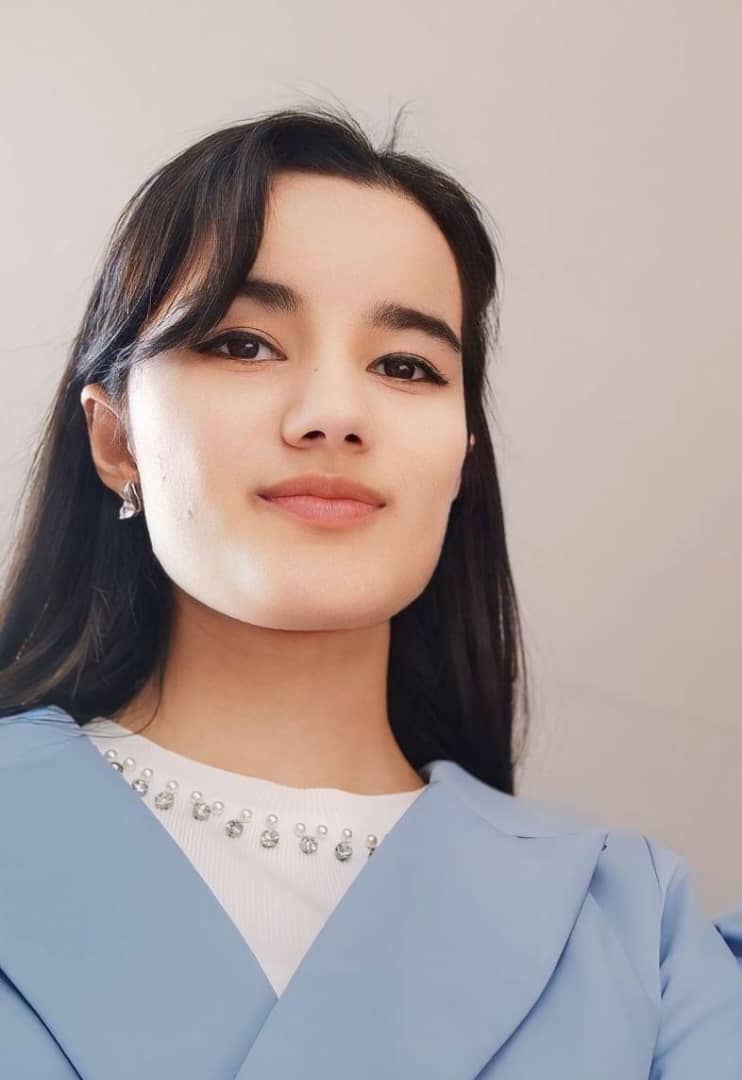
Zaripova is Mavluda Jumaniyaz’s daughter was born on May 8, 2004 in Urganch District, Khorezm Region. In 2011-2022, she studied at general secondary school No. 6 in Urganch and graduated with a certificate of excellence and a gold medal. Currently, she is a 2nd year student of Mathematics at Urganch State University. She is a Winner of a number of competitions, Olympiads and festivals, regular participant of various marathons and events, skilled stylist (women’s hairdresser), colorist, volunteer in “Golden Wing”, “Dillmir” and similar public and private organizations, as well as “Shine” a member of such academies and organizations as “Girls’ Academy”, “Laylo Academy”, “Legendary Youth Club”, “Young Leaders Club”.
Similar Posts by The Mt Kenya Times:
- Diaspora Times Global Oct 17 – Oct 23, 2026
- Is social media a blessing or a curse for university students?
- Light at last: How electricity is reshaping Nandi and Uasin Gishu
- The triple squeeze: how EPRA’s fuel price hike is reshaping the survival equation for the common mwananchi
- Zelenskyy accuses Trump of rewarding Putin as Pope pleads for peace from a hospital bed
About the Author