
By MKT Correspondent
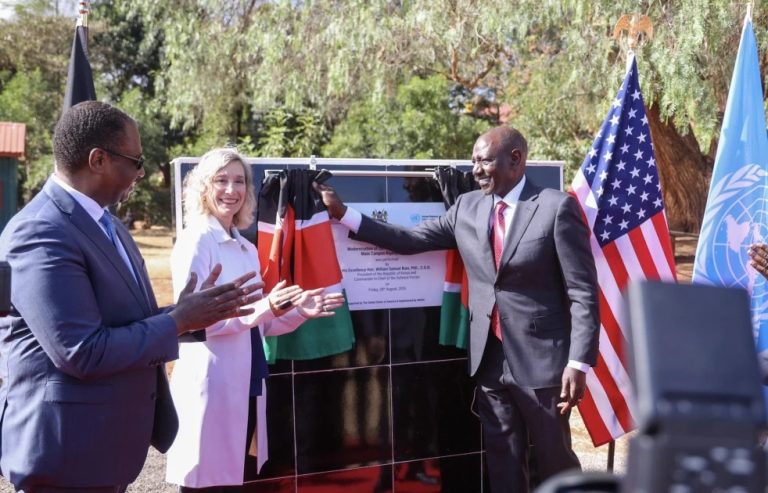
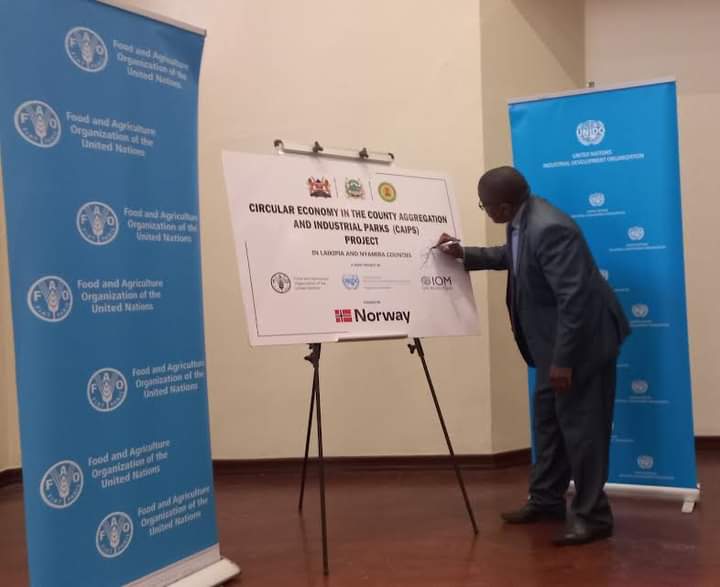
National Government, development partners, and counties are launching a one-year pilot project called “Circular Economy in the County Aggregation and Industrial Parks (CAIPs)” to address post-harvest losses, which currently account for 40 per cent of national production.
The project aims to create closed-loop systems where agricultural products are reused, repurposed, and recycled, reducing waste and maximising value.
The project is targeting two value chains, mainly banana and livestock, in Laikipia and Nyamira counties.
The Norwegian Government has funded the project with KSh193.5 million on top of what the Kenyan government has already invested in.
The project focuses on producing food in ways that protect and regenerate nature, ensuring that agricultural practices enhance biodiversity and restore ecosystems for future generations.
The cost to transform the global agrifood system to make it more resilient, nutritious, inclusive, and net-zero is estimated at about KSh65 Trillion a year for the next 10 years.
FAO) Interim representative in Kenya, Nyabenyi Tipo noted that agrifood systems should be solutions rather than problems, and the transformation should begin at the grassroots level within local communities.
The United Nations Industrial Development Organisation (UNIDO) Country Representative Tally Einav said that their role will be to create bankable green projects and platforms to help connect businesses that take up production through FAO and have created a business.
They will develop tailored guidelines for the two value chains to assist businesses in integrating circularity into their processes and provide training and technical support to enhance the capacities of policymakers and business organisations.
Asha Kerubo Myakwara, a banana farmer from Nyamira, said they have started value addition and utilisation of waste management from bananas due to high post-harvest losses of up to 46%. She hopes that from UNIDO, they will have zero post-harvest losses in their county.
“Through this we were able to reduce to 15 per cent, and we are hoping that from UNIDO we are going to have zero post-harvest losses in our county,” she said.
The project is also aligned with the Kenyan government’s prioritisation of food and nutrition security and ambition to establish CAIPS, promoting agro-processing and strong market linkages.
Similar Posts by The Mt Kenya Times:
- Mt Kenya Times ePAPER August 31, 2026
- Two weekends, two fronts: How DCP is fighting on both sides of the Atlantic
- Kalonzo becoming a movement: The quiet storm that is scaring Ruto
- Sifuna climbing the mountain: Kenya’s political map is being redrawn
- Counting regions, chasing power: Kenya’s road to 2027
About the Author