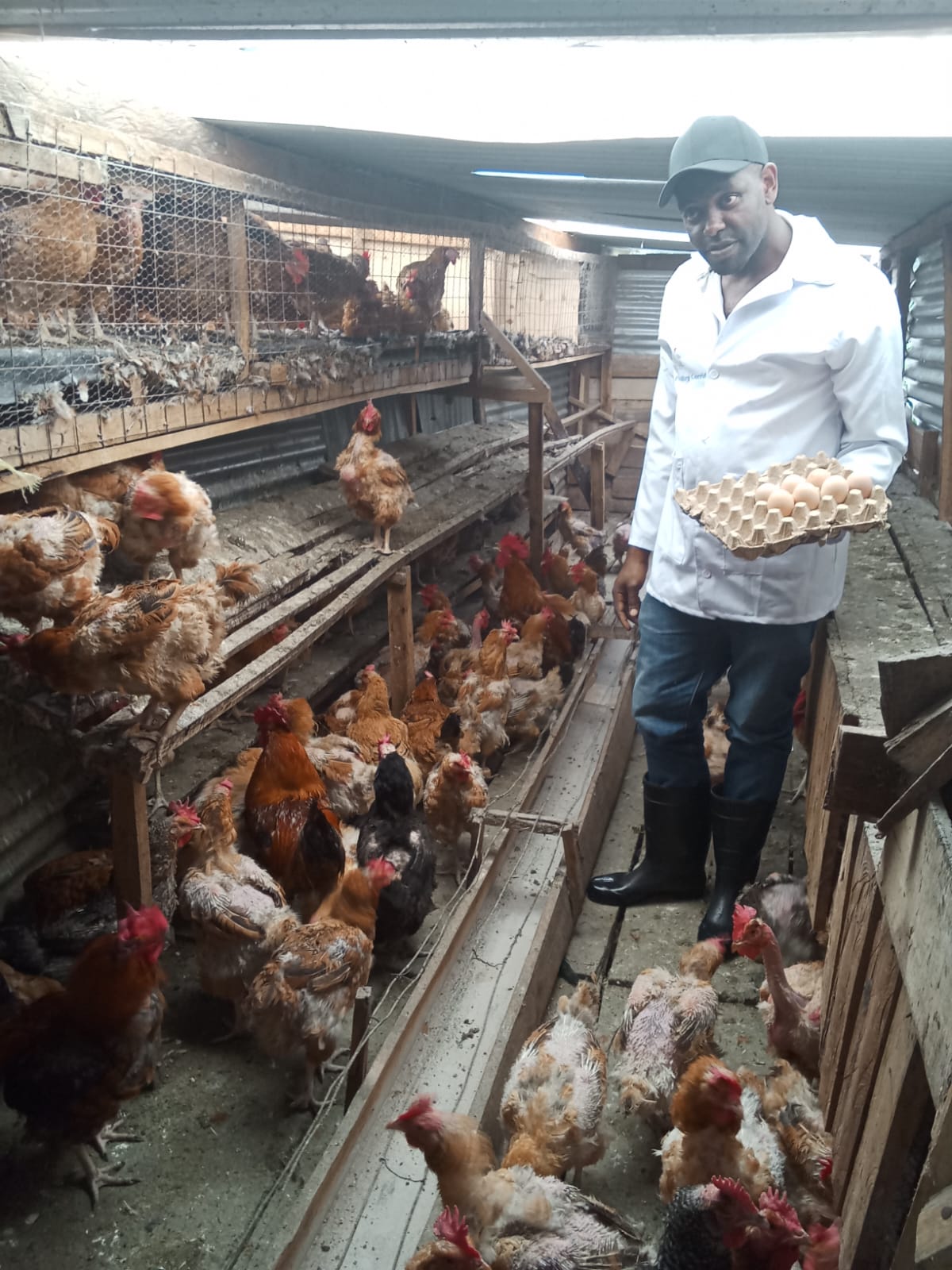
Samuel Wanjohi Kihagi in his pouty farm attending to his bird's and pigs.

By Paul Wanjiru
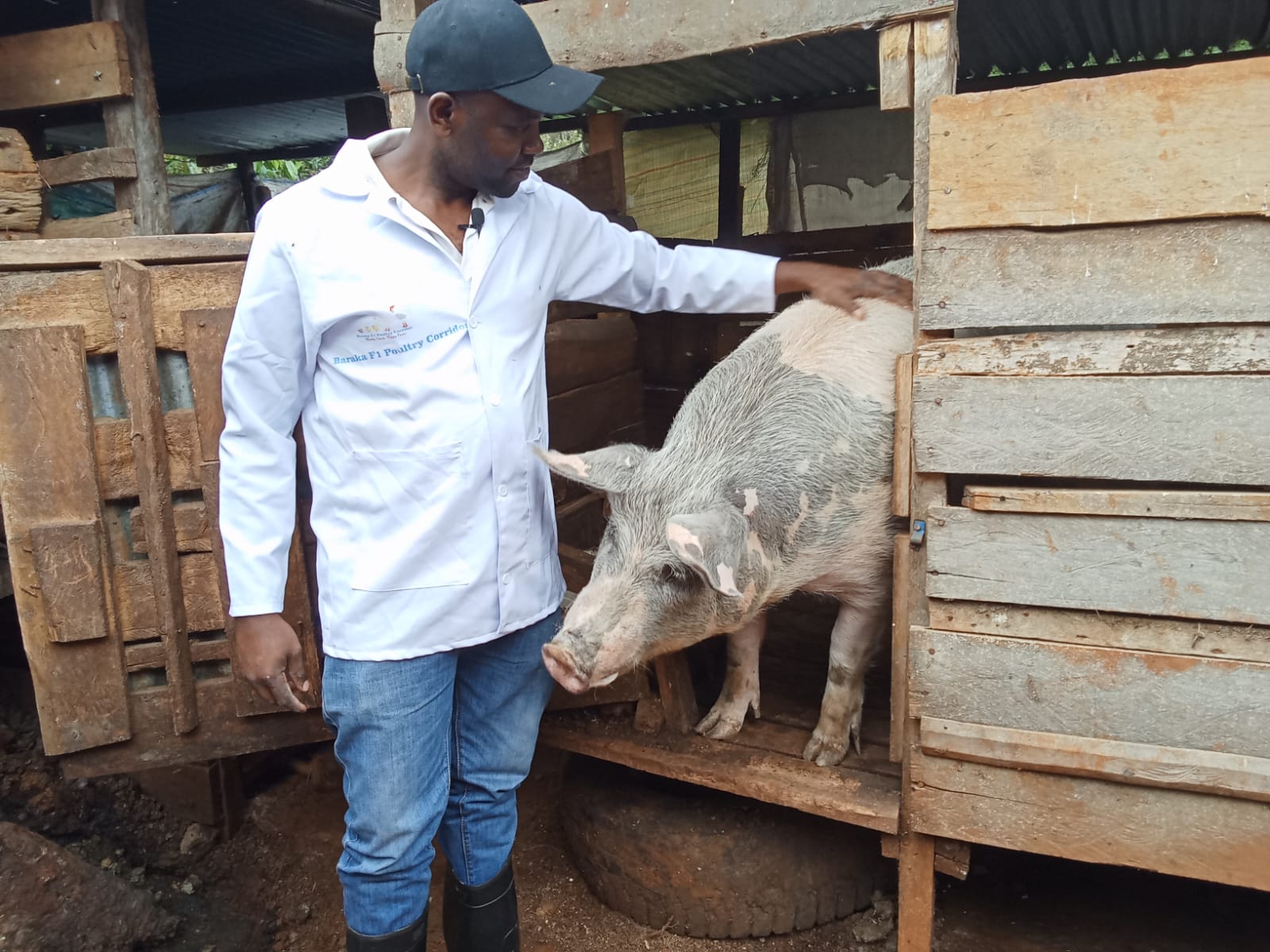
After working as a banker for eight years, Samuel Wanjohi Kihagi decided to quit his job and return to his home village to pursue poultry and pig farming. He started small, with only 50 chicks and two pigs, and today, his business has grown into a thriving poultry and pig farm known as Baraka F1 Poultry Farm.
For the past five years since starting the farm, Wanjohi has worked tirelessly towards his goal, although he believes he has yet to achieve it. His focus is on selling the Improved Kienyeji F1 breed not only within Kenya but also internationally.
Wanjohi has also been helping fellow villagers venture into poultry farming by teaching them how to vaccinate their birds for free. “I have been talking to local youths, telling them that one doesn’t need to pursue a white-collar job. Farming is also a viable option since it doesn’t require a lot of space or a huge amount of capital,” he says.
“The demand for this improved Kienyeji breed is very high, and we are struggling to meet it. Our birds lay fertilized eggs, which are scarce on the market,” Wanjohi explains.
He does not regret leaving his banking career, saying, “I don’t regret quitting my job because what I’ve achieved in farming over the last five years could not have been accomplished in my banking career.”
As the director of Baraka Farm, Wanjohi highlights the unique advantages of the Improved Kienyeji breed, describing it as a multipurpose chicken. “For those interested in eggs, these birds can lay continuously for up to 18 months. For those focused on meat production, the birds grow quickly when well-fed.”
Located in Othaya, Ruruguti, Iriaini Ward, Nyeri County, Baraka Farm was established in 2018. It has since expanded, with a capacity of 178 laying birds and 200 meat birds, with the price per kilogram of chicken meat going for 500 shillings.
Wanjohi acknowledges the challenges he faces, particularly in accessing veterinary services. He urges the government to support farmers by providing mobile veterinary officers, as many farmers have to travel long distances to find veterinary care.
Looking ahead, Wanjohi is confident that Baraka Farm will continue to grow, with plans to tap into both local and international markets through networking opportunities.
Similar Posts by The Mt Kenya Times:
- Nyeri youth reap big in Nick Mararo dancing competition
- Nyeri youth group in roasting and packing
- Nyeri’s call for proactive leadership: Reviving a legacy of national impact
- Attachees or office slaves?
- Opposition faults government over punitive taxes, warns against elections rigging
About the Author