
Echoes of Lahore in Poetry: A Conversation with Dr. Rizwan Akhtar
 The Mt Kenya Times
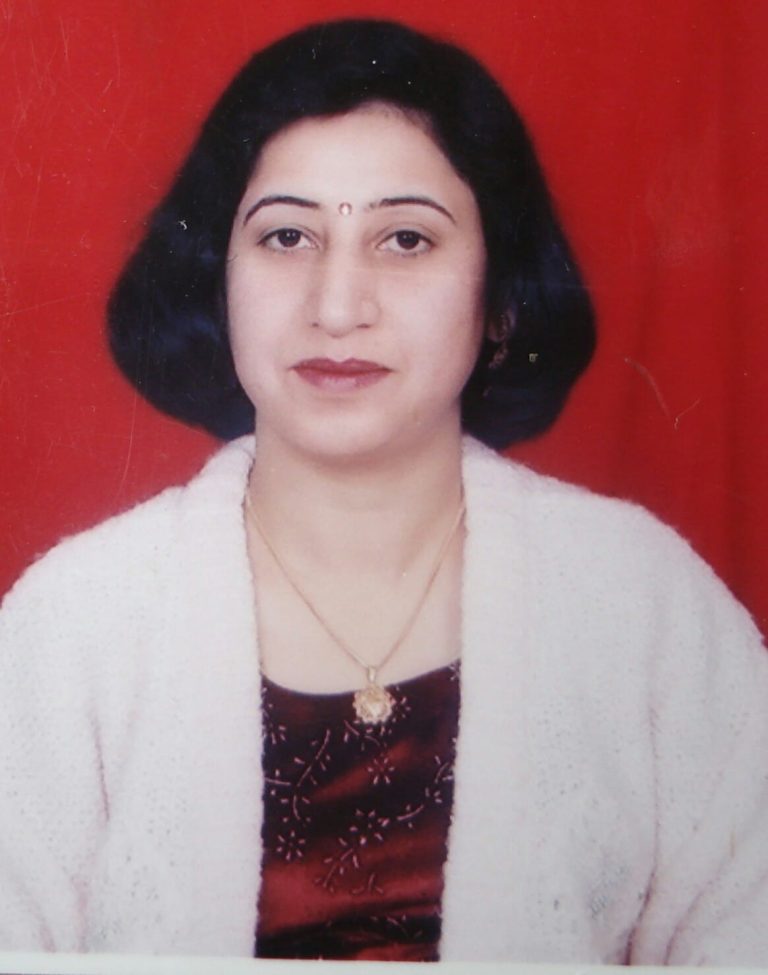
Dr Rizwan Akhtar

Tajalla Qureshi
tajallahqureshi@gmail.com
Co-founder and Co-Editor at
Wordsmith Magazine, Pakistan
Interviewer and Associate Editor at
Insight Magazine, United States
Member of Humanist of World Organization
What’s your story, and how did you begin your writing journey?
In the beginning, there were no signs. Still, as I became familiar with the world of books, I discovered a treasure trove of easy and impulse-driven pickings, as well as threatening tomes on philosophy and literature. At least I became aware of the fact that reading is an irreproachable and transgressive act, as the Urdu language poet John Elia once said, “Many people are writing when they should be reading.” One needs a mentor, a chaprona, to guide them, someone who can provide a temporary crutch, a shoulder, and initiation into the world of readings. I did not have that luxury. I proceeded with rustic fervor, and the books that came my way were an emotional, spontaneous, and jouissance-filled embrace, often of Urdu language poetry, both modern and classic. I had seen my friends, even sober-looking teachers, quoting philosophical and sentimental Urdu verses, and receiving admiration. I often found it obscene, typical, and restrained from showing the lurking desire to become a writer. But one day, I picked up William Wordsworth’s “The Child is the Father of Man.” Now, Urdu, Persian, Arabic, and English created a lingual strife, and I embarked on a journey to reconcile them, and there was a ceasefire. The college and early university days, with scant chances of using libraries and a dearth of libraries, created a consciousness of deprivation that transformed into a voracious appetite for poetry and other forms of literature. Arabian Nights, Ghalib, and Shakespeare invaded the vulnerable imagination. The journey was a “famished road,” paved with the desire to read and write.
What fortified you to start writing, and how has that inspiration evolved?
Earnestly, I must confess that my love for the city of Lahore, the city of my birth, of childhood, and a long ancestral trail has reinforced my writing. I owe everything to this city of splendor, of romance, of history, and, regretfully, the munificent city of opaque dust, now beset by the most polluted, ecological, and difficult-to-bear reality. Yet, the romance it holds out surpasses everything – violence, urban decay, and human greed. As Keats once wrote to Fanny, and which I paraphrase as “My cruelty is transient, but Love is permanent”. The City is a beloved, yearned-for, sought, wooed, metamorphosed, and disillusioned entity, a true Caritas, a selfless and enduring love that transcends its flaws. After all, a poet waits for the beloved. There is a grace in waiting, as well as an ache.
.

Can you share your creative process? How do you move from an idea to a finished piece?
These days, every writer is asked to demystify their creative process, as if it’s a puzzle that can be solved. I, however, believe that creativity is an innate process, a verb that’s plugged into our being. We’re created to create, so it’s impossible not to have a process in built. As we evolved as intellectual beings, took control of the planet, and built civilizations, we began to believe in a process of all sorts. Homo sapiens are creative, but they are not alone in this activity. But, in my opinion, the creative process is akin to trying to grasp a fistful of sand – the harder you squeeze, the more it slips away. Perhaps it’s a desire, a void that can’t be filled. To create is to bow down to a form, a shape, an alphabet, or a deity. For me, everything that becomes the content of poetry is inbuilt, but I externalize it with effort, this is the way you finish a piece if you accomplish something at all. Inspiration is for amateurs; work is for professionals. So, I’ve had to reconcile the formal, the craft, and the impulse, which is a delicate balancing act. It’s a bit like trying to find a needle in a haystack, but the needle is always moving, and the haystack is constantly shifting.
What aspects of Lahore’s cultural heritage resonates with you the most, and why
Primarily, history – encompassing architecture, folklore, and anecdotal past – still lives on as a vibrant ethos, resonating across generations. Today, the feeling of Anemoi contingent upon larger temporal and spatial life haunts my poetic self.
The Lahore I Am Coming is such an evocative title. What inspired it, and how does the city of Lahore influence the poetry within?
Yes! It is. As I departed Lahore in 2008, embarking on academic pursuits, the pain of leaving and the hope of returning melded into a melancholic dirge for a reunion with the lost beloved. In the absence, Lahore took on a fresh valence, the war on terror and the consequent debris that cities in my country bore, and Lahore too saw that deluge of violence, children killed in suicidal bombs, and sadly I reflected with a speculative aesthetics. Furthermore, some wounds are personal and deeper, and as Derrida says, the desire to hide is the desire to publish, so the paradox found its way into Lahore, I Am Coming. In this nostalgic cartography, the city’s jouissance was forever lost, yet its specter lingered, a haunting reminder of the past.
Did you face any challenges in capturing the essence of Lahore in poetry? If so, how did you overcome them?
I cannot say if I do precisely. Maybe the material challenge is that the city is getting more and more polluted, and we are doing nothing to stop it. Its cultural heart is still beating, but the echo is growing fainter, a bit more muffled with each passing day.
How do you handle writer’s block, and what strategies help you stay motivated?
Mediate. Wander, eat less, and read impulsively. There is no way to get out of it, unless you do.
What was your initial impression of Derek Walcott when you met him? Did it align with how you envisioned him through his poetry?
No, it didn’t align because I had never recognized the need to intertwine biography with poetry, compulsively. But he was amazing, green-eyed, with the Caribbean soul written all over him, and a nostalgia for St. Lucia that he wove seamlessly into his lectures. I wrote a poem, “Walcott Class of Poetry”, to commemorate those moments in the summer of 2010 spent at the University of Essex, where his words had truly come alive. As I look back, I realize that he had a way of ringing in the nuances of language, and his lectures were a true Augenblick – a fleeting moment of insight that has stayed with me ever since.
What role does feedback play in your writing process, and how should writers handle criticism?
Urgh! I listen to understand. (I sulk in private).
What habits or practices do you think every writer should develop?
Reading. (cultivate solitude)
Could you share a piece of your writing that you feel best represents your style or voice?
Love, Not Write
ever since I forgot to tell you the
last word was you a blank page
resembled you how can a poem
replace you only by some quirk of
time then wait and see yourself
defying the onslaught if couplets
but silence can be anthologized by
tomorrow’s anxiety of expression
we will be wordless and together.
—————————————————————————————————————
INTERVIEWER
Tajalla Qureshi – a literary enchantress who weaves embroideries of thoughts and passions with the delicacy of a leading artist in the realm of words. She is a gifted wordsmith from Pakistan.
In addition, she is the visionary Co-Founder and Co-Editor of “The Wordsmith E-Magazine, Pakistan,” where words are woven into magic. She is also an International Interviewer and Associate Editor at Insight Magazine, United States, and a member of the Humanist of the World Organization.
Furthermore, she was interviewed by Tamikio L Dooley from the United States and Abigirl Phiri from Zimbabwe, Africa.
Besides that, her writings including Poetry, Flash Fiction, Mirco Fiction and Creative Articles and Research Articles have been glorified in International Journals, more than 40 international and national anthologies, Global magazines, many international e-papers, and Online websites in Pakistan, America, Germany, Canada, Africa, the United Kingdom, Bangladesh, and India.
On the other hand, she has artistically read her poetry at the Pakistani Young Writer`s Conference held at Mandi Bahauddin and presented her paper at Kinnard College for Women in Lahore, Pakistan. She has also presented papers at an international conference in Uzbekistan. Like a shooting star, her literary presence blazes across the sky, leaving an indelible mark on the hearts and minds of all who encounter her work.
Similar Posts by The Mt Kenya Times:
- Mt Kenya Times ePAPER October 20, 2026
- Ruto rallies Kalenjin elders in Rift Valley unity push
- Sonko bid to nullify impeachment judgments fast-tracked in court
- Arrest the sponsors, not just the foot soldiers, Kalonzo tells police
- Police and politics shut down Kitale’s busiest market
About the Author


I have the privilege to be one of his students. His voice still cherishes my soul. I can see him, reading him.