By: Sharipov Dilshod Bakhshilloyevich
Senior Lecturer, Department of Social Sciences,Bukhara State Pedagogical Institute
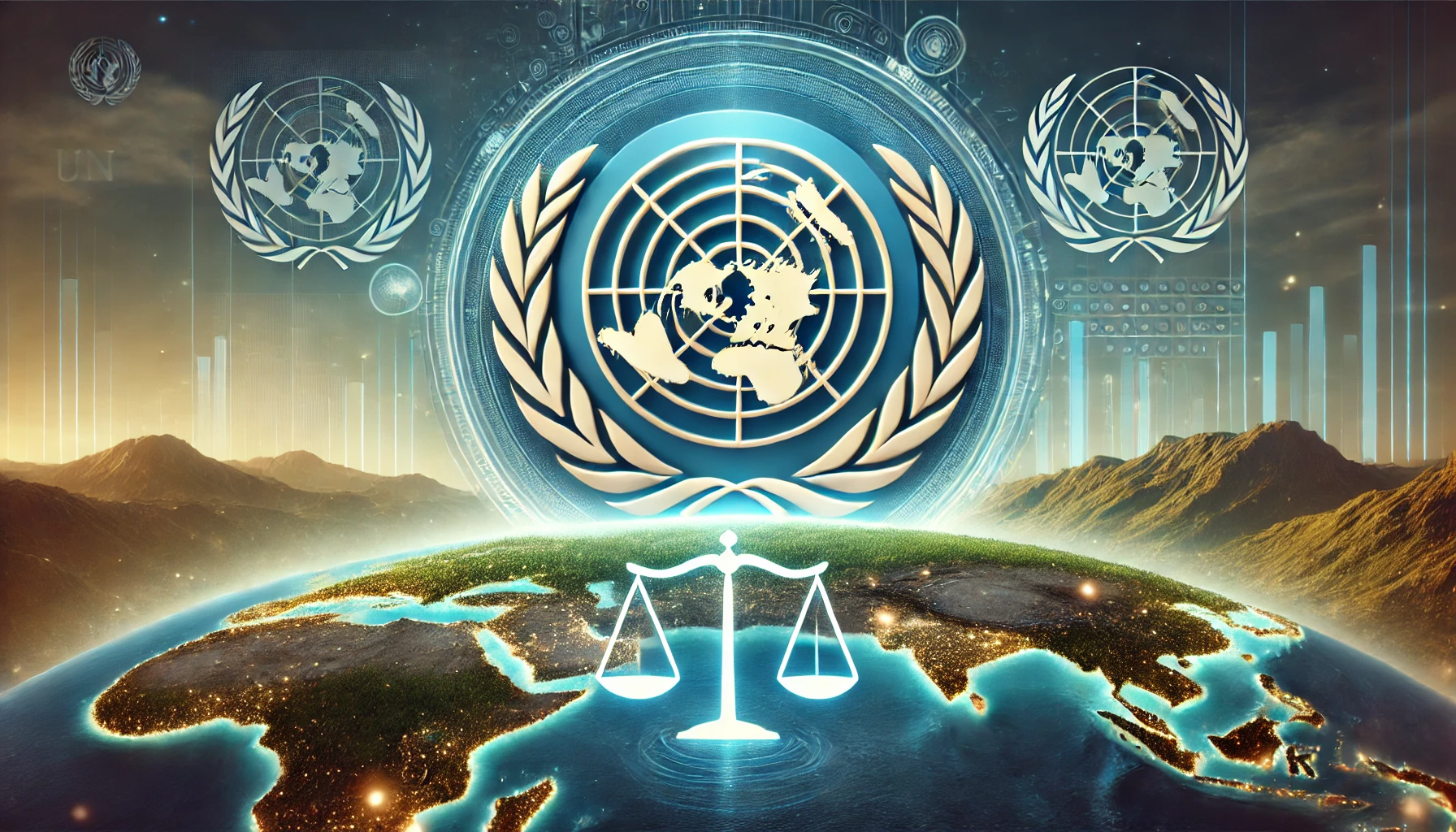
The term “United Nations” was first proposed by U.S. President Franklin Delano Roosevelt and was used in the “Declaration of the United Nations” signed on January 1, 1942. Shortly thereafter, from April 25 to June 25, 1945, the UN Charter was drafted at the International Conference on the Establishment of an International Organization held in San Francisco. On June 26, 1945, representatives of 50 countries signed the Charter of the United Nations. Poland later became the 51st founding member. Officially, the United Nations began functioning on October 24, 1945, and this date is celebrated annually as United Nations Day [1, pp. 3; 143–153].
THE POWER OF VETO
The primary purpose of establishing the UN was to prevent armed conflicts arising from international tensions and to curb the growth of armament [2, p. 942]. This implied a commitment to halting direct military actions by aggressors. Unlike the League of Nations, the UN called upon member states to strengthen their military, air, and naval forces to protect any victimized member state from unjustified attacks. However, the authority to implement military action solely rests with the UN Security Council. For any significant decision to be adopted, at least seven votes, including all five permanent members, must be in agreement. If any one of the permanent members exercises its veto right, the matter is effectively blocked and cannot be further discussed or resolved. Understandably, in times of crisis, the veto power can paralyze the Security Council. If the Security Council is unable to reach a resolution against an aggressor, the General Assembly may take over and issue a resolution [3, p. 942].
UN PEACEKEEPING OPERATIONS
The UN’s peacekeeping efforts began in 1948 with the establishment of a body to monitor compliance with peace agreements in the Middle East [4, p. 80]. That same year, peacekeeping missions were carried out in 110 countries, involving over 750,000 military, police, and civilian personnel. More than 1,500 peacekeepers have sacrificed their lives in the pursuit of peace. Despite its extensive operations, UN peacekeeping expenses account for less than 0.2% of global military expenditures [5, p. 81].
Security Council decisions launch peacekeeping operations, and the Secretary-General typically appoints a special representative to lead them. The military responsibility for each mission lies with the appointed military commander or observer [6, p. 82]. The UN does not possess its own standing army, and no single country provides permanent military forces for UN missions. Personnel and resources are provided voluntarily by member states [7, p. 82].
PEACE THROUGH DEVELOPMENT
In today’s context, peace and security should not be viewed solely as the absence of conflict. Sustainable peace is achieved through economic development, social justice, environmental protection, democratization, disarmament, and the protection of human rights. Peace can only endure when economic and social development is guaranteed [8, p. 87].
The UN’s peacebuilding efforts often aim at establishing structures that support long-term stability. These include securing human rights, organizing elections, developing local self-governance, improving healthcare and education, and fostering economic growth [9, p. 88]. The concept of “peace through development” is a central tenet of the UN’s peacebuilding strategy [10, p. 88]. Organizations under the UN umbrella such as the UN Development Programme (UNDP), UNICEF, the World Food Programme, and the UN High Commissioner for Refugees all play vital roles in reconstruction processes, providing opportunities for displaced individuals and building trust in national and local governance [11, p. 89].
The UNDP, established in 1965, plays a crucial role in maintaining global peace. Its three core objectives are:
Helping transform the United Nations into a strong, cohesive force for sustainable human development;
Mobilizing resources to address key development challenges, including poverty alleviation, job creation, and the advancement of women’s rights;
Expanding international cooperation in sustainable human development and providing essential resources to support such cooperation [12, p. 89; 13, p. 39].
UN DECLARATIONS ON PEACE
Throughout its history, the UN has adopted numerous documents affirming humanity’s right to peace and calling on all member states to uphold it. For instance, the 1984 Declaration on the Right of Peoples to Peace (General Assembly Resolution 39/11) reiterates that the UN’s main objective is to ensure international peace and security, stressing that in the nuclear age, peace is essential for the survival of civilization [14, p. 100].
The 1975 Declaration on the Use of Scientific and Technological Progress in the Interests of Peace (Resolution 3384 [XXX]) emphasizes that such progress should not be used to violate sovereignty, conduct aggressive wars, or suppress national liberation movements. It must also respect individual rights and personal inviolability [15, pp. 124–127].
UN PRESENCE AND COMMEMORATIVE DATES
Currently, the UN operates information centers, services, and offices in 77 countries [16, pp. 351–364]. In Uzbekistan, the UN office is located in Tashkent. The UN also designates specific international days and weeks to promote peace and solidarity, such as:
March 21: International Day for the Elimination of Racial Discrimination
March 21–27: Week of Solidarity with Peoples Struggling Against Racism and Racial Discrimination
June 4: International Day of Innocent Children Victims of Aggression
June 26: UN International Day in Support of Victims of Torture
First Tuesday of September: International Day of Peace
October 24–30: Disarmament Week
November 16: International Day for Tolerance
November 29: International Day of Solidarity with the Palestinian People
December 2: International Day for the Abolition of Slavery
December 10: Human Rights Day [17, pp. 349–351]
CONCLUSION AND PERSPECTIVES FOR REFORM
Overall, the pursuit of global peace and sustainable stability is inextricably linked to the internal peacebuilding, developmental, and governance policies of each individual nation. In this regard, the United Nations and its subsidiary institutions play a decisive role as impartial guarantors and facilitators of peace.
Nonetheless, in recent years, the call for reforming the United Nations has grown louder. The effectiveness and credibility of the UN—especially the Security Council—are often questioned due to the disproportionate influence granted by the veto power to its five permanent members (China, France, Russia, the United Kingdom, and the United States). In situations where international consensus is urgently required, the use of the veto can stall crucial decisions, thereby paralyzing the peacekeeping or humanitarian mission at hand.
Any proposed reform of the UN system, particularly of the Security Council, is a complex and sensitive issue. It requires a delicate balance between the principle of sovereign equality among all member states and the strategic interests of powerful nations. Therefore, any meaningful structural reform must emerge through extensive diplomatic engagement and, ultimately, the approval of those states that hold veto power.
Despite these challenges, the UN remains a cornerstone of international cooperation and a powerful symbol of humanity’s collective commitment to peace, justice, and sustainable development. It is through strengthening multilateral dialogue, enhancing the participation of underrepresented regions in decision-making, and ensuring fair implementation of resolutions that the UN can continue to fulfill its founding mission in the 21st century and beyond.
Similar Posts by The Mt Kenya Times:
- Mt Kenya Times ePAPER September 29, 2026
- Kenya’s ageing crisis: Act now or pay later
- NYS fights to save KSh2.1B Nakuru road deal in court
- Leaders rally round Karua after father’s death
- Lamu residents: Compensate us first
About the Author