Tetu Constituency Boycott Government’s Empowerment Programme Initiative With Organizers Being Forced To Hire Attendees
 The Mt Kenya Times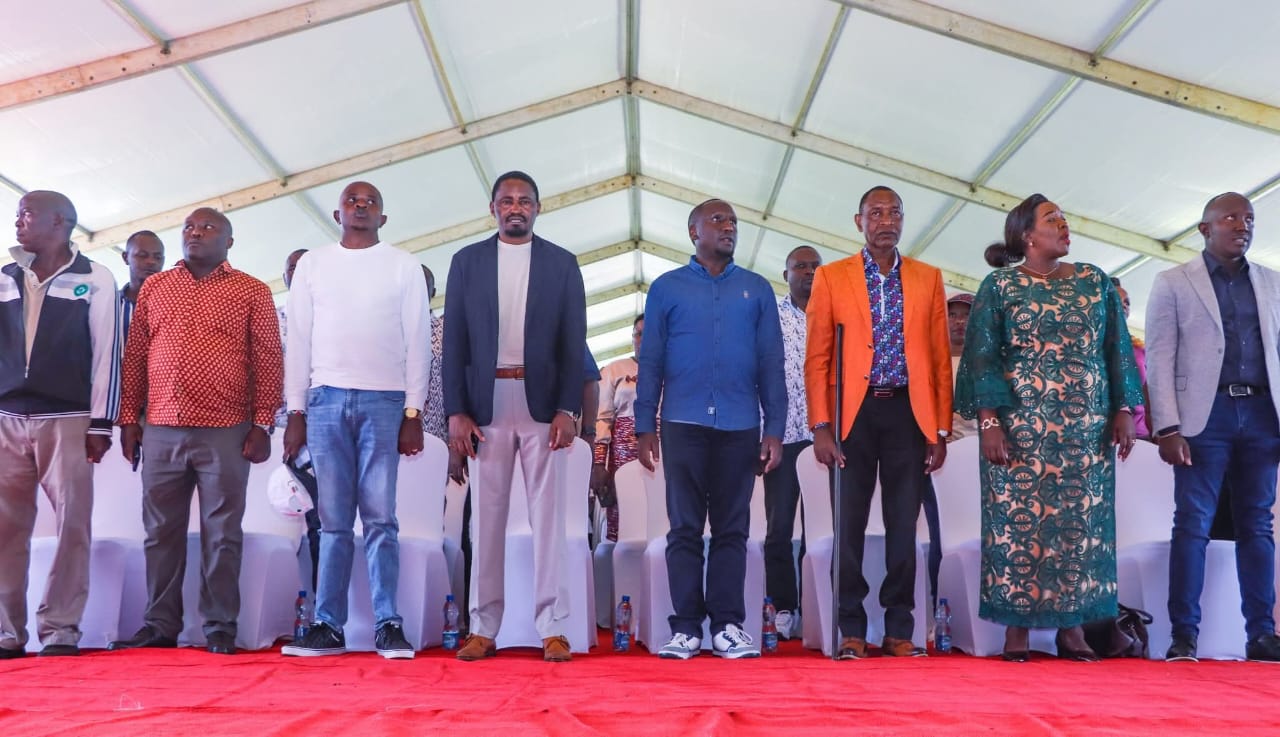
Tetu Constituency Government's Empowerment Programme Initiative organizers

The Locals Gave The Event A Wide Breath, Saying They Wanted Infrastructures Like Roads And Not Not Rhetoric
By Rodgers Wagura
What was billed as a grand “Bottom-Up Empowerment Day” in Tetu Constituency on Friday sparked widespread criticism and public outcry among residents, who dismissed the highly publicized gathering as an empty political spectacle devoid of meaningful impact.
The event, held at Wamagana Stadium, was led by Nyeri Senator Wahome Wamatinga and graced by among others, Energy Principal Secretary Alex Wachira.
Despite the fanfare and presence of senior leaders, the low turnout of local residents was glaring. Many of those in attendance were reportedly ferried in from neighboring constituencies, with residents observing a conspicuous number of school buses some from as far away as Kieni used to fill the crowd.
“The stadium had more strangers than locals,” said Mary Wanjiru, a small business owner in Wamagana.
“We are the people who should be empowered, but our shops were forced to close, and we were harassed by police for not attending. That’s not empowerment. That’s intimidation.”
Tetu MP Geoffrey Wandeto was notably absent from the event a decision that further fueled speculation that the meeting had more to do with political optics than community upliftment.

His supporters argue that the MP was left out of the planning and that the event was orchestrated as a platform for political grandstanding.
One of the main draws of the event appeared to be the choppers and high-profile motorcades that descended on Tetu.
“We only came to see the helicopters,” admitted Peter Maina, a local boda boda rider. “But after that, it was just empty speeches. No talk of roads, no talk of schools or medicine. That’s not what we need.”
The flashpoint of anger centers on the stalled Mau Mau Roads project, a long-promised infrastructure development aimed at improving mobility and honoring the region’s freedom fighters.
Years of political pledges have yielded minimal results, and locals are losing patience.
“These roads are more than just tarmac—they’re about dignity and economic opportunity,” said constituency manager Mathu. “Yet they come here to talk big and do little.”
Critics say the event was little more than a political platform for Senator Wamatinga, who is believed to be positioning himself for higher office. “It’s a PR exercise,” said James Karuga, known locally as Omo, a vocal community leader. “They spent all this money to stage a show, while schools have no desks and hospitals have no drugs.”
Worse still, some residents say that those who refused to participate were intimidated by police and local administration officers. Businesses were forced to close to make way for the event, leading to losses for small traders.
“There is no empowerment in disruption,” another local lamented. “We need action, not shows. If that budget was used to improve capitation in schools or restock our clinics, we’d be better off.”
Defenders of MP Wandeto pointed to his ongoing development record, contrasting it with the theatrics of the empowerment day. Wandeto, who has served as MP since 2022, has directed funds through the NG-CDF and Uwezo Fund to support youth and women’s groups, renovate schools, and initiate construction of digital hubs.
One of his flagship initiatives a KSh 67 million Huduma and Youth Resource Center—is nearing completion and expected to serve thousands of residents. His supporters say this is the kind of practical empowerment that makes a real difference.
“Giving bursaries, building schools, fixing roads—that’s real empowerment,” said Omo. “Our MP has been knocking on government doors to get Mau Mau Road prioritized. That’s what matters.”
Indeed, infrastructure such as the Ihithe–Ndunyu Njeru road has seen progress under Wandeto’s leadership, with continued lobbying for further development.
What emerged from this week’s meeting is a clear message from the people of Tetu: they want development, not distractions. From stalled roads and underfunded schools to empty health centers and neglected youth, the real needs remain unaddressed.
“We’re not asking for miracles,” said Mathu. “We’re asking for roads, education, and healthcare. Things we can see and touch—not speeches from people who don’t even represent us.”
In the wake of the event, locals are also questioning the source and utility of the funds used to organize such large-scale political functions. “Where did the money come from?” asked a retired teacher. “Couldn’t that be used to improve our schools or build a dispensary? They gave people food today, but what about tomorrow?”
As political tensions simmer in Tetu, the incident has sparked a broader conversation about how public resources are used—and misused—in the name of “empowerment.” Residents are demanding that county and national leaders stop treating them as a backdrop for political theater and instead focus on delivering the services they so desperately need.
One elderly attendee summed up the public sentiment: “Empowerment is not what you say on a stage. It’s what we see on our roads, in our schools, in our homes. Right now, all we’ve seen is a show—and Tetu is not amused.”
Some of the other leaders who attended the meeting included Mwangi Kiunjuri, Ann Wamuratha, Njoroge Wainaina, Aron Cheruiyot and Eric Wamumbi.
Similar Posts by The Mt Kenya Times:
- Mt Kenya Times ePAPER October 27, 2026
- Sifuna draws hope from Serbia and Brazil as Kenya’s 2027 race heats up
- Uhuru calls for unity as he marks 65th birthday
- Kenya establishes international crimes division: Justice delayed, but will it be delivered?
- World marathon champion Jepchirchir suspended in fresh blow to Kenya’s clean sport drive
About the Author