What Happens When the Storytellers Are Silenced? Media Leaders Seek Answers
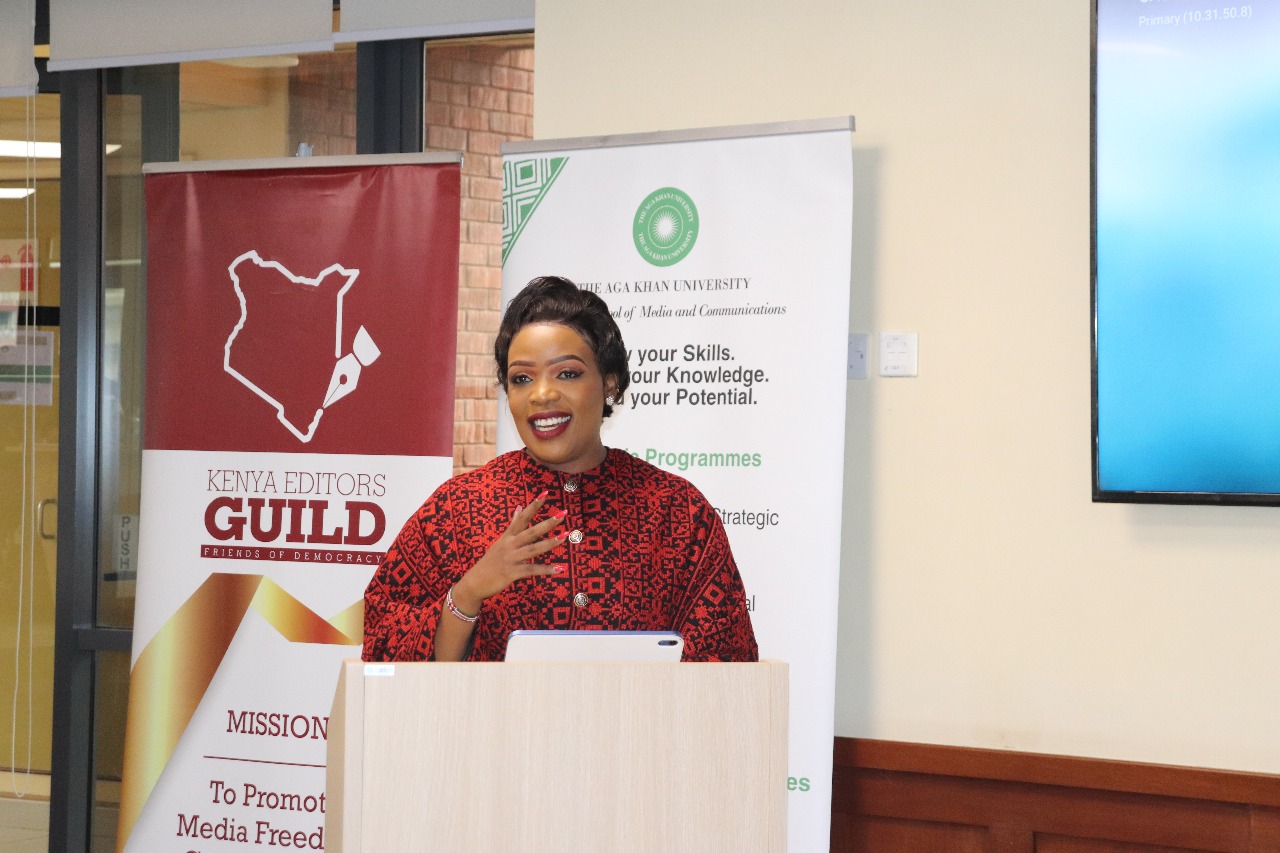
In picture, Kenya Editors Guild President Zubeidah Kananu, giving her remarks, during the Sexual Harassment in Media dialogue at the Aga Khan University in Nairobi.
By Aoma Keziah,

The Editors’ Guild of Kenya (KEG), together with partners from the wider media community, hosted a half-day dialogue at Aga Khan University on the issue of sexual harassment in the media industry.
The forum drew journalists, newsroom managers, gender specialists and human rights advocates to the same table, with the goal of finding practical solutions to a problem that has long undermined both professionalism and safety in newsrooms.
In her opening remarks, KEG President Zubeidah Kananu noted that To every survivor, their story and career matters.
“You deserve justice not just policy. Newsrooms must be safe before the story breaks. Leaders, audit your policies, staff must demand accountability,” she stated.
Speakers highlighted the need for clear reporting channels, stronger institutional policies, and a culture of accountability within media houses. They stressed that harassment, in whatever form, not only harms individuals but also weakens the integrity of journalism.
“The media doesn’t just report the news it shapes the conscience of society. But what happens when the storytellers themselves are silenced by fear?,” asked Aga Khan University Dean GSMC Nancy Booker.
Senior Lecturer,TUK Julius Bosire , highlighted that we are not brought up to understand these are your sisters and brothers, Sexual harassment thrives when we see colleagues as targets rather than family.
“I Recommend mandatory newsroom family ethics training for all media staff, and professional kinship. Create a unified National Media Code against harassment, requiring adoption for licensing,” he remarked.
Participants also shared personal experiences and recommendations on how to support colleagues who come forward with complaints. Gender experts called for regular training sessions and awareness campaigns, noting that many victims remain silent due to fear of retaliation or lack of trust in existing systems.
By the end of the dialogue, stakeholders agreed on the importance of sustained action. They committed to working together to ensure safer and more inclusive workplaces, where journalists can focus on their craft without fear of intimidation or abuse.
Similar Posts by Aoma Keziah:
- Nationwide Youth Business Drive Enters Last Lap With New Nyota Trainings
- Green Light From Washington Sets G42 On Fast Track to Build Region’s Most Powerful AI Network
- Safina Eyes Kariobangi North Seat in Intensified Push Before Poll Day
- KEBS Opens Talks With Manufacturers On New Standards Levy Order 2025
- Kenya, Uganda And South Sudan Chart Way Forward On East Africa Rail Corridor
About the Author


 The Mt Kenya Times