DR Congo’s 17th Ebola battle: WHO chief arrives in Kinshasa as death toll mounts
 The Mt Kenya Times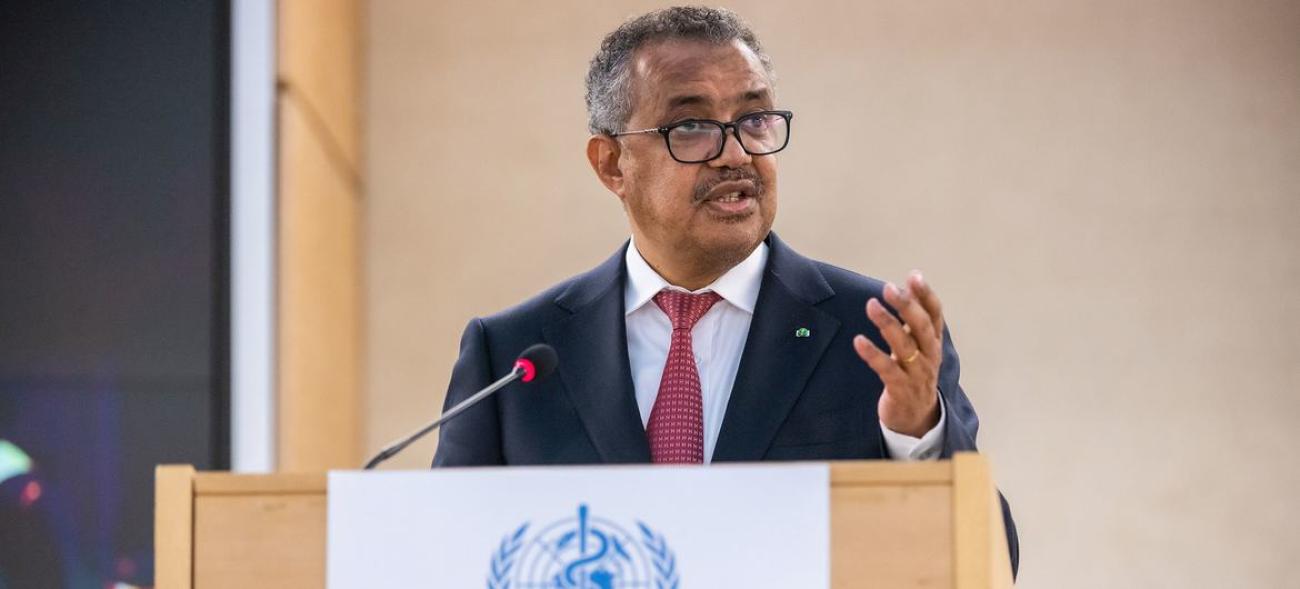
World Health Organization Director-General Tedros Adhanom Ghebreyesus
With no vaccine, no ceasefire, and more than 200 dead, the world’s top health official has flown into the heart of an outbreak that is testing even DR Congo’s formidable epidemic resilience.
By Norman Mwale
The World Health Organization Director-General, Tedros Adhanom Ghebreyesus, arrived in Kinshasa on Thursday to lead the international response to the Democratic Republic of DR Congo’s seventeenth Ebola outbreak, which has killed more than 200 people and infected over 900 since the government declared a surge on 15 May.
The visit marks the most senior-level international engagement since the outbreak was declared a public health emergency of international concern — a designation that unlocks accelerated global funding and coordination. Tedros travelled first to the capital before heading to Ituri province in the country’s northeast, where cases were first detected weeks ago and where the virus continues to circulate amid active conflict and widespread displacement.
DR Congo has faced Ebola sixteen times before and beaten it every time. Tedros arrived carrying that history as both shield and rallying cry. “This country has defeated Ebola 16 times. The 17th will be no different. But we must act now, together,” he posted on X before departing for Kinshasa. The message was deliberate — part reassurance, part warning. The confidence is earned. The urgency is real.
What makes this outbreak particularly alarming is the strain at its centre. Unlike previous outbreaks that involved the better-known Zaire strain, for which approved vaccines and treatments exist, this one involves the Bundibugyo variant — a rarer, less-studied strain for which there is currently no licensed vaccine and no proven therapeutic. Health authorities are therefore operating without the pharmaceutical safety net that helped contain DR Congo’s deadly 2018 to 2020 outbreak in North Kivu, which killed more than 2,000 people and became the second-largest Ebola outbreak in recorded history.
The WHO said it is moving swiftly to close that gap. In partnership with DR Congo’s national medical research institution, the agency is expanding its laboratory network across the affected region to accelerate case confirmation, reduce diagnostic turnaround times, and enable faster isolation of infected individuals. Real-time data, health officials argue, is the single most powerful tool available in the absence of a vaccine — it determines how quickly contacts are traced, how efficiently resources are deployed, and how much of the virus’s spread can be interrupted before it takes hold in new communities.
But the outbreak is not unfolding in a vacuum. Eastern DR Congo remains one of the most complex humanitarian environments on the planet. Armed groups continue to operate across Ituri and neighbouring provinces, displacing civilians into overcrowded camps where disease spreads easily and health workers struggle to gain access. Tedros addressed this directly and without diplomatic softening: “We cannot build community trust or isolate the sick while bombs are falling,” he said.
The WHO chief used his platform to call on all warring parties in eastern DR Congo to agree to an immediate ceasefire for humanitarian purposes, warning that ongoing fighting is fracturing the containment corridors that response teams depend on. Aid convoys have been turned back. Health facilities have been attacked. In some communities, misinformation and deep-rooted distrust of outside intervention have made community engagement — the backbone of any effective Ebola response — extremely difficult to sustain.
Health officials acknowledged these challenges while insisting that the response, led by the DR Congolese government with WHO support, remains on track. DR Congo’s experience base is substantial. The country has built an institutional memory around Ebola that few nations possess, having navigated outbreaks in remote forests, urban centres, and active conflict zones over four decades. Epidemiologists, contact tracers, and community health workers who have confronted the virus before are being redeployed to Ituri, bringing hard-won knowledge that no training manual can fully replicate.
International partners including the United States Centres for Disease Control and Prevention, Médecins Sans Frontières, and UNICEF have confirmed their operational presence in the region, though all have noted that security conditions and community resistance remain the primary obstacles to an accelerated response. Funding commitments from donor governments are being fast-tracked following the emergency declaration, though advocacy groups have cautioned that money announced in capitals often arrives in the field weeks too late.
For the families of the more than 200 people already lost to this outbreak, the geopolitics of emergency declarations and laboratory networks are abstractions. In the villages of Ituri, where some households have lost multiple members, Ebola has returned with the particular cruelty it reserves for communities already exhausted by war and poverty. Health workers say they are encountering grief layered on grief — people who have already buried too many and are now burying again.
Tedros’s arrival will not, by itself, stop the virus. No visit does. But it signals to the DR Congolese government, to donors, to warring factions, and to the communities at the outbreak’s centre that the world is watching and that the institutional weight of the global health system is engaged. Whether that engagement translates into the speed and scale the moment demands will be determined not in Kinshasa’s conference rooms but in the villages of Ituri, where health workers are rising before dawn to trace contacts, earn trust, and hold a line against a virus that has never once waited for the world to be ready.
DR Congo has beaten Ebola sixteen times. The seventeenth battle has begun — and this time, it is fighting without a vaccine, in a war zone, against a clock that does not stop.
Similar Posts by The Mt Kenya Times:
- Love came home to Sheema
- When strength becomes silence
- Keeping a flame alive: The Turkic world’s debt to Ganira Pashayeva
- Dr Rania Lampou: The woman who turned a classroom into the world
- The Darkness Within: A Critical Review of Joseph Conrad’s Heart of Darkness
About the Author