Court nullifies Maraga’s advisory on dissolution of parliament over gender rule
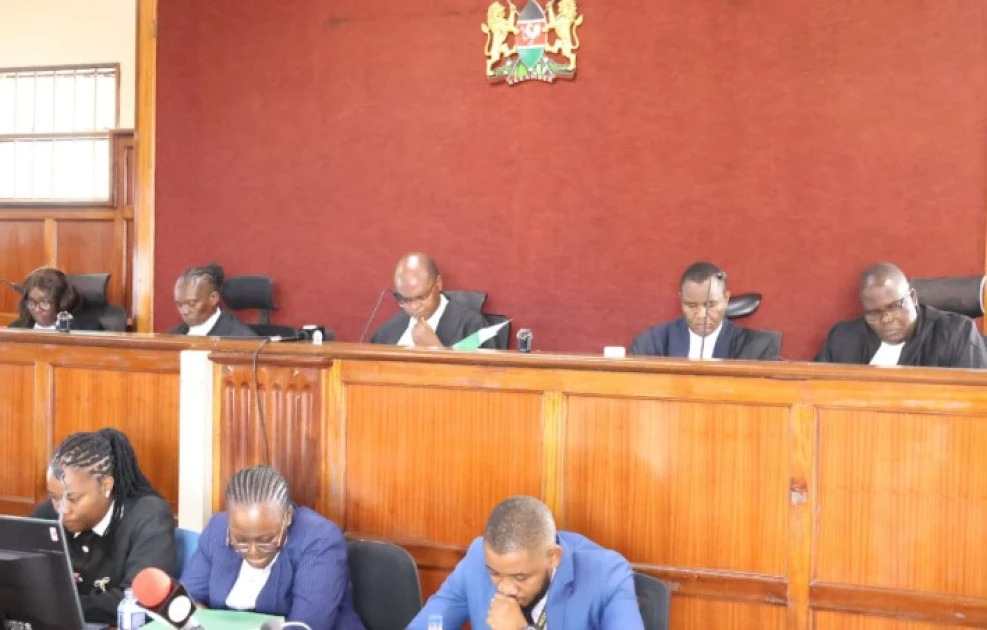
A five-judge bench of the High Court
Court nullifies Maraga’s advisory on dissolution of parliament over gender rule
A five-judge bench rules the former Chief Justice overstepped his constitutional mandate, but affirms that parliament’s gender obligations remain firmly intact
By MKT Reporter
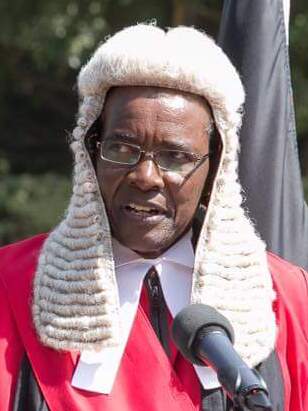
A five-judge bench of the High Court has declared unconstitutional an advisory issued by former Chief Justice David Maraga recommending the dissolution of Parliament for failing to implement the Constitution’s two-thirds gender principle.
The ruling, delivered by the Constitutional and Human Rights Division in Nairobi, settled a long-running dispute that had placed three arms of government in direct tension — a legislature accused of chronic non-compliance, a former Chief Justice who believed he had exhausted patience, and a presidency that declined to act. The bench held that Maraga’s advisory did not constitute a binding constitutional directive capable of compelling the President to dissolve Parliament, and quashed it in its entirety.
The case arose from Parliament’s repeated failure to enact legislation required to give effect to the constitutional requirement that no more than two-thirds of members of any elective public body be of the same gender. Article 261 of the Constitution had set clear timelines for Parliament to operationalise various provisions, including the gender rule. Those deadlines came and went without meaningful legislative action, and frustration among gender equality advocates deepened with each passing electoral cycle.
It was against that backdrop that Maraga formally notified the Speakers of the National Assembly and Senate, as well as the Attorney General, that continued non-compliance could trigger constitutional sanctions — up to and including the dissolution of Parliament. Petitioners in the case argued that years of legislative inaction had left the former Chief Justice with little practical choice but to invoke enforcement mechanisms to safeguard constitutional supremacy. They maintained he acted squarely within his mandate.
Some petitioners went further, urging the court to find that the President was under a constitutional obligation to act upon receiving such advice. They argued Parliament ought to have been dissolved within a reasonable period — proposing a maximum of 21 days — and that presidential inaction should have caused Parliament to be deemed dissolved automatically. They also contended that Parliament’s persistent defiance of constitutional requirements undermined its standing to defend itself in legal proceedings arising from those very breaches.
The bench was unmoved by those arguments, though not without affirming the underlying constitutional obligations that gave rise to the dispute. The judges drew a careful distinction between Parliament’s duties and the legal weight of the Chief Justice’s advisory. They affirmed that responsibility for enacting constitutionally required legislation rests with Parliament as an institution, not with individual lawmakers, and that those obligations survive changes in membership and successive electoral cycles. “The Constitution does not permit institutional failure to defeat its own enforcement mechanisms,” the court observed.
That declaration will provide some comfort to gender equality advocates who feared the ruling might dilute Parliament’s accountability. The court was emphatic that constitutional duties remain enforceable. What it rejected, firmly, was the proposition that an advisory from the Chief Justice could serve as a self-executing instrument — one that automatically sets in motion the dissolution of a co-equal arm of government without further legal process.
Constitutional enforcement mechanisms, the bench reasoned, must be grounded in proper legal interpretation and judicial process. The assumption that an advisory opinion creates binding obligations on the President, or triggers automatic consequences, finds no support in the constitutional text. To hold otherwise, the judges implied, would be to permit a single office to unilaterally alter the balance of constitutional power — an outcome the framers of the Constitution plainly did not intend.
The ruling arrives at a moment when the gender principle remains one of the most persistently unresolved constitutional obligations in Kenya’s post-2010 order. Parliament has faced petitions, court orders and public censure over its failure to legislate on the two-thirds rule, yet successive assemblies have produced little more than procedural manoeuvres and stalled bills. The Constitutional Implementation Oversight Committee has repeatedly flagged the gap, while civil society organisations have grown increasingly impatient with what they describe as deliberate legislative avoidance.
For Maraga, the judgment is a rebuke — though not an entirely unexpected one. Legal scholars had questioned from the outset whether an advisory, however strongly worded, could carry the constitutional weight he appeared to attribute to it. His defenders argue he was attempting to force accountability in the absence of any other viable mechanism, and that the President’s silence left him with few options. Critics counter that the separation of powers demands institutional restraint even in the face of institutional failure.
The court’s ruling does not absolve Parliament. If anything, it redirects attention squarely back to the legislature and to the political will — or lack thereof — that has allowed the gender principle to languish for 15 years since the Constitution was promulgated. The bench’s reminder that constitutional obligations survive changes in parliamentary composition is, in effect, a message to the current assembly: the duty has not expired, and the courts remain available to those who choose to pursue enforcement through proper channels.
For the millions of Kenyan women whose equal participation in public life the two-thirds principle was designed to protect, the ruling changes the mechanism but not the urgency. Parliament still owes the Constitution a law it has never written.
Similar Posts by The Mt Kenya Times:
- Mt Kenya Times ePAPER October 26, 2026
- Sakaja challenges Kamukunji police over Eastleigh suspect bail
- Muturi demands binding livestreaming rules for 2027 polls to prevent repeat of 2022 chaos
- NTSA calls for road safety to be declared a national disaster after 24 die in Mtito Andei crash
- Ruku turns on Waiguru over deputy president ambitions: ‘That seat is not being contested for’
About the Author