Agĩkũyũ elders and scholars to convene in historic first national cultural gathering
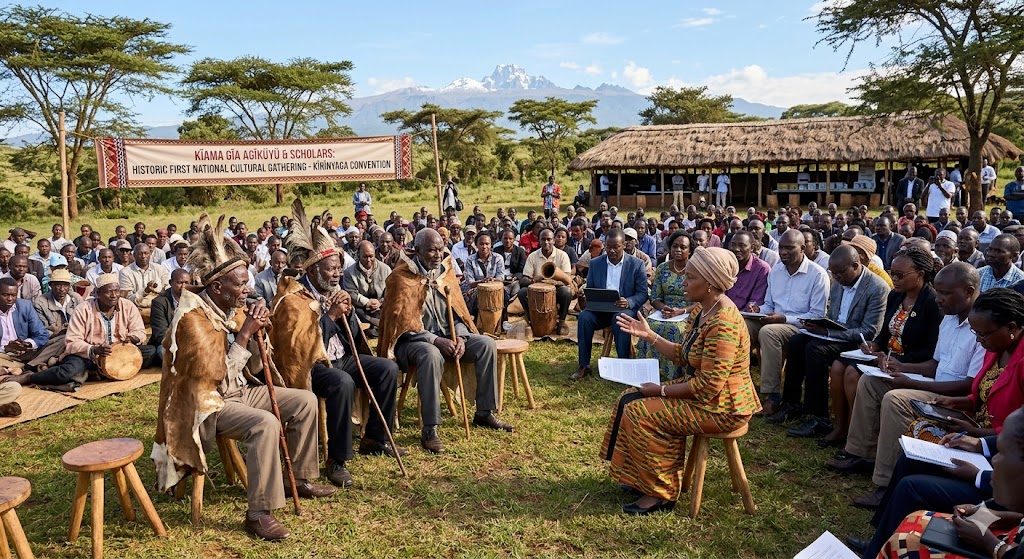
Agĩkũyũ elders and scholars to convene in historic first national cultural gathering
The three-day convention at Kenyatta University, opening on 17 June, seeks to revive ancestral wisdom and chart a century-long vision for one of Kenya’s most influential communities
By MKT Reporter
The first National Agĩkũyũ Culture Convention opens at Kenyatta University Conference Centre in Nairobi Tuesday next week, bringing together elders, scholars, cultural practitioners, and community leaders for a three-day gathering billed as the most significant intellectual and cultural assembly the community has convened in the modern era.
Organised by the Maina and Mwangi Trust alongside the Ngemi na Ndũhio Cultural Association, the convention runs from 17 to 19 June under the theme Kūriūkia Riiri wa Rūrīrī — Reviving the Glory of our Culture. It is structured around three thematic pillars, draws presenters from across Kenya and the diaspora, and is designed to be the first of what organisers hope will become a regular fixture — held annually or biennially — in the cultural life of the Agĩkũyũ people.
The scale of ambition is considerable. This is not a festival, and its architects are at pains to say so. Unlike popular cultural events such as Nduumo or the numerous musical showcases that celebrate Gĩkũyũ identity through performance, the convention is conceived as a gathering of the learned — a forum in which ideas are stress-tested, knowledge systems are examined, and the long-term trajectory of the community is debated with rigour.
The convention celebrates the community’s rich cultural and spiritual heritage while creating space for intellectual engagement, reflection, and collective renewal — rekindling the values, knowledge systems, and cultural frameworks that have long defined the Agĩkũyũ people.
At the heart of the gathering is a striking metaphor borrowed from Gĩkũyũ tradition: the search for Kanya ka Rũrĩrĩ, the lost divination gourd said to contain the wisdom and essential codes that once governed the proper functioning of the tribe. Organisers describe the convention not as a nostalgic exercise in cultural preservation, but as an active recovery mission — an attempt to locate what has been misplaced in the rush of modernisation and to make it useful again.
The discourse is structured around three pillars. The first, Mũgĩkũyũ, Ngai wake na Ũngai Wake, addresses spirituality and worldview — the philosophical traditions, ethical values, and deep spiritual foundations that have historically defined community identity. The second, Ũtonga wa Mũgĩkũyũ, or Holistic Wealth, interrogates economic foundations, health systems, and the community’s relationship with family and land. The third, Ira, Ũmũthĩ na Rũciũ — Past, Present, and Future — is explicitly intergenerational, connecting historical memory to contemporary realities and mapping what organisers describe as a bold, 50 to 100-year strategic vision for the community.
That last pillar carries particular weight at a moment when the Agĩkũyũ — historically one of Kenya’s most economically active and politically influential communities — find themselves navigating a rapidly shifting national landscape. The Mt Kenya region has witnessed significant political realignment in recent years, with shifting alliances and contested leadership raising questions about the community’s collective direction. Against that backdrop, the convention’s insistence on long-term strategic thinking rather than short-term political positioning is itself a statement.
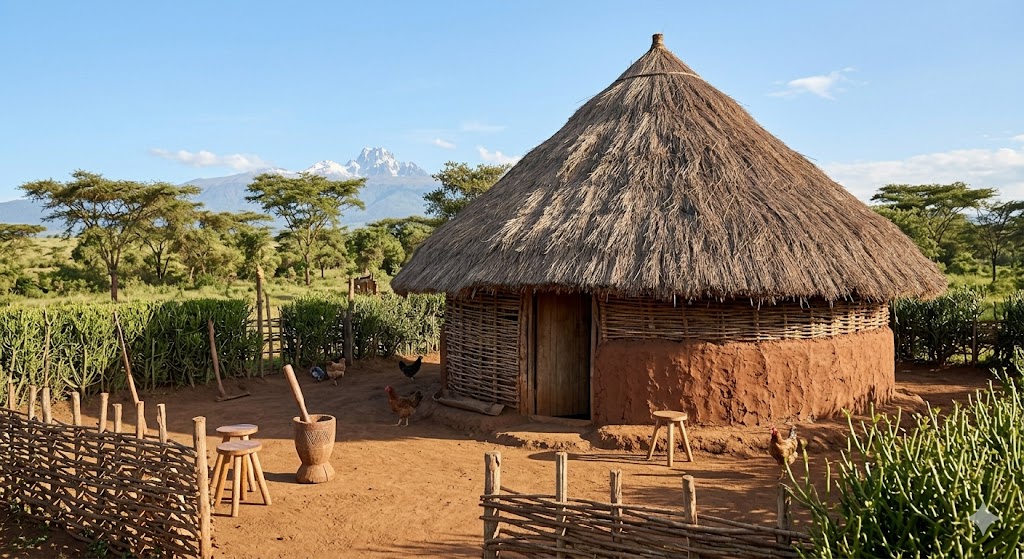
The Maina and Mwangi Trust is a registered charitable organisation promoting the acquisition, preservation, and dissemination of Agĩkũyũ culture and heritage — using culture and tradition to address the social challenges facing the community. The Ngemi na Ndũhio Cultural Association is a community-based organisation registered with the Department of Culture in Kiambu County, dedicated to education and research, preserving, documenting, and disseminating traditional knowledge. Together, the two bodies represent a strand of organised civil society that has consistently argued that cultural grounding and community cohesion are prerequisites for any durable social or economic progress.
Presenters drawn from diverse professional and social backgrounds have submitted papers across the three thematic areas, and organisers believe the ideas generated over the three days will not remain confined to the conference centre. The hope is that the convention’s outputs — its debates, its papers, its resolutions — will cascade outward through social media and community networks, seeding a broader reawakening that reaches Agĩkũyũ communities far beyond Nairobi.
The event is being held in a hybrid format, allowing virtual participation at a cost of Ksh 2,000 for Kenya-based attendees or USD 15 for international participants, while in-person delegates pay Ksh 6,000 for full access to all plenary sessions, paper presentations, breakout workshops, and cultural evening galas. The hybrid structure is significant: the Agĩkũyũ diaspora, spread across North America, Europe, and the Gulf, has long been a source of both capital and ideas for the homeland community, and the convention’s organisers appear determined to draw that intellectual and financial resource into the conversation rather than leave it at the margins.
The choice of Kenyatta University as the venue carries its own symbolism. Named after Jomo Kenyatta — himself an Agĩkũyũ and the scholar-nationalist who wrote Facing Mount Kenya, one of the earliest and most important ethnographic accounts of Gĩkũyũ society — the institution sits at the intersection of academic inquiry and cultural identity in a way few venues in Kenya can match. Kenyatta’s own insistence that African communities must understand themselves on their own terms, rather than through the lens of colonial interpretation, echoes through the convention’s entire intellectual architecture.
The organisers are candid about the scale of what they are attempting. Reviving a cultural framework is not the work of three days, and they do not claim otherwise. The convention is explicitly framed as a beginning — the first strike of what they hope will become a sustained, generational effort to rebuild the Agĩkũyũ’s strategic place not only in Kenya, but in the broader project of an Africa finding its footing in a rapidly changing global order.
Whether it succeeds will depend, in part, on what happens when the delegates go home. Ideas ignited in a conference hall have a habit of fading in the noise of daily life. The test of this convention will not be the quality of the papers delivered, but whether the community chooses to act on them.
The gourd is lost. The search begins on Tuesday.
Similar Posts by The Mt Kenya Times:
- Mt Kenya Times ePAPER October 1, 2026
- Museveni backs Lamu but keeps Uganda’s money at home
- Sifuna’s party wins its name — and Kenya’s opposition race begins in earnest
- Lamu’s $16B gamble: Africa’s biggest refinery divides the region
- Ruto launches KSh2.2 trillion Lamu refinery in East Africa’s biggest energy bet
About the Author