The Mt Kenya Times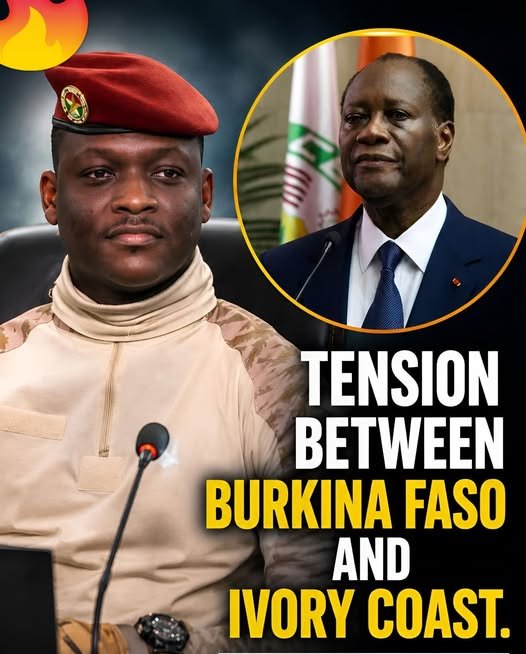
By Norman Mwale
_“Our shared frontier cannot become a fault line for West Africa. Peace must guide every step we take.”_ — ECOWAS Commission Official
The 545-kilometre frontier between Côte d’Ivoire and Burkina Faso, long regarded as a corridor of trade and kinship, is now the focus of renewed diplomatic anxiety as border incidents and public rhetoric between Abidjan and Ouagadougou sharpen.
Tensions resurfaced last month after Ivorian security forces detained several Burkinabè nationals near Doropo, citing concerns over cross-border movement of armed groups. Burkina Faso’s transitional government responded by summoning Côte d’Ivoire’s ambassador, accusing Abidjan of “unprovoked aggression” along a frontier that communities on both sides have shared for generations.
“We cannot accept any violation of our territorial integrity,” Burkina Faso’s Minister of Foreign Affairs, Karamoko Jean-Marie Traoré, told reporters in Ouagadougou. “The security of our citizens comes first, and we will respond with the firmness required to protect it.”
Ivorian officials reject the accusation. Speaking in Abidjan, Côte d’Ivoire’s Minister of Interior and Security, Vagondo Diomandé, said the operations were intelligence-led and targeted “terrorist elements seeking refuge across the border”. He added: “Côte d’Ivoire respects Burkina Faso’s sovereignty. Our action is defensive, not hostile. We seek cooperation, not confrontation.”
The dispute comes at a delicate moment for regional security. Both countries are confronting jihadist activity spilling southward from the Sahel, and the border zone has become a transit route for displaced families, livestock traders and informal commerce. Local leaders warn that political friction risks undermining those ties.
“The border is not a line on a map for us, it is our market, our family, our daily life,” said Awa Koné, a trader in Tougbo, a Burkinabè border town. “When officials speak sharply, our businesses suffer. We need dialogue, not accusations.”
Chiefs and community elders from both sides convened a meeting in Doropo earlier this week to call for calm. Nana Kouamé, a traditional leader in northern Côte d’Ivoire, urged both governments to “remember the blood and marriage that bind our people”. Civil society groups have echoed the appeal. The West African Network for Peacebuilding described the exchange of statements as “regrettable but reversible” and called for immediate de-escalation through ECOWAS channels.
ECOWAS has offered to mediate. A Commission spokesperson said technical teams were ready to deploy to the border area to verify facts and support confidence-building measures. “De-escalation is urgent,” the official said. “Our shared frontier cannot become a fault line for West Africa. Peace must guide every step we take.”
Analysts note that while the current standoff is serious, neither capital appears to seek open conflict. Both governments depend on regional trade and security cooperation, and both face domestic pressure to show strength without triggering instability. The next test will be whether military patrols along the frontier are scaled back and whether high-level talks resume before the dispute hardens into lasting mistrust.
For now, the border remains open but tense. Trucks still move, families still cross, and markets still open at dawn. What remains uncertain is whether political leaders can match that daily resilience with the restraint required to keep a shared border from becoming a divided one.
Similar Posts by The Mt Kenya Times:
- Mt Kenya Times ePAPER October 1, 2026
- Museveni backs Lamu but keeps Uganda’s money at home
- Sifuna’s party wins its name — and Kenya’s opposition race begins in earnest
- Lamu’s $16B gamble: Africa’s biggest refinery divides the region
- Ruto launches KSh2.2 trillion Lamu refinery in East Africa’s biggest energy bet
About the Author