Sifuna’s party wins its name — and Kenya’s opposition race begins in earnest
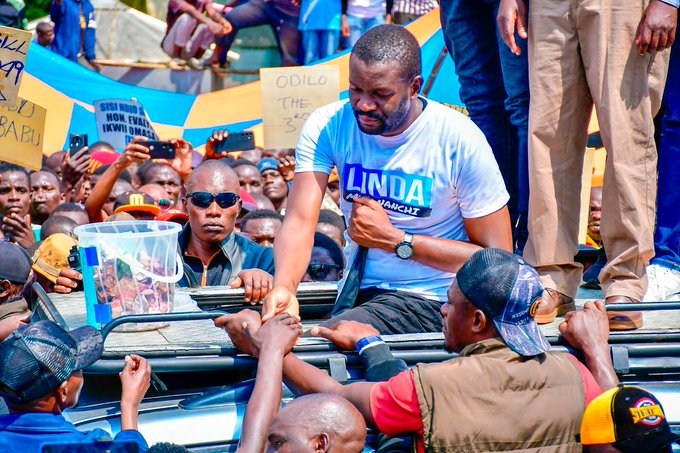
Nairobi Senator Edwin Sifuna
A tribunal ruling hands the Nairobi senator his political identity just as the countdown to August 2027 turns urgent
By James Mwangi
The Political Parties Disputes Tribunal yesterday handed Nairobi Senator Edwin Sifuna a victory that goes well beyond a legal technicality: it cleared the path for the Linda Mwananchi Movement to secure its name, its brand and, with it, the institutional foundation for what is rapidly shaping up as the most consequential opposition presidential campaign Kenya has seen since the death of Raila Odinga.
The Tribunal, chaired by Innocent Muganda, set aside the Registrar of Political Parties’ August 7 decision declining to reserve the Linda Mwananchi Movement name and its abbreviation, LMM. The ruling found that the Registrar’s rejection was without legal justification under the Political Parties Act, dismissing the argument that the name was confusingly similar to the Liberty National Democratic Alliance, known as LINDA. The Registrar has seven days to reconsider the application in accordance with the Tribunal’s findings. It is a deadline that Sifuna’s camp will be watching with considerable intensity.
The ruling matters because the name is the movement. Linda Mwananchi — protect the citizen — is not merely a party label. It is a slogan that has filled rally grounds across Western Kenya and Nairobi, a brand that has given Sifuna a political identity distinct from the ODM he once served as secretary-general before being removed earlier this year. Without the name, the movement risked losing its most potent public asset just as the 2027 General Election, scheduled for August 10, enters its most critical organising phase.
A TIFA poll placed Sifuna climbing from virtually no measurable national support in 2025 to 15 per cent by June 2026, with 44 per cent support within ODM as the party’s preferred presidential candidate. A separate Infotrak survey placed a Kalonzo-Sifuna combination at 23 per cent support, ranking it among the opposition’s most preferred presidential pairings. These are not the numbers of a peripheral figure. They are the numbers of a man who has inserted himself at the centre of Kenya’s most competitive electoral contest in a generation.
To understand how Sifuna arrived here requires understanding the vacuum he moved into. Raila Odinga’s departure from the domestic political stage — first into the broad-based government arrangement and then through his death — left the opposition without its defining figure and its most reliable coalition architect. Without a credible presidential candidate from Western Kenya since Kijana Wamalwa in 1997, the region, the second largest voting bloc after Mt Kenya, has largely been a battleground for swing votes. Sifuna, a first-term senator who built his profile through combative opposition rhetoric and an instinctive ability to connect with younger, urban voters, saw the opening and moved into it with remarkable speed.
His Linda Mwananchi movement, originally an ODM faction opposed to the party’s support for President William Ruto’s broad-based government, has gained traction particularly among young people disillusioned with the country’s political establishment. He has repeatedly appeared in Raila-branded attire at rallies, deploying the former premier’s legacy as a borrowed legitimacy while simultaneously building an identity entirely his own. He told radio stations in Western Kenya that he would tour all counties before deciding whether to formally challenge Ruto, adding: “We want to push our Linda Mwananchi movement until it becomes consequential such that when we say we will have a presidential candidate and a running mate, we indeed stand a chance of winning the election.”
The vehicle for that candidacy appears to be taking shape. Trans Nzoia Governor George Natembeya confirmed last week that Sifuna is likely to contest the 2027 election under the United Democratic Party, which would serve as a national outfit rather than a purely regional vehicle. Natembeya was emphatic that Sifuna should seek the presidency itself, not a running-mate position — a signal that Sifuna’s Western Kenya base is not willing to play the subordinate role it has historically occupied in opposition coalitions.
Sifuna and Wiper leader Kalonzo Musyoka held talks earlier this month on forging a united opposition, with both agreeing that opposition leaders must work together to mount a credible challenge to Ruto. The meeting did not produce a joint candidate announcement, but it set out the architecture of a coalition conversation that will dominate Kenyan politics well into 2027. The key figures at the table include Kalonzo, Sifuna, former Deputy President Rigathi Gachagua and former Interior Cabinet Secretary Fred Matiang’i — a gathering of formidable but competing presidential ambitions that must be resolved if the opposition is to avoid repeating the fractured candidacies of previous elections.
The mathematics are unforgiving. Sifuna’s push to unite Western Kenya under Linda Mwananchi threatens to dismantle the historical Azimio voting bloc, creating severe mathematical complications for all major political players ahead of the 2027 polls. If Sifuna commands the Mulembe nation vote and aligns it with urban youth support in Nairobi, he becomes indispensable to any opposition coalition. If the coalition fractures, Ruto — with the advantages of incumbency and a consolidated Mt Kenya base — becomes a difficult incumbent to dislodge.
The government is watching. Ruto’s Kenya Kwanza administration has shown in previous electoral cycles that it understands the danger of a unified opposition better than most, and will work methodically to keep the opposition coalition fragmented. The broad-based government arrangement, which brought ODM formally into the fold, was in part a strategy to defang the most organised opposition machinery the country possessed. Sifuna’s refusal to accept that arrangement and his determination to build an alternative structure is precisely what makes him, in the eyes of both his supporters and his opponents, the most consequential opposition figure currently active in Kenyan politics.
Yesterday’s tribunal ruling will not resolve the deeper strategic questions — who leads the coalition, who takes which slot on the ticket, which communities deliver which votes. But it does something important. It tells Sifuna’s supporters, and his rivals, that the machine is being built, the paperwork is being filed, and the brand that has packed rally grounds from Kakamega to Mathare is not going away.
Ten months from August 10, 2027, Kenya’s most unpredictable election in years is beginning to take shape. Sifuna now has his name. The harder question is whether he can build the coalition broad enough to use it.
Similar Posts by The Mt Kenya Times:
- Mt Kenya Times ePAPER October 1, 2026
- Museveni backs Lamu but keeps Uganda’s money at home
- Lamu’s $16B gamble: Africa’s biggest refinery divides the region
- Ruto launches KSh2.2 trillion Lamu refinery in East Africa’s biggest energy bet
- Keep off politics from teachers – West Mugirango MP tells off sponsors at Kiangungu Prayers Day
About the Author