A Murang’a High Court petition seeking conservatory orders against rival FKF factions has thrown Kenya’s football governance crisis into the judicial arena, with the 2027 Africa Cup of Nations co-hosting at stake
By Martin Weche
The Football Kenya Federation’s protracted leadership crisis landed before the High Court at Murang’a last week after a sports stakeholder filed an urgent constitutional petition seeking court intervention to halt what he described as a dangerous dual power structure threatening to destroy the institutional integrity of Kenyan football. The petition challenges the current FKF disputes, and a subsequent application has also been filed challenging the Special General Meeting resolutions of 7 November 2026.
Patrick Kinyua filed Petition No. E028 of 2026 on 3 November at the Murang’a Law Courts Constitutional and Human Rights Division, naming the Football Kenya Federation, its Congress, its National Executive Committee, the Cabinet Secretary for Youth Affairs, Creative Economy and Sports, and the Sports Registrar as respondents. The petition was certified urgent and placed before Justice Dorah Chepkwony, with case activities recorded on both 4 and 9 November.
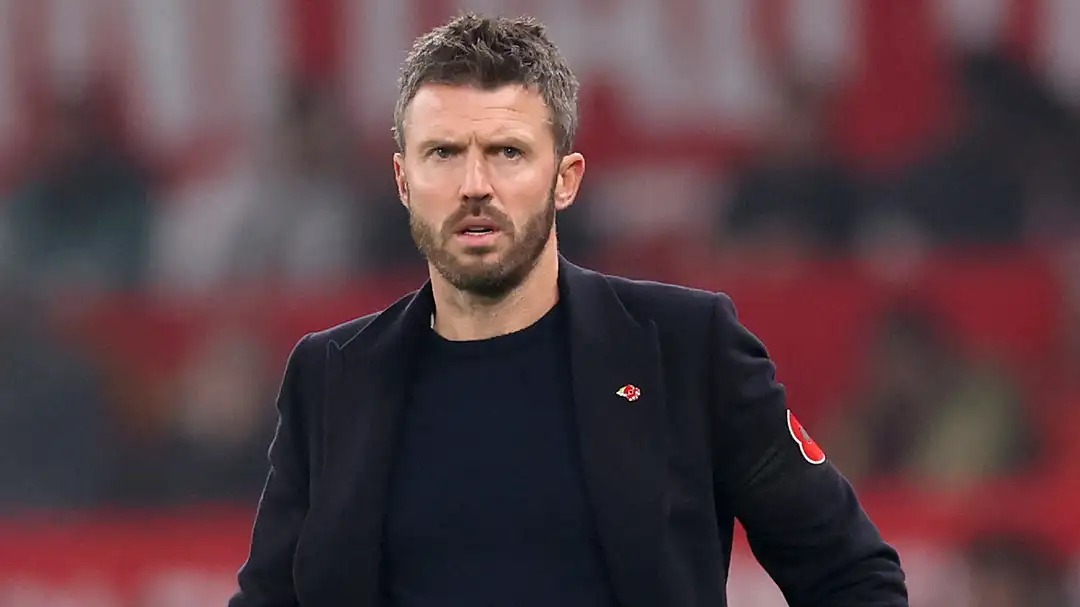
The crisis at the heart of the petition has been simmering since April. Hussein Mohammed was elected FKF President on 7 December 2024, with McDonald Mariga elected as his Vice-President in a process recognised by both FIFA and the Confederation of African Football. Within months, however, the leadership had descended into open warfare. On 24 April 2026, nine of the fourteen National Executive Committee members passed a resolution directing Mohammed to step aside over alleged financial impropriety linked to a KSh 42.4 million insurance tender connected to the 2024 African Nations Championship, simultaneously installing Mariga as acting president.
FIFA moved swiftly to reject the resolution, declaring it null and void for failing to comply with the procedural requirements of the FKF Constitution, particularly Article 41, which governs the suspension or removal of elected officials. FIFA was explicit: the steps required — proper agenda communication, quorum, voting thresholds and the right to be heard — had not been followed. “Actions taken outside the clearly defined statutory framework cannot produce valid legal effects within the association,” FIFA stated, warning that members acting in breach of the FKF Constitution risked disciplinary consequences. Despite the global body’s categorical position, the Mariga-aligned faction refused to stand down, repeatedly preventing the committee from achieving the quorum required under Article 40 of the FKF Constitution.
The human cost has been considerable. Mohammed made repeated attempts through June, July, August, September and October to convene NEC meetings to address the 2026/2027 budget, national team coaching appointments, league structures, refereeing policy and AFCON 2027 preparations. Each meeting collapsed for want of quorum. By October, Mohammed had publicly declared he had given up trying to work with the seven dissenting members and warned they would face disciplinary action.
A pre-consultative NEC Kamukunji held on 13 October offered a rare moment of engagement when both factions attended, but it unravelled quickly. The Mariga side presented thirteen governance concerns; only four were addressed before the meeting was adjourned. When a formal NEC meeting was called the following day, the Mariga faction stayed away, citing a lapsed seven-day notice period under Article 38(3) of the FKF Constitution. “We cannot punish millions of Kenyans because of seven people,” Mohammed told journalists afterwards.
By late October the situation had deteriorated into competing disciplinary processes. General Assembly representatives issued proposals seeking the expulsion of seven NEC members aligned with Mariga — including Mariga himself, Robert Kenneth Macharia and Bernard Korir Lagat — for alleged breaches of the FKF Constitution and FIFA Statutes. Four days later, separate General Assembly representatives issued a Summons to Show Cause against Mohammed, citing six charges including financial irregularities and alleged manipulation of NEC minutes.
The petition asks the court to declare the dual power structure a threat to the rule of law, restrain all parallel disciplinary processes, direct the Cabinet Secretary and Sports Registrar to exercise their supervisory powers under the Sports Act No. 25 of 2013, and compel the entire dispute into a constitutionally compliant resolution process.
Former Harambee Stars coach Jacob Mulee captured the wider despair. “Kenya is the only country right now where the league has not started. Even in Ukraine, where there is war, the league is ongoing,” he said. With Kenya co-hosting the 2027 Africa Cup of Nations, CAF President Patrice Motsepe has already warned: “We have never needed unity in Kenyan football as we need it now.” The court, it seems, may now have to deliver what the boardroom could not.
Similar Posts by The Mt Kenya Times:
- Who will carry the students’ voice? Laikipia University prepares for November 18 elections
- Cultural features of the concept of “Anger” in French and Uzbek
- Carrick on the edge as Manchester United consider managerial change
- Emirates expands Premium Economy and winter sun routes across Europe
- World media leaders urge stronger oversight, inclusive cooperation amid AI-driven transformation