Kalonzo builds a national outlook: Can Wiper’s mountain-to-coast gamble rewrite Kenya’s political map?
 Dan
Dan 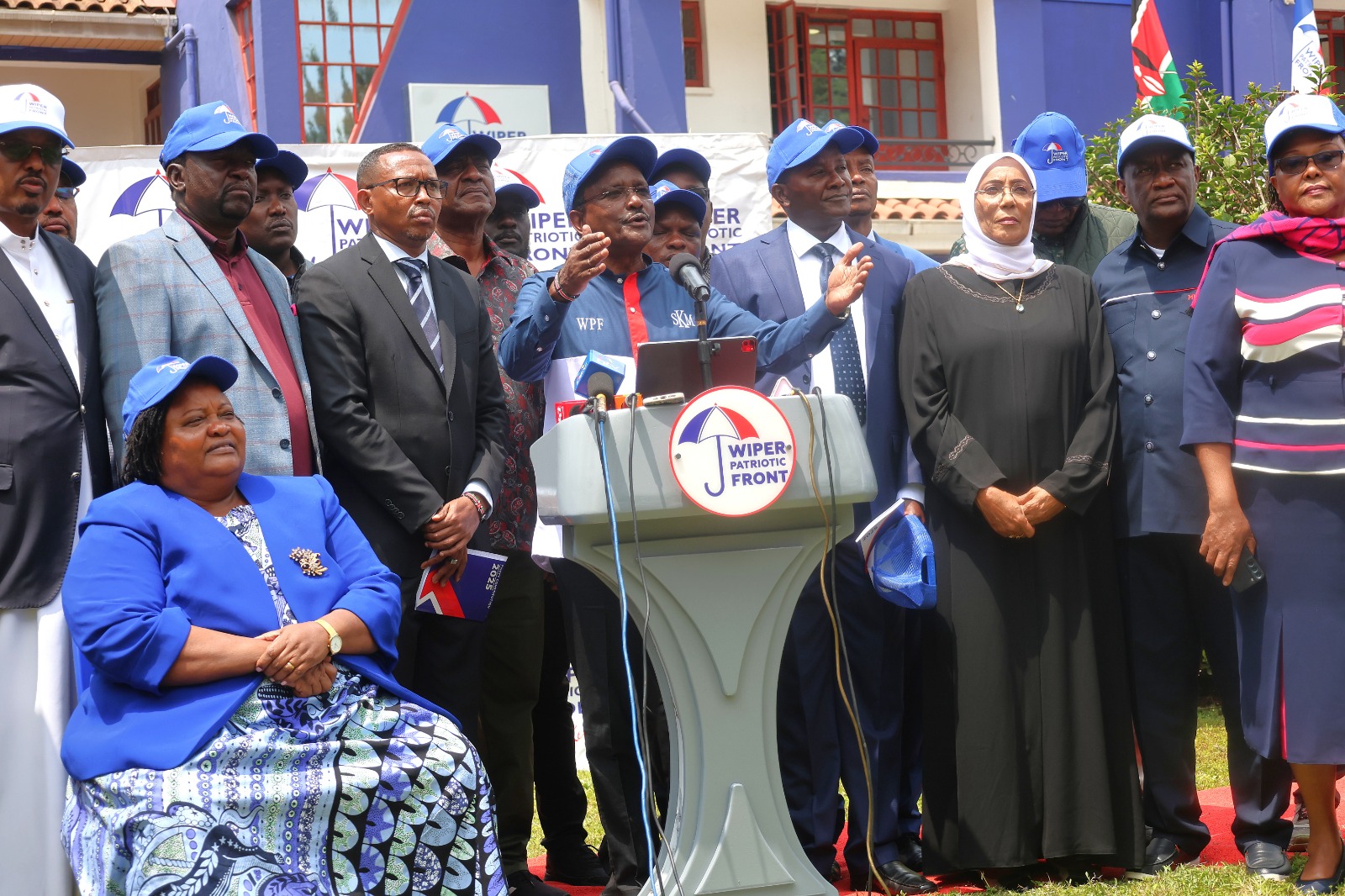
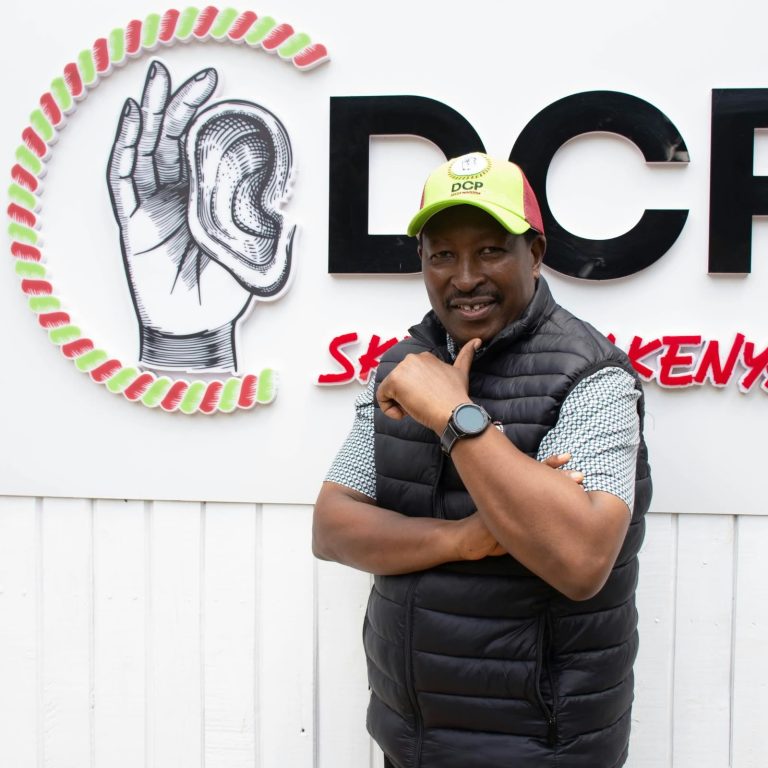
Kalonzo Musyoka unveiling the new Wiper leadership

A convergence of Ukambani, Mt Kenya, Coast, North Eastern and disaffected Ruto and Odinga voters could hand Kalonzo Musyoka the most formidable coalition Kenya has seen since the 2002 Narc sweep.
By Dan Mwangi
Kalonzo Musyoka’s restructuring of the Wiper Patriotic Front’s senior leadership is proving to be more than an organisational exercise — it is the opening move in what his strategists believe could become the most consequential political realignment in Kenya since the National Rainbow Coalition swept Daniel arap Moi’s succession candidate from power in 2002.
The arithmetic, when examined carefully and honestly, points to a cumulative vote total that, at its conservative floor, sits at approximately 9.8 million votes, rising to a realistic midpoint of 11.5 million and, if the Kalonzo-Gachagua relationship fully crystallises and the economic environment continues to deteriorate, reaching or exceeding 13 million votes — a figure that would more than double the 7.18 million votes with which Ruto won the presidency in 2022.
That number is not a fantasy. It is what the political geography of Kenya currently makes possible, and understanding how it is assembled requires an honest examination of every bloc, every alliance and every variable in play between now and August 2027.
In the 2022 presidential election, William Ruto received 7.18 million votes and Raila Odinga 6.94 million — a combined total of 14.12 million votes from Kenya’s two dominant political formations. Between them, they captured nearly the entire registered voter universe that turned out that August. The question now being asked in Wiper’s Nairobi strategy sessions, in DCP political circles and in the drawing rooms of opposition-aligned donors is deceptively simple: what happens if a significant portion of both those coalitions finds a new political home?
The answer, if the Kalonzo-Gachagua relationship matures into a formal or semi-formal electoral understanding, is a number that would fundamentally and permanently alter Kenya’s political landscape.
Start with what Kalonzo already owns. Ukambani — Kitui, Machakos and Makueni — is the party’s generational bedrock, delivering approximately 1.6 million votes with a consistency that no political earthquake has yet disrupted. This bloc does not require persuasion. It requires activation, organisation and a candidate whose national credibility justifies the community’s investment. Kalonzo, running as a presidential candidate rather than a running mate, provides that justification in full.
Layer onto that foundation the Mt Kenya arithmetic, and the picture shifts from competitive to potentially decisive. The region — Nyeri, Kirinyaga, Murang’a, Kiambu, Nyandarua, Meru, Embu and Tharaka-Nithi — carries approximately six million registered voters, making it the single largest voting bloc in the country. To appreciate the scale of what Gachagua commands within this territory, one county alone tells the story with brutal clarity: Kiambu, Kenya’s most populous county, holds over 1.2 million registered voters. It is one county. The region has eight.
The Ol Kalou parliamentary by-election provided the most recent and most reliable data point on the depth of Gachagua’s Mt Kenya grip. In a contest watched nationally as a referendum on his post-impeachment standing, the DCP-aligned candidate dominated with approximately 86 percent of the vote — a figure that, projected across a six-million-voter region, translates into a potential bloc of 5.16 million votes moving in disciplined unison behind a Gachagua-endorsed candidate.
That is not a regional vote. That is a national election-deciding force.
Nyandarua Senator John Methu, the DCP Secretary General designate, anchors the party’s institutional machinery while Gachagua commands its emotional energy. Together they have constructed a political operation that does not merely win — it dominates. The impeachment of October 2023, rather than diminishing Gachagua’s Mt Kenya standing, transformed him into the region’s most potent political symbol since the founding generation of independence-era leaders. His support base does not follow him reluctantly. It follows him with the conviction of a community that believes it was wronged and is now organising its response.
The relationship between Kalonzo and Gachagua is, by the standards of Kenyan opposition politics, conspicuously warm. Kalonzo was among the leaders who publicly questioned the manner and pace of the impeachment — a position carefully noted in Mt Kenya political circles where the memory of that parliamentary session remains raw and politically combustible. That positioning has created a reservoir of goodwill in the mountain that no amount of campaign spending could replicate.
If Gachagua were to extend even a calibrated, semi-formal endorsement of Kalonzo’s presidential candidacy — signalling to DCP’s grassroots that Kalonzo represents the vehicle through which Mt Kenya reclaims its national influence — the consequences would be transformative. Applying the Ol Kalou benchmark of 86 percent dominance across the six-million-voter Mt Kenya bloc, Gachagua’s influence could deliver between 4.5 and 5.16 million votes to a Kalonzo-led ticket. Even discounting heavily for the imperfect translation of by-election results to a presidential race, a conservative transfer of sixty percent of the Mt Kenya bloc yields 3.6 million votes — more than double Kalonzo’s entire 2022 presidential total on his own.
That relationship also carries a specific and frequently underestimated dividend along the Coast. Mombasa, Kilifi, Lamu and the broader coastal corridor are home to a substantial Kikuyu diaspora community — traders, hoteliers, property owners and professionals who maintain strong emotional ties to Mt Kenya politics while casting ballots in Coast constituencies. This community, conservatively estimated at 200,000 to 300,000 registered voters, takes its political signals from Gachagua-aligned cues with a fidelity that coastal political operators have long recognised. A Gachagua endorsement of Kalonzo would unlock this vote with minimal additional campaigning required, layering it onto Mohamed Ali’s already formidable Mijikenda and Swahili base and pushing the Coast’s total contribution toward one million votes or beyond.
Ali, the Nyali Member of Parliament who built his national profile as an investigative journalist before entering politics, commands genuine cross-generational appeal along the coastal strip. The Coast’s deep historical grievances — land injustice, economic marginalisation, the unresolved majimbo conversation — have created an electorate that consistently rewards candidates who speak credibly to those concerns. Wiper’s “#KomboaKenya” reform narrative resonates powerfully in this context. The Coast’s approximately 3.5 million registered voters, properly mobilised through Ali’s networks and amplified by the Kikuyu diaspora responding to Gachagua’s signal, represent one of the most accessible and high-yield electoral prizes available to any opposition candidate.
North Eastern, where Ambassador Siyat Osman Ibrahim’s appointment is targeted, adds further weight. The region’s counties — Garissa, Wajir, Mandera, Marsabit and Isiolo — collectively account for roughly 800,000 registered voters. In 2022, the bloc largely supported Ruto’s Kenya Kwanza ticket transactionally, and that transactional loyalty has shown visible signs of strain as complaints about insecurity, drought response and marginalisation have intensified. Ibrahim’s diplomatic standing across the region positions Wiper to recapture a meaningful portion of that vote — conservatively 300,000 to 400,000 under active mobilisation.
Eastern Kenya beyond the Ukambani core adds a further dimension. Meru, Embu and Tharaka-Nithi counties sit at the political intersection between the Mt Kenya bloc and the broader eastern corridor, with a combined registered voter base of approximately 1.2 million. These counties have historically swung between regional loyalty and national coalition logic. With Jamleck Kamau as party chairman providing a Mt Kenya face to Wiper’s leadership, and Gachagua’s influence extending naturally into these border communities, the party’s competitive ceiling in this sub-region rises considerably.
The disaffected Ruto voter adds yet another layer. Kenya Kwanza’s 2022 coalition was never ideologically coherent — it was assembled from communities motivated primarily by ending Odinga’s repeated bids for the presidency and securing a share of national resources under a new administration. Three years into Ruto’s presidency, with the cost of living at sustained historic highs, the housing levy generating persistent public anger and the broad-based arrangement with Odinga’s formation producing a sense of deep political betrayal among core Kenya Kwanza supporters, a substantial portion of that 7.18 million is genuinely available for political migration.
Electoral geography analysts estimate that between 1.5 and 2.5 million of Ruto’s 2022 voters — drawn from the Rift Valley’s disaffected Kalenjin communities, Coast Kenya Kwanza supporters now gravitating toward Ali, and Mt Kenya voters following Gachagua’s political direction — could shift to a Kalonzo-led ticket under the right conditions. These are not marginal protest voters. They are communities with organised structures, established turnout records and leaders capable of delivering disciplined bloc votes when the political signal is unambiguous.
Luo Nyanza’s dominant political formation has moved into a broad-based arrangement supporting Ruto’s re-election, closing the door on the 1.2 to 1.5 million Nyanza votes that powered Odinga’s successive campaigns. That bloc is not available to Kalonzo in its organised form. But Odinga’s 2022 coalition extended well beyond Nyanza — into Western Kenya, parts of the Coast, Nairobi’s opposition-leaning constituencies and communities across the country who voted against Ruto rather than specifically for Odinga. Many of those voters, perhaps 1.5 to 2 million of the 6.94 million, are now politically homeless. The broad-based arrangement did not absorb them into the Ruto fold — it simply left them without a natural electoral destination. Kalonzo’s consistent positioning as a leader of principle who has never traded his values for accommodation speaks directly to this constituency.
The full cumulative picture, assembled with evidence-based numbers, is therefore this: Ukambani’s near-certain 1.6 million. Mt Kenya, with Gachagua’s 86 percent dominance benchmark applied conservatively at sixty percent transfer efficiency across six million voters, contributing 3.6 million at the floor and 5.16 million at the ceiling — with Kiambu’s 1.2 million registered voters alone illustrating why even conservative Mt Kenya projections are transformative. The Coast, combining Ali’s networks, the Kikuyu diaspora responding to Gachagua’s signal and disaffected Kenya Kwanza coastal voters, delivering 900,000 to one million. North Eastern contributing 300,000 to 400,000. Eastern Kenya’s swing counties adding 400,000 to 500,000. Disaffected Ruto voters from the Rift Valley and elsewhere adding 1.5 to 2.5 million. Politically homeless former Odinga supporters contributing a further 1.5 to 2 million.
That is how the conservative floor of 9.8 million is built. That is how the midpoint of 11.5 million is reached. And that is how, under optimal conditions, the ceiling of 13 million becomes not a projection but a political reckoning.
“These are not appointments of convenience, but of conviction,” Kalonzo said when unveiling his new leadership team. “They strengthen a leadership team ready to deliver a United Alternative Government in waiting and to Komboa Kenya.”
The variables that could constrain this arithmetic deserve honest acknowledgement. A formal Kalonzo-Gachagua arrangement requires Gachagua to subordinate his own presidential ambitions to a coalition logic that positions him as a kingmaker rather than a candidate. That is a significant political decision that only the mathematics of electability can ultimately compel. Gachagua must calculate whether leading a movement that falls short independently is more valuable than delivering a coalition that wins decisively under a partner’s name. The Ol Kalou numbers suggest he has the leverage to determine the outcome either way — which means his decision, when it comes, will be the single most consequential act in Kenya’s 2027 political cycle.
The disaffected voter projections also carry genuine uncertainty. Political migration requires active recruitment, ground-level organisation and financial resources that Wiper is only beginning to assemble. Numbers that are theoretically available do not automatically become votes without the campaign infrastructure to harvest them.
What is beyond reasonable dispute is that the political architecture being constructed — four appointments spanning the mountain, the coast, the north and the national communications space, underpinned by a warm and publicly acknowledged relationship with the man who controls 86 percent of the country’s largest voting bloc — represents the most credible opposition coalition-building exercise Kenya has seen in two decades.
Kenya’s 2027 presidential election will not be the foregone conclusion that State House strategists are projecting. If the Kalonzo-Gachagua understanding holds, deepens and translates into organised political action, it will deliver a majority so commanding that it renders the question of who wins not a matter of arithmetic but of history.
And Kalonzo Musyoka, at seventy-three, is building that history one appointment, one relationship and one carefully cultivated alliance at a time.
Similar Posts by Dan:
- Ndindi Nyoro pulls a Kibaki stunt: The mountain stirs again as 2027 looms
- Ruto vs Uhuru: The war Kenya never saw coming
- Ruto’s reckoning: Gachagua puts four years on trial
- Mudavadi tells Sifuna: Dreaming about it won’t make you president
- Two visions, one region, one race against time
About the Author

 The Mt Kenya Times