Dan
Dan 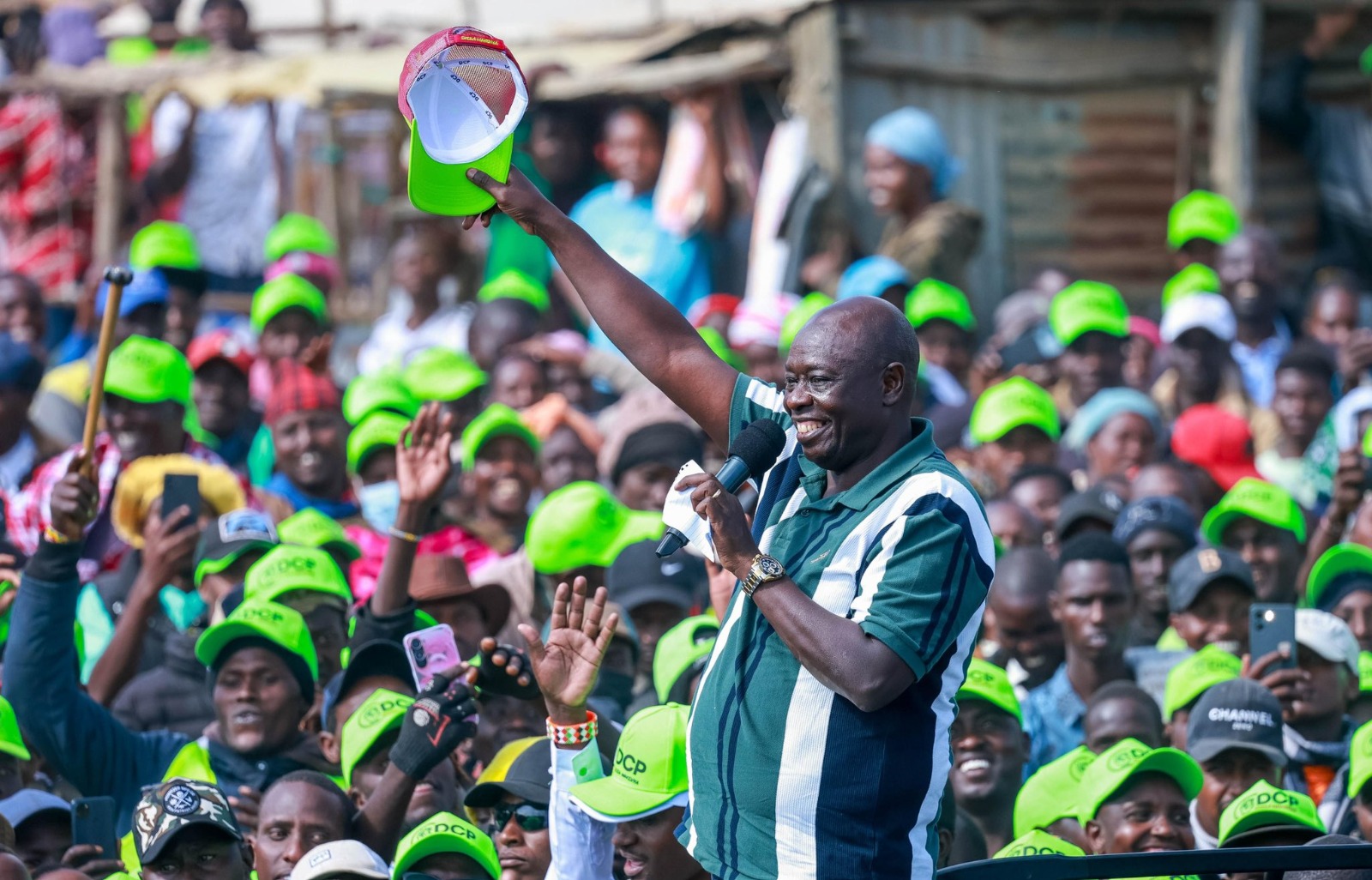
Former Deputy President Rigathi Gachagua in Narok County at Nairakia-Enkare town

The man William Ruto had removed from the deputy presidency is now coming for his job — and yesterday he announced a national address to deliver what he calls a full verdict on four years of broken promises.
By Dan Mwangi
Rigathi Gachagua, the former Deputy President whom William Ruto had impeached from office in October 2024, announced yesterday that he would deliver a nationally televised address laying out what he describes as the failures, abuses and broken promises of his former running mate’s four-year presidency — opening the most aggressive phase yet of his campaign to unseat Ruto in the 2027 General Election.
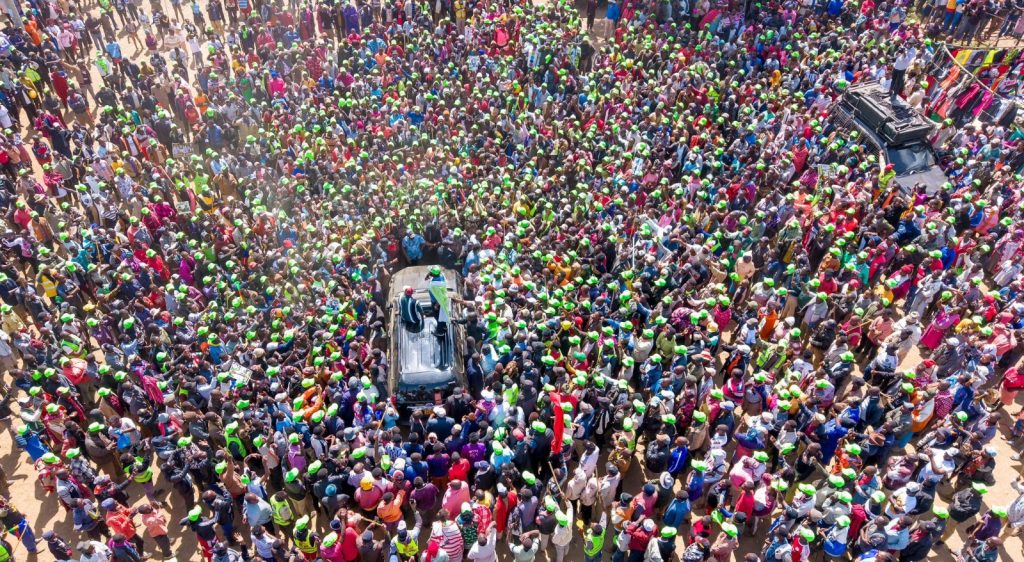
The announcement came during a public engagement in Narok East Constituency at Nairakia-Enkare town, where Gachagua, now leader of the Democracy for the Citizens Party (DCP), told residents that Kenya was ready for a change of direction and that the moment to demand it had arrived. The address, he said, would be comprehensive — a point-by-point assessment of the Kenya Kwanza administration’s record on the economy, governance, security and what he characterised as the systematic abuse of state power by the man who once shared the country’s highest office with him.
“Tomorrow, I will address the nation about what work Ruto has done in four years and the harm he has caused Kenyans,” Gachagua said. “I will address the people of the Republic of Kenya so that Kenyans will know who Ruto is, what he has done over the past four years and why he must go home.”
It was a declaration of open political war — and it came from a man uniquely placed to wage it.
The story of Gachagua and Ruto is one of the more extraordinary falling-outs in recent Kenyan political history. The two men campaigned together, won together and were sworn in together in August 2022 on a platform built around the bottom-up economic model — a promise to redirect opportunity towards ordinary Kenyans, the hustlers and small traders who felt left behind by the political establishment. Less than two years later, the relationship had collapsed entirely. In October 2024, parliament voted to impeach Gachagua as Deputy President, a process his allies described as politically orchestrated and which Ruto’s administration did not publicly resist. Gachagua was removed from office, replaced, and left to consider his next move.
He has now made it.
The significance of his planned address lies precisely in who is delivering it. Gachagua is not a peripheral critic firing from the margins of opposition politics. He sat in the Cabinet. He attended the meetings. He was present for the decisions he now condemns. Where other opposition leaders can only allege, Gachagua can claim to have witnessed — and that distinction will define the character of his campaign in ways that will be difficult for the Ruto administration to dismiss or deflect. A man who was impeached by the system he now attacks carries a grievance that is personal as much as political, and Kenyan voters will feel that distinction in every word he speaks.
The four-year mark is a politically charged threshold in any democracy, and in Kenya it arrives with particular sharpness. The question being asked in markets, matatus and homes across the country is a simple one: did the Kenya Kwanza government deliver? The administration points to infrastructure investment, digital services expansion and the Affordable Housing Programme as evidence of progress. Its critics — and they are numerous — point to the cost of living, which has remained punishingly high throughout the government’s tenure. Fuel prices, food costs and the early depreciation of the shilling all bit deeply into household incomes. The tax measures introduced in 2024, which triggered the Gen Z-led protests that forced the humiliating withdrawal of the Finance Bill, remain a defining and unresolved wound on the Ruto presidency — one that no amount of political reframing has fully closed.
Gachagua intends to reopen every one of those wounds, in sequence and in detail. His address is designed to function less as a political speech and more as a prosecutorial brief — evidence marshalled, failures catalogued and a case constructed for a jury of Kenyan voters who will deliver their verdict in August 2027. The man Ruto impeached is now preparing to put Ruto’s record on trial, and the irony of that reversal will not be lost on anyone watching.
He sharpened his case in Narok East with an accusation that struck a rawer nerve than economic statistics alone. Gachagua alleged that Nathan Wasama, a parliamentary aspirant for Mt Elgon who was shot dead at his home in Tuikut, Cheptais, Bungoma County, last week, had reported death threats to police on five separate occasions before he was killed — and that the authorities had done nothing. He further alleged that the individual who threatened Wasama was being shielded by Interior Cabinet Secretary Kipchumba Murkomen, and that rather than being arrested and questioned, the suspect had been provided with a security escort of six police Land Cruisers.
“People are being killed like chickens, and your job is to perform cover-ups because of extreme greed,” Gachagua said, directing his words at what he described as a compromised and politically captured security establishment.
He also alleged that DCI Director Mohamed Amin was being deployed to suppress rather than investigate killings in Mt Elgon, and linked his claims to a broader pattern of state-facilitated violence and impunity under the current administration. The allegations are serious. The National Police Service, Murkomen and Amin had not publicly responded to the claims at the time of publication, and they have not been independently verified. Their significance, however, lies not only in their content but in the political architecture they are assembling. Gachagua is constructing a narrative in which the Ruto government is not merely economically incompetent but morally disqualified — a government that, in his telling, fails Kenyans twice: first by neglecting them, then by silencing those who dare to speak for them.
“Next year, when I am the President of the Republic of Kenya, those responsible will be arrested and taken to court,” he said — a statement that made his intentions plain. He is not positioning himself as a critic of the system. He is positioning himself as its replacement.
He declared that Narok East marked the formal opening of his national campaign. “The journey to send Kasongo home has officially started here in Narok East,” he said, using his established nickname for the president in a deliberate signal that the gloves were fully off.
The path ahead remains formidable. Ruto retains the full apparatus of incumbency — state resources, institutional machinery and a ruling coalition that, however strained, remains intact. His allies have consistently dismissed Gachagua as a disgruntled former official whose removal from office was constitutionally sanctioned and whose legal troubles compromise his political credibility. That argument will be tested, loudly and repeatedly, between now and 2027.
But the man Ruto impeached is no longer keeping quiet.
Today’s address will tell Kenya — and the world — just how loudly he intends to speak.
Similar Posts by Dan:
- Ndindi Nyoro pulls a Kibaki stunt: The mountain stirs again as 2027 looms
- Ruto vs Uhuru: The war Kenya never saw coming
- Mudavadi tells Sifuna: Dreaming about it won’t make you president
- Kalonzo builds a national outlook: Can Wiper’s mountain-to-coast gamble rewrite Kenya’s political map?
- Two visions, one region, one race against time
About the Author

 The Mt Kenya Times