Kenya’s electoral ghosts walk again: Kuria’s confession opens a dangerous wound ahead of 2027
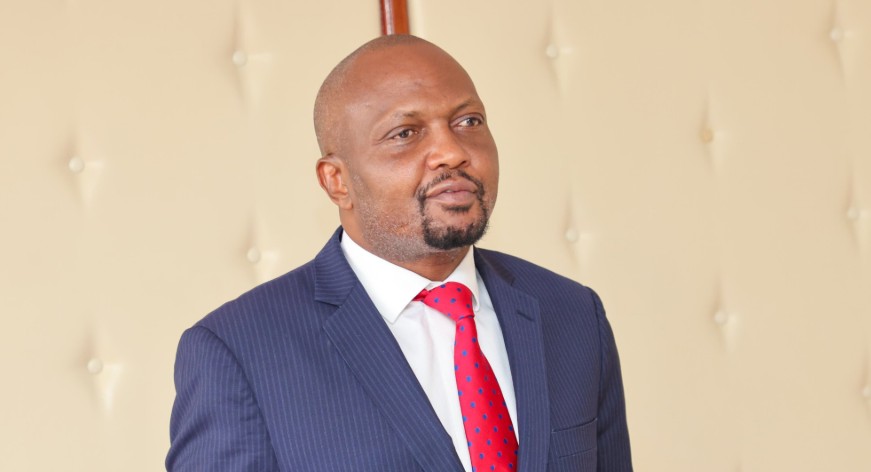
Former Cabinet Secretary Moses Kuria
With Moses Kuria admitting he helped rig two elections and Uhuru Kenyatta declaring the last one stolen, Kenya heads toward its most combustible vote in a generation
By David Kimani
Former Cabinet Secretary Moses Kuria yesterday admitted, in terms rarely heard in Kenyan public life, that he helped rig the 2013 and 2017 presidential elections in favour of former President Uhuru Kenyatta — revelations that have cracked open old wounds in a country already trembling with pre-election anxiety ahead of the August 2027 general election.
Speaking on Inooro FM radio, Kuria described in specific detail how he and a small group of operatives fought a legal battle over rejected votes to prevent a presidential runoff in 2013 — and went further, alleging that Independent Electoral and Boundaries Commission servers were tampered with to secure Kenyatta’s first-round victory. “Uhuru knows better what we did for him in 2013 and 2017,” Kuria said. “In 2013, he got the plus-one of around six thousand votes. There was the question of the rejected votes, which were to be counted, but Itumbi, Jematiah and I went to court and it was ruled that the rejected votes should not be counted — and that is how Uhuru won in 2013, otherwise, he had not won.”
He named lawyers Fred Ngatia and Njoroge Regeru as key participants in the legal strategy, and implicated Davis Chirchir — who served as IEBC chief executive during the 2013 election — in the alleged server manipulation. “We even did something in the servers to save him,” Kuria said. “We did it with Davis Chirchir to save him from facing Baba in a runoff, so it was not easy in 2013.”
Kuria’s remarks were a direct riposte to Uhuru, who earlier this week publicly declared, for the first time, that he believes the late Raila Odinga won the 2022 presidential election. Speaking at a Jubilee Party National Executive Committee meeting in Nairobi on Tuesday, Kenyatta said his camp had done everything possible to support Odinga’s campaign. “We did everything to help him become President of Kenya,” he said. “And to this day, I know he won that election. We know, we know.” The IEBC declared President William Ruto the winner of the 2022 contest with 7,176,141 votes — 50.49 per cent — against Odinga’s 6,942,930 votes. The Supreme Court subsequently upheld Ruto’s victory. Kenyatta provided no new vote-counting evidence to support his claim.
The two explosions — Uhuru’s insinuation that 2022 was stolen, and Kuria’s confession that 2013 and 2017 were — have detonated simultaneously into a political environment already primed for conflict. Kenya is less than two years from a general election, and almost nothing about the conditions surrounding it is calm.
The opposition grouping now known as the People’s United Opposition, fronted by Wiper leader Kalonzo Musyoka, former Deputy President Rigathi Gachagua, former Interior Cabinet Secretary Fred Matiangi, Martha Karua of the People’s Liberation Party, and Eugene Wamalwa of DAP-K, has for months been raising alarms about the integrity of the 2027 vote. Their primary target has been the IEBC itself. When Ruto forwarded seven names to fill the long-vacant commission in May, the opposition accused him of state capture. “It isn’t a commission for the people,” the coalition said in a joint statement. “It’s a project designed to rig the 2027 election.” IEBC chairman Erastus Ethekon has dismissed the allegations, insisting the commission is operating strictly within the law and has not been compromised. “Nobody,” he said in early September, “should try to create narratives about IEBC being compromised.”
But the damage — to public confidence, to institutional trust — runs deeper than any press statement can repair. Kuria’s disclosures, however politically motivated, have given opposition claims a new and uncomfortable credibility. If a man who was inside the machine says the machine was rigged, the burden of proving otherwise falls heavily on those who now operate it.
Kuria himself is not a neutral witness. His admission came in the middle of a political war of words triggered by Uhuru’s comments, and the timing is transparent. Yet that does not make the content false. He has made similar, if less detailed, admissions before — in 2020, during a period of Jubilee internal fracture, he wrote on Facebook: “I have always been in denial that we did not steal the 2013 and 2017 elections. Today it’s almost clear.” At the time, the remark was treated as political theatre. Yesterday’s radio interview was considerably more specific.
The political realignment now under way is as consequential as any Kenya has seen. Uhuru has endorsed Matiangi for the presidency, describing him as “respectful, not corrupt” and “a hard worker.” Gachagua, who was Ruto’s deputy before his impeachment in late 2024, leads the Democracy for the Citizens Party and is positioning himself as a central figure in the opposition coalition. Kalonzo, Kenya’s most enduring opposition survivor, has framed his 2027 candidacy around a single message: “Agenda number one is Ruto must go.” Matiangi himself has drawn crowds in his Gusii base, signalling a serious presidential ambition.
On the Ruto side, the government has pushed back hard. UDA leaders accused Uhuru of failing to heal from 2022, with Health Cabinet Secretary Aden Duale telling a rally in Tharaka Nithi that “the things he failed to do, Ruto is doing right now.” National Assembly Speaker Moses Wetangula joined the chorus, accusing Kenyatta of taking sides against his successor.
Meanwhile, Odinga’s family asked to be left out of it. His younger brother, Omondi Oginga, speaking at the family home in Siaya, said Uhuru should allow the family to mourn. “Raila is now resting, so let him give us a break,” Oginga said. ODM, for its part, demanded that Uhuru explain why he had waited four years to speak — and why, if he believed Raila had won, he had overseen the transfer of power to Ruto.
That question sits at the heart of everything. Kenya has a pattern: election disputes are raised, litigated, and then buried — only to resurface years later, usually when the political climate makes them useful again. Kuria’s confession and Uhuru’s insinuation are both, at least in part, instruments of present-day positioning. But they have consequences that extend well beyond the ambitions of the men making them.
With less than two years until the country votes again, the revelations of yesterday are now the atmosphere of today. Kenyan voters — many of them young, increasingly impatient, and deeply sceptical of elite politics — are watching. Whether the country’s institutions are capable of holding a credible election in 2027 is no longer merely an opposition talking point. It is the central question of Kenyan democracy.
The ghosts of 2013 have been given a name and a voice. What Kenya does with that knowledge will define the election to come.
Similar Posts by The Mt Kenya Times:
- Ruto in New York: Kenya open for investment, not aid
- Amisi tells Uhuru to keep off active politics, woos Sifuna
- Kenya’s universities on the brink: Students pay the price for a crisis they did not create
- The unwanted guardians: How Kenya’s civil society is hunted for defending the very democracy it built
- Reijnders comes clean: ‘I can’t deny I’m a money grabber’
About the Author