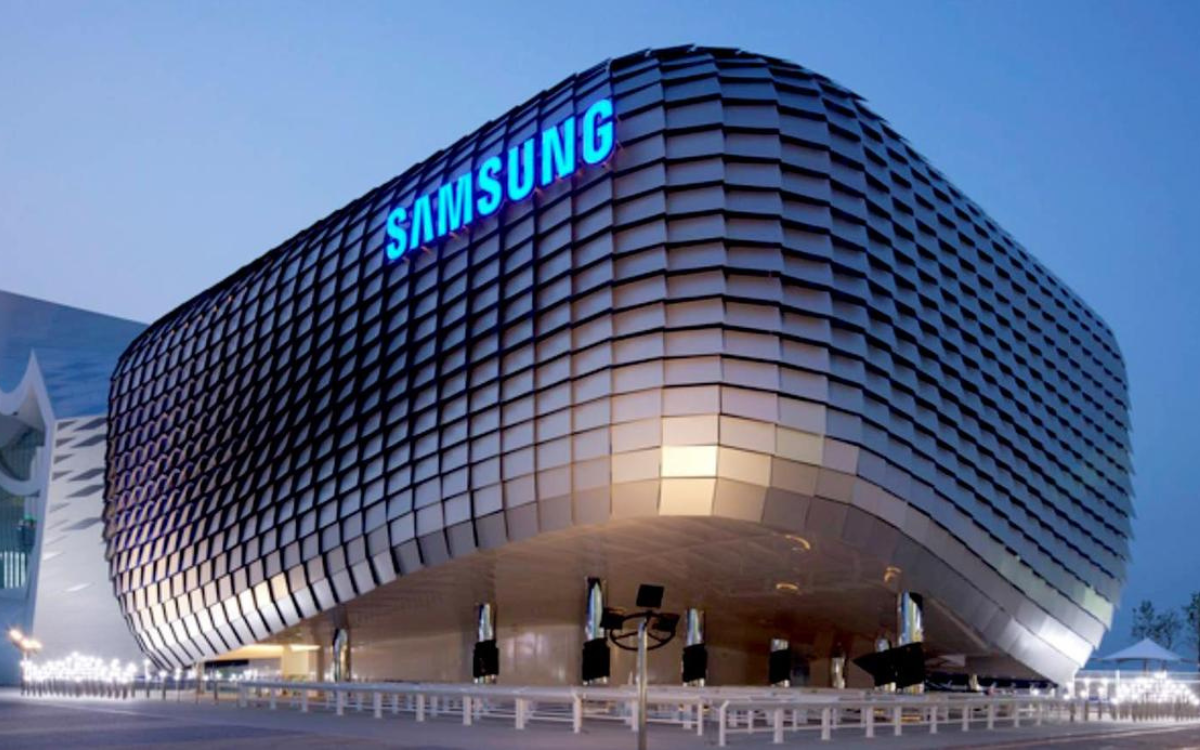
Flexible daily and weekly payment plans have unlocked premium device sales across the continent, handing the South Korean giant a commanding lead over its rivals
By Jane Njeri
Samsung Electronics has topped Africa’s smartphone market in both revenue and unit sales for the first time in thirty years, driven by a customised installment payment model that has fundamentally reshaped how consumers across the continent access and purchase mobile devices.
According to market research firm TechInsights, Samsung’s unit sales surged 34.8 per cent in the second quarter of 2026, even as total smartphone sales across the African market fell 16.6 per cent year on year over the same period. The divergence is striking: while the broader market contracted, Samsung moved decisively in the opposite direction, capturing ground that its rivals lost.
The catalyst, TechInsights says, was not a product breakthrough but a commercial innovation tailored to African economic realities. Rather than requiring a single upfront payment or a conventional monthly instalment plan, Samsung introduced a model that allows customers to pay for devices in daily or weekly amounts — a structure that mirrors the income patterns of millions of African workers who are paid irregularly or in cash. “The introduction of a customised installment model that lets customers pay for devices in daily or weekly amounts, reflecting local income structures where monthly salaries are not common, appears to have been a key factor,” TechInsights said in a statement.
The results have been commercially significant. The installment payment model accounted for 46 per cent of Samsung’s smartphone revenue in Africa, underscoring how central the financing innovation has become to the company’s continental strategy. Crucially, the scheme has not merely driven sales of entry-level handsets. As the upfront cost barrier has lowered, consumers have demonstrated a willingness to trade up. “As the initial purchase burden has decreased, sales of premium products are also increasing. Samsung’s sales of Galaxy S and Z series devices in Africa rose 20 per cent year on year this year,” the research firm noted.
The broader market share trajectory reinforces the scale of Samsung’s advance. The company’s share of smartphone unit sales in Africa grew from 22.4 per cent in 2024 to 26.5 per cent last year. On an annual basis for 2026, Samsung is projected to hold a 34.5 per cent share of sales value and a 38.7 per cent share of unit volume — figures that would represent an increase of more than 16 percentage points in unit market share over just two years. No other manufacturer in the African market is currently on a comparable growth trajectory.
The significance of the achievement extends beyond the commercial. Africa’s smartphone market remains one of the most underpenetrated in the world relative to population size, meaning the continent represents a long-term growth prize that every major consumer electronics manufacturer is competing to claim. The fact that Samsung has cracked the market not through price-cutting alone but through a financing model built around local income behaviour suggests a strategic maturity that its competitors will find difficult to replicate quickly. Building the partnerships, digital infrastructure and consumer trust required to operate a daily payment system at scale across diverse African markets is not something a rival can copy overnight.
For African consumers, particularly those in lower-income brackets who have historically been priced out of premium technology, the implications are tangible. Access to higher-specification devices — with better cameras, longer battery life, more processing power and improved security — has direct consequences for productivity, digital financial inclusion and participation in the growing digital economy. A smallholder farmer in rural Kenya who can now afford a Galaxy device through daily micropayments is not simply buying a smartphone; they are gaining access to mobile banking, agricultural information platforms, e-commerce and digital government services that were previously beyond reach.
Samsung’s performance in Africa also carries a broader lesson for multinational corporations operating on the continent. The conventional assumption — that African consumers will always gravitate towards the cheapest available option — is being quietly dismantled. What African consumers consistently demonstrate is a preference for value and reliability, provided that the financing structures exist to make that value accessible. Samsung identified that gap and built a product around it. The results speak for themselves.
With a projected 38.7 per cent share of unit volume by year end, Samsung’s dominance of Africa’s smartphone market looks set to deepen further still.
Similar Posts by The Mt Kenya Times:
- Mt Kenya Times ePAPER November 11, 2026
- Karua’s campaign team escapes injury in Kisii road accident
- Ruto and Gachagua trade blows as Kenya’s 2027 election battle turns brutal
- Kenya’s tax deadline shifts to April: Are ordinary Kenyans ready?
- Kenya closes Bern embassy and opens new missions in Azerbaijan and Congo