The Linda Mwananchi Movement is expanding into Laikipia with a sharp message for young Kenyans — and a direct challenge to the president ahead of 2027
By James Mwangi
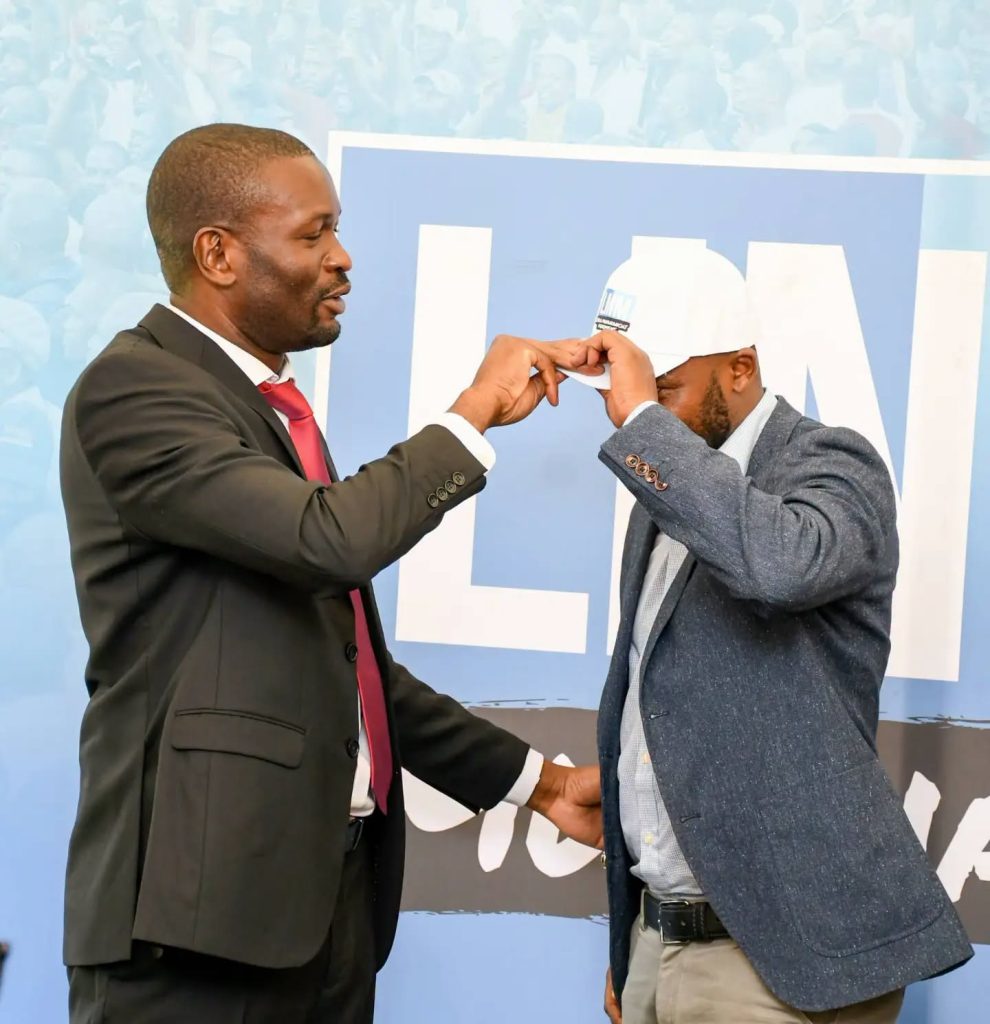
Linda Mwananchi Movement party leader Edwin Sifuna yesterday warned young Kenyans that re-electing President William Ruto in 2027 would foreclose their prospects of ascending to leadership positions by 2032, as his party received defectors from the Orange Democratic Movement at a press conference in Laikipia County.
The event marked a visible expansion of the movement’s organisational footprint into a county that has historically been contested political territory, and Sifuna used the platform to sharpen his party’s pitch to younger voters — the demographic that proved decisive during the 2022 general election and that every major political formation is now actively courting ahead of August 2027.
“I want to tell all young people: if you elect Ruto again, no young person will be a leader in 2032,” Sifuna said, delivering the message in a register designed to land with an audience that has grown increasingly vocal about political exclusion and generational change. The warning was blunt by design. With Kenya’s youth bulge well documented — the majority of registered voters are under 35 — the question of who controls the youth vote is, in practical terms, the question of who wins the next election.
Sifuna’s critique extended beyond the presidential race. He singled out the long-delayed Nanyuki-Doldol road project in Laikipia County as a symbol of what he characterised as a pattern of unfulfilled development promises. “We have heard about the road from Nanyuki to Doldol for many years. Stop talking to Ruto about it — I will come and build it myself,” he said, a pledge that drew applause from the gathering but will inevitably invite scrutiny as the campaign period intensifies and promises require costing.
His most pointed remark, however, was not about roads. “If you are not alive, even the Doldol road being built will not help you,” Sifuna said, a line that situated infrastructure promises within a broader argument about personal safety and the relationship between citizens and the state — a theme that has gained political traction in the wake of public protests and the controversies they generated.
Sifuna also announced plans to visit Laikipia County formally as part of a wider effort to demonstrate LMM’s growing organisational strength. “We will come to Laikipia to show that our party is firm,” he said — a signal that the movement intends to treat the county as a genuinely competitive battleground rather than peripheral territory.
The press conference featured contributions from the movement’s senior leadership, each carrying a distinct message aimed at different segments of the audience. Deputy Party Leader Faith Odhiambo addressed young people directly, framing LMM’s emergence as a generational moment. “Youth, our time is now. We are telling this government: we will not allow young people to be killed by the state,” she said, connecting the movement’s appeal to anxieties that have been building among younger Kenyans since the mid-2024 protests.
Deputy Party Leader Kawira Mwangaza, the former Meru Governor, focused on the party’s electoral machinery, announcing that LMM intends to field candidates across all counties in 2027. “As Linda Mwananchi, we will field candidates everywhere in Kenya. Nominations will be free and fair,” she said — a commitment that, if delivered, would transform LMM from a pressure movement into a full-spectrum electoral vehicle capable of contesting parliamentary and civic seats alongside the presidency.
Mwangaza also praised Sifuna’s personal integrity, describing him as “Mr Clean” — a characterisation that positions him against a political culture widely perceived as transactional and that echoes the kind of branding that has historically resonated with urban, educated and younger voters frustrated by establishment politics.
LMM Secretary General Caroli Omondi went further, explicitly linking Sifuna to the political legacy of former Prime Minister Raila Odinga, who remains one of the most consequential figures in Kenya’s post-independence political history. “This Sifuna is the one who carries the spirit of Baba now. Do not be afraid. We are the ones who will protect you,” Omondi said — a framing that seeks to inherit the emotional and organisational loyalty that Odinga commanded across Western Kenya and parts of Nairobi without requiring Odinga’s direct endorsement.
That inheritance claim is significant and contested. Odinga’s political network, built over decades and anchored in Luo Nyanza, does not transfer automatically, and several formations are positioning themselves as its natural successors. Sifuna’s advantage is that he brings both geographical roots — his networks span Luo Nyanza and Western Kenya — and a public profile sharpened through years as ODM Secretary General, a role that gave him direct experience of how national party machinery operates. His departure from ODM, and the defections the movement received yesterday, suggest that at least some of that network is following him.
The Laikipia event is part of a broader pattern. Across Kenya’s political landscape, parties and movements are using the period between now and the official campaign season to build structures, recruit defectors and establish territorial presence. LMM’s move into Laikipia — a county with a mixed ethnic composition and a history of land-related political tension — suggests the movement is thinking beyond its perceived Western Kenya base.
Whether that expansion translates into electoral results will depend on factors that press conferences cannot resolve: candidate quality, financial resources, coalition agreements and the final shape of the opposition’s presidential architecture. The question of who the opposition fields as its presidential candidate, and on what terms the other formations align behind that choice, remains the defining unresolved question of Kenya’s pre-election period.
Sifuna has made his position clear. The youth, he argues, are the story of 2027 — and their choices will determine not just who wins, but who gets to lead Kenya in the decade that follows.
The young people of Laikipia were listening. Whether they act on what they heard is the question that will only be answered at the ballot.
Similar Posts by The Mt Kenya Times:
- Uhuru issues unity call to opposition at Nairobi funeral
- Uhuru tells opposition: Unite or step aside as Kenya’s 2027 battle takes shape
- Opposition leaders visit Gachagua to offer condolences after sister’s death
- Rising Stars strike late to sink Ivory Coast and edge closer to Olympics dream
- The theatre of déjà vu: Pochettino dreams again at Old Trafford