Sifuna’s moment: The senator who wants to rewrite Kenya’s political script
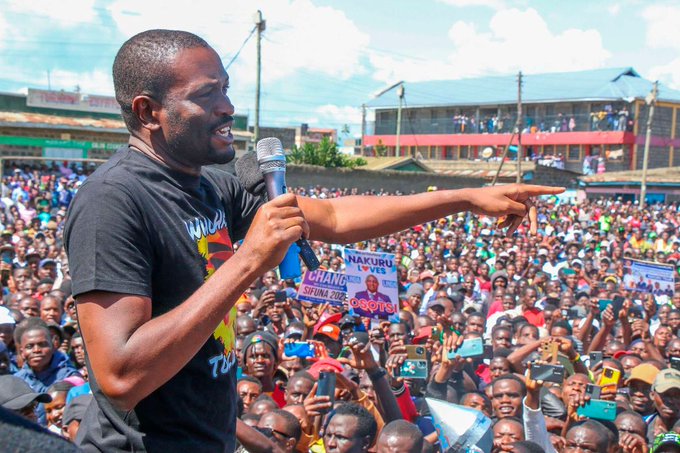
Nairobi Senator Edwin Sifuna
From ODM rebel to presidential hopeful, Edwin Sifuna is racing to turn a grassroots movement into a registered party — but legal obstacles, coalition arithmetic and veteran rivals stand between him and State House
By David Kimani
Nairobi Senator Edwin Sifuna is in the process of registering Linda Mwananchi as a political party for a 2027 presidential bid, his allies have confirmed, in a move that is rapidly transforming what began as a protest movement within ODM into one of the most consequential new forces in Kenyan electoral politics.
The registration drive is being led by senators Godfrey Osotsi of Vihiga and Richard Onyonka of Kisii, who confirmed that the faction has scheduled a meeting with the Office of the Registrar of Political Parties and has already reserved at least one version of the Linda Mwananchi name. Osotsi has been emphatic about the seriousness of the endeavour. A team of experts, he says, is currently drafting the new party’s blueprint and manifesto, ahead of a planned 47-county popularisation tour that will lay the groundwork for a national presidential campaign.
Sifuna’s declaration on July 18 that he is ready to seek the presidency transformed Linda Mwananchi from a pressure group into a potential electoral force, thrusting a figure known for sharp political commentary and fierce loyalty to his base into a conversation that had, until recently, been dominated by seasoned heavyweights. The move has been building for months. Sifuna launched an online membership registration drive earlier this year, saying the directory would help his team gauge the level of support and strategise effectively for the 2027 mission.
The political terrain from which Sifuna emerges is instructive. ODM has been riven by internal division, with Oburu Oginga’s faction warming to President Ruto while Sifuna’s camp firmly rejects any partnership with the ruling establishment. That rupture has been public and bitter. Sifuna, who remains officially ODM secretary-general despite attempts to remove him, has used the Linda Mwananchi banner to consolidate rebel ODM legislators — among them Embakasi East MP Babu Owino, Siaya Governor James Orengo and a cluster of Western Kenya lawmakers — into a disciplined opposition bloc that has already demonstrated real electoral reach. At the Finance Bill 2026 vote in June, the Linda Mwananchi bloc joined forces with Kalonzo Musyoka’s Azimio grouping and Rigathi Gachagua’s Mount Kenya legislators to mount the most coordinated parliamentary opposition Ruto has faced since taking office.
The registration itself, however, faces significant legal and political obstacles. The Registrar of Political Parties rejected a prior attempt by another applicant to reserve the name “Linda Mwananchi Party of Kenya,” citing Section 8 of the Political Parties Act on the grounds that it closely resembles an already reserved slogan. Sifuna’s team has reserved backup names and is pursuing the registration through modified alternatives, but the outcome remains uncertain. According to the ORPP, the new outfit has met some requirements and is awaiting full registration, suggesting the process is active but incomplete.
Beyond the bureaucratic hurdle lies a more complex political one. The Linda Mwananchi camp has made clear it intends to field Sifuna as the presidential candidate in his own right — not as a deputy to Kalonzo, not as a coalition satellite, but as a principal contender. The Luhya Elders Forum threw its weight behind Sifuna on Sunday, naming him the opposition’s preferred presidential candidate and urging other formations to consolidate around him. Forum deputy chairperson Noah Wekesa put the community’s position plainly: “Our son Edwin Sifuna has been accepted by a lot of Kenyans.” Kitutu Chache South MP Anthony Kibagendi has also insisted Linda Mwananchi is part of the planned grand coalition, saying: “The idea is to bring together all the opposition parties because that is the only way we can beat Ruto.”
At yesterday’s Azimio joint council meeting, Kalonzo confirmed that engagement with Linda Mwananchi is ongoing, saying: “We are talking to Linda Mwananchi. We wish them well as they push for the registration of Linda Mwananchi as a political party.” Kalonzo’s own ambitions for the flagbearer position are well established — he has told his inner circle that at 72, this is his last and best chance at the presidency. The two movements’ visions of what a coalition looks like are, for now, in creative tension: Kalonzo wants to lead it; Sifuna’s allies want him on the ballot too.
That tension is not necessarily fatal. Kenya’s coalition history is littered with arrangements that seemed impossible until the night before they were signed. What Linda Mwananchi brings to the negotiating table is something that veteran opposition figures cannot manufacture: genuine grassroots energy, a cross-regional following spanning his Western alliance networks across Luo Nyanza and Western Kenya, and the support of a generation of Kenyans who are tired of recycled presidential faces. Siaya Governor James Orengo has argued that Linda Mwananchi is currently the biggest movement in the country and must produce a presidential candidate. “Linda Mwananchi will form the next government, and the sixth president will come from this movement,” Osotsi declared at a Vihiga rally in April — language that leaves no doubt the movement has no intention of playing a supporting role.
What Sifuna has built in less than a year is remarkable by any political standard. What he has not yet built is a registered party, a presidential campaign structure, or a coalition agreement that reconciles his ambitions with those of Kalonzo, Gachagua and Matiang’i — all of whom regard themselves as equally central to whatever emerges. The registration of Linda Mwananchi as a party will be the first real test of whether this movement can make the transition from phenomenon to institution.
Kenya’s 2027 election is still a year away. In Kenyan politics, that is both a long time and no time at all.
Similar Posts by The Mt Kenya Times:
- Mt Kenya Times ePAPER September 19-20, 2026
- Kenya joins US and UK to put citizens on the terrorism frontline
- Kenya’s parliament races to tame the AI frontier
- Kalonzo calls Ruto to order over Uhuru attacks
- Gachagua takes his 2027 campaign to America
About the Author