The Mt Kenya Times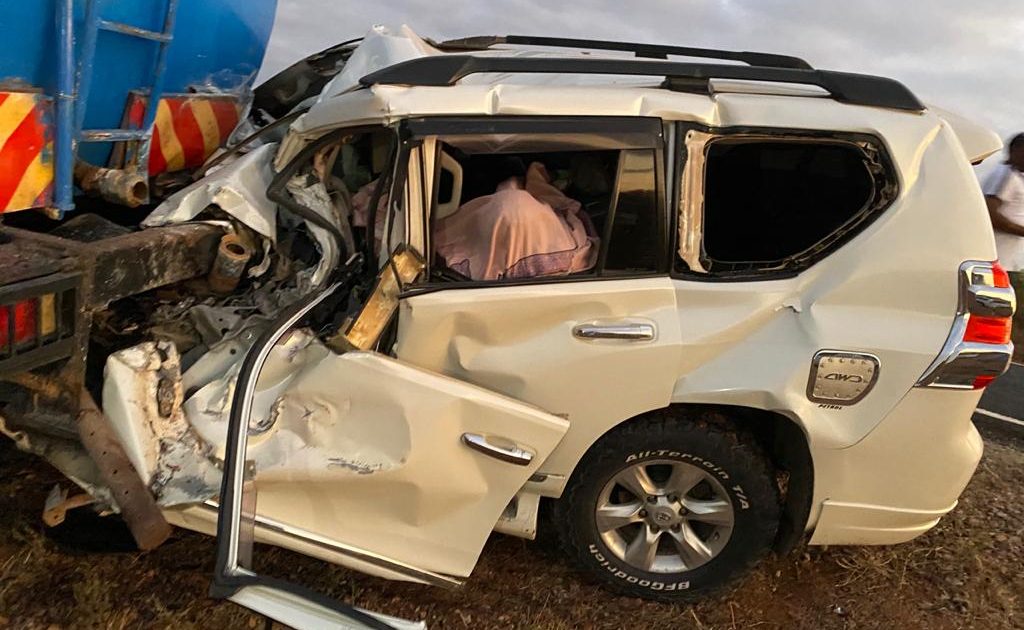
By: Jerameel Kevins Owuor Odhiambo
In the first half of 2026 alone, Kenya’s roads claimed 2,150 lives an 11 percent rise over the same period the year before. Pedestrians accounted for roughly 836 of those deaths; motorcyclists and drivers followed in grim succession. The National Transport and Safety Authority has long warned that road crashes already drain about 5 percent of the country’s GDP each year through lost productivity, medical costs, and shattered families. These are not abstract numbers. They are bodies on asphalt, widows at mortuaries, children who will never again hear a father’s voice. And they begin, almost always, with a simple, deliberate refusal: the refusal to obey the rules that exist to keep people alive.
That refusal is the seed of a larger rot. It is the same spirit that treats traffic laws as optional suggestions, that celebrates the matatu driver who weaves through oncoming traffic like a street performer, that laughs when a police officer pockets a few hundred shillings instead of writing a ticket. From the smallest transgression to the grandest theft of public trust, Kenya has cultivated a culture of impunity so dense it has become the air many breathe without noticing its poison.
Consider the everyday theatre of the matatu. These vehicles, vital arteries of urban movement, have been allowed to become rolling discotheques. Bass-heavy music thunders at volumes that leave passengers disoriented, ears ringing, nerves frayed. When you step off, the world itself seems muffled, as if the city has been wrapped in cotton. This is not culture; it is acoustic assault. It is the same disregard that permits overlapping on dual carriageways, sudden stops without signals, and the casual bullying of slower drivers. The road is treated not as a shared commons requiring restraint, but as a private arena for displays of dominance. Etiquette evaporates. Loud conversations in confined spaces, uninvited commentary on strangers’ lives, the constant jostling for space all of it reveals a society that has forgotten the quiet dignity of mutual consideration.
The same selective blindness appears in the moral calculus of corruption. Corruption is condemned with righteous fury when it disadvantages “us,” yet excused, even celebrated, when it benefits “our own.” A tribesman charged after credible investigation is defended not on the merits of evidence but on the basis of blood. Courts become theatres of ethnic solidarity rather than forums of justice. The Director of Public Prosecutions is whispered about as a political instrument; the police are spoken of as a force that can be directed against inconvenient citizens. Kidnappings by those sworn to protect, surveillance deployed out of fear of the governed, public officers who look down on the people they are paid to serve these are not isolated scandals. They are symptoms of a deeper condition: integrity has been thrown out the window like litter from a speeding matatu.
Police officers openly solicit bribes. Surveys consistently place them at the top of the bribery index; one recent study found that seven in ten Kenyans who interact with the police encounter a bribery situation. The national average bribe has climbed, year after year. Meanwhile, government offices that should deliver critical services operate with the lethargy of institutions that know accountability is rare. The clerk who stares past you, the officer who demands “facilitation,” the official who treats a citizen’s request as an interruption of personal time these small humiliations accumulate into a national atmosphere of contempt.
At the apex sits a politics of performance and propaganda. When leaders treat truth as a flexible tool rather than a binding constraint, when the machinery of the state is turned against those who question it, the example cascades downward. Why should a matatu driver respect speed limits if those at the top treat the law as a suggestion for the powerless? Why should a junior officer refuse a bribe if the system itself appears to reward the brazen? The president as chief narrator of convenient fictions, the weaponisation of institutions, the fear that leads a government to monitor its own people these are not abstract constitutional debates. They are the soil in which everyday impunity grows.
There is a painful irony here. Kenya is a nation of churches, of public prayers, of fervent invocations of divine intervention. Even so the question hangs in the air like exhaust smoke after a traffic jam: Can Jesus even save us? The answer, if one is honest, is that salvation does not arrive as a cosmic erasure of consequences. It arrives, if it arrives at all, through the harder work of conscience recovering its authority. A people who have normalized the idea that rules exist only for others, that tribal loyalty outranks evidence, that noise is freedom and restraint is weakness, will not be rescued by rhetoric alone.
The correlation is stark and instructive. Societies that treat road rules as non-negotiable tend to treat public funds the same way. Societies that protect the vulnerable pedestrian also tend to protect the whistle-blower. Societies that insist on quiet dignity in shared spaces are more likely to insist on dignity in the courtroom and the government office. The reverse is also true: when the small disciplines collapse, the larger ones follow. The matatu that deafens its passengers is not unrelated to the official who deafens himself to the public’s complaints. The driver who overlaps without consequence is practising the same logic as the politician who treats accountability as an optional extra.
This is not a counsel of despair. It is a call to notice. The data is already written in blood and budget lines. The moral pattern is already visible in the daily interactions that shape a nation’s character. What remains is the choice to name the pattern without euphemism, to refuse the comfortable tribal exemptions, to demand that integrity cease being a slogan and become a practice. The roads will continue to kill until the culture that feeds them is confronted. The public purse will continue to haemorrhage until the selective blindness is healed. And the soul of a people will remain restless until the simplest courtesies obedience to rules that protect strangers, honesty when no one is watching, respect for the shared space are restored.
Kenya does not lack talent, faith, or resilience. What it has lacked is the collective decision that impunity is not cleverness but cowardice, that tribal solidarity without justice is merely organised injustice, and that a society which cannot keep its people alive on the road cannot claim to be serious about keeping them free. The first fact is the body count. Everything else is the long shadow it casts.
The writer is a social commentator.
Similar Posts by The Mt Kenya Times:
- Kingdom Bank charts new path for MSME growth through chamber partnership
- Mt Kenya Times ePAPER September 25, 2026
- Babu Owino’s party predates Linda Mwananchi, clarification shows
- Anglican church tells Kenyans: The country is getting worse and silence is complicity
- Sifuna set for UDP presidential unveiling as Western Kenya bids to field its own candidate
About the Author