Why Kenya keeps preparing for power instead of preparing the country
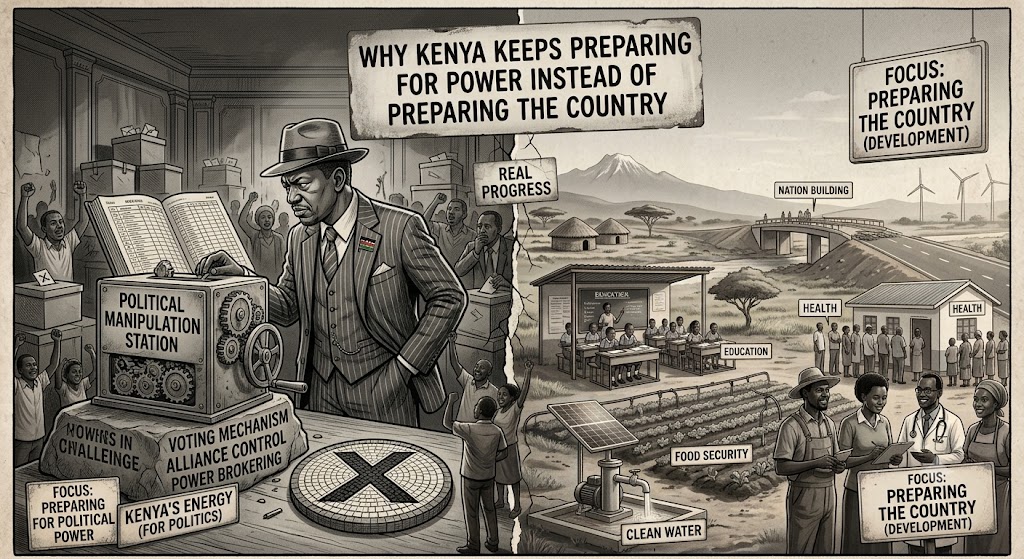
As the August 11 ruling reignites debate over the electoral timetable, the more uncomfortable question is why we invest so much in the next election and so little in the country between them.
By Levis Wangamati
Kenya has a peculiar political habit. We begin preparing for the next election long before we have finished dealing with the problems created by the last one. By the time politicians have settled into office, conversations about succession have already begun. Coalitions take shape, loyalties are tested, possible running mates emerge, regions are quietly mapped, and opinion polls become political scripture.
Then came August 11. A date that had largely lived inside a constitutional argument suddenly became a national political question. The High Court declared that Kenya’s presidential election was constitutionally due on August 11, 2026, rather than in 2027 — while suspending the practical effect of that declaration. The ruling did not instantly move the country to the ballot. Instead, it exposed something more fundamental: the distance between the political calendar Kenyans had been preparing for and the constitutional questions that determine how that calendar should actually work.
That distance deserves more attention than the political excitement surrounding the next election. Because perhaps Kenya’s greatest political problem is not that we prepare too early for elections. Perhaps it is that we prepare too little for the country.
For years, 2027 has been treated almost as a political destination. Politicians have been positioning themselves, alliances have been floated, succession has become a permanent subject of national conversation, and every political visit is assigned electoral meaning. The country watches. The politicians calculate. And somewhere beneath all this choreography, ordinary life continues.
A parent still has to find school fees. A graduate still has to look for work. A patient still has to find treatment. A farmer still has to worry about markets and weather. A small business owner still has to keep the doors open. These citizens do not live according to the political calendar. They live according to the cost of living.
That is why the August 11 controversy should force a broader national conversation. The important question is not simply whether the election belongs in 2026 or 2027 — that must be settled through the constitutional and legal processes of the Republic. The more uncomfortable question is why we have become so politically invested in the date of the next election while remaining so little invested in the condition of the country between elections.
Kenya has made succession a national sport. We discuss who will succeed whom with extraordinary enthusiasm. We dissect political alliances as though they were football formations. We reduce regions to voting blocs and communities to electoral arithmetic. But leadership is not mathematics, and a nation is not a spreadsheet of votes.
Behind every percentage in an opinion poll is a citizen whose concerns will remain long after the pollsters have moved on. Behind every political coalition are millions of people who will still need functioning institutions when that coalition eventually dissolves. This is where our politics loses its sense of proportion. We have become fascinated by who gets power and insufficiently interested in what power is supposed to accomplish.
The Constitution should remind us of the difference. The constitutional order is not simply an instrument for determining who occupies State House. It is meant to organise power, limit it, distribute it, and make it accountable to the people. Elections are essential — but elections are not governance. Winning an election gives a government the authority to govern. It does not give it permission to forget why government exists.
Yet our political culture often treats electoral victory as the ultimate achievement. Once the votes are counted, the campaign machinery does not disappear — it changes shape. Development projects become political evidence. Appointments become signals of loyalty. Government announcements become opportunities for political branding. Opposition becomes a contest of personalities rather than an examination of policy. Even national problems become campaign material.
This is how a country gets trapped in permanent election mode. A government that spends too much energy anticipating the next political contest may struggle to make decisions whose benefits are long-term. A politician may prefer the popular decision to the necessary one. An administration may hesitate to confront difficult structural problems because the consequences are politically inconvenient. Institutions may be judged not by whether they are faithfully performing their constitutional mandate, but by which political side they appear to favour.
The August 11 ruling offers Kenya an opportunity to pause. Not to panic. Not to turn the judiciary into another battlefield between political camps. Not to treat a complicated constitutional question as a convenient slogan. Instead, we should ask what the controversy reveals about the health of our constitutional democracy.
If the country can spend years preparing politically for one election year while constitutional litigation produces an entirely different interpretation of the electoral timetable, then perhaps the real problem is not the disagreement over dates. Perhaps it is our failure to build sufficient certainty around the rules that govern the most important democratic exercise in the country.
A stable democracy requires more than elections. It requires predictable institutions, respect for constitutional timelines, independent bodies capable of performing their duties without political intimidation, and citizens who understand that democracy is not merely the right to choose leaders — it is also the responsibility to demand accountability from them.
This is where Kenya must change its political conversation. Instead of asking only who has the numbers, ask who has the ideas. Instead of asking which community will produce the next leader, ask what policies that leader will pursue. Instead of asking which coalition will win, ask what it intends to do with victory.
These are less exciting questions. They are better questions.
Kenya does not suffer from a shortage of politicians. It suffers from a shortage of political seriousness. We have mastered mobilisation, slogans, and coalition-building. What we have not mastered is continuity. Every administration arrives promising a new beginning while many national problems remain stubbornly old. Youth unemployment does not disappear with a new coalition. Public debt does not vanish after a political transition. Weak institutions do not become strong simply because their occupants change.
The country requires something more difficult than political renewal. It requires institutional maturity.
The campaign posters will eventually come down. The rallies will become memories. The alliances will shift. But the country will remain. The young Kenyan looking for work will still be looking. The family counting its money at the end of the month will still be counting. The patient will still need treatment. The taxpayer will still demand value.
Elections may determine who governs Kenya for the next term. Only governance will determine what kind of Kenya they inherit.
Because elections change governments. Only good governance changes lives.
Similar Posts by The Mt Kenya Times:
- Kingdom Bank charts new path for MSME growth through chamber partnership
- Mt Kenya Times ePAPER September 25, 2026
- Babu Owino’s party predates Linda Mwananchi, clarification shows
- Anglican church tells Kenyans: The country is getting worse and silence is complicity
- Sifuna set for UDP presidential unveiling as Western Kenya bids to field its own candidate
About the Author