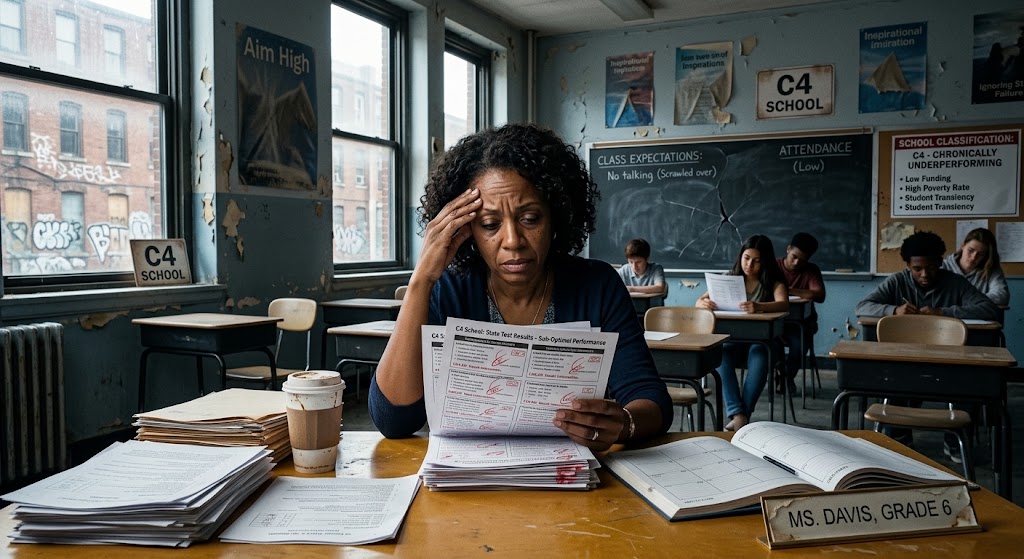
Years of hardship, invisible effort and relentless disappointment have quietly broken the professional spirit of many educators in Kenya’s most marginalised schools
By Ashford Kimani
Internalised failure is a psychological condition in which individuals repeatedly encounter setbacks, disappointment and difficult environments until they unconsciously accept that failure is normal, permanent and unavoidable. It happens when people stop expecting success even before making a serious attempt. A person carrying internalised failure may continue reporting to work and performing routine duties, but internally they have surrendered hope. They no longer believe meaningful change is possible.
Consider sport. If a football team loses every season for ten consecutive years, players and supporters eventually approach matches expecting defeat. Even with talented individuals on the pitch, they enter mentally beaten. A student who repeatedly performs poorly in Mathematics tells a similar story. Over time that learner begins saying, “Maths is not for me,” even before attempting a problem. The mind slowly accepts failure as identity.
That same phenomenon is quietly affecting many teachers in C4 schools across Kenya.
In hardship and marginalised schools, teachers have gradually internalised poor performance, low expectations and educational hopelessness — not because they are incompetent or lazy, but because years of operating in difficult environments have psychologically conditioned many of them to believe that excellence belongs to other schools and other regions.
In some institutions, a mean score of D+ is celebrated like a national achievement because the school has struggled for years without better. Teachers openly say things like, “Our students cannot compete with national schools,” or “These children cannot pass Mathematics,” or “This area has never produced doctors.” Such statements reveal something deeper than academic struggle. They reveal wounded professional belief systems.
One major cause is prolonged exposure to poor results. Imagine teaching for ten years in a school where learners rarely qualify for university. Every year, a teacher prepares candidates, runs remedial lessons, motivates students and sacrifices personal time — only for results to remain painfully low. After repeated disappointments, many teachers unconsciously lower expectations simply to protect themselves emotionally from frustration.
Human beings naturally adapt to their environments. When poor grades are normalised over years, mediocrity slowly becomes acceptable. Survival replaces ambition. Staffroom conversations shift from how to produce engineers and surgeons to how to avoid embarrassment on results day.
The difficult socio-economic realities surrounding many C4 schools compound the problem. Some learners arrive from homes affected by extreme poverty, alcoholism, drug abuse, broken families and hunger. In certain regions, children walk several kilometres to school daily, often without breakfast or basic learning materials. Teachers themselves sometimes work in remote postings with poor housing, unreliable electricity and limited professional support.
When educators continuously struggle against such realities without visible improvement, emotional exhaustion sets in. The mind begins whispering a dangerous message: “Nothing will ever change here.” That is precisely how internalised failure takes root.
Kenya’s comparison culture within education has worsened matters. Elite national schools dominate headlines and rankings while struggling schools appear in the news mainly during unrest or poor performance announcements. Teachers in marginalised institutions rarely receive recognition for the extraordinary work they do under harsh conditions. They watch learners from wealthier schools access laboratories, digital tools and mentorship while their own students share worn textbooks. Such visible inequality slowly kills morale.
Internalised failure also manifests in reduced professional growth. Teachers who once pursued workshops, innovation and career development gradually become passive. New teaching methods are resisted. Technology is ignored. Some stop reading or researching modern instructional approaches because, deep inside, they no longer expect transformative outcomes.
The tragedy is that this mindset spreads. New teachers posted to struggling schools often arrive energetic and ambitious, but after months of absorbing a negative school culture, some adopt the same defeated thinking. Staffrooms become centres of complaint and blame rather than spaces for problem-solving and innovation.
Learners, in turn, borrow this mindset from the adults around them. Children observe adult attitudes closely. If teachers consistently speak the language of limitation, students internalise inferiority. A bright child dreaming of becoming a pilot or neurosurgeon may quietly lower ambitions after repeatedly hearing, “People from this school do not reach such levels.” That is how communities remain trapped in cycles of educational underachievement.
Yet history proves that difficult environments do not automatically produce failure. Some of the world’s greatest achievers emerged from villages, informal settlements and under-resourced schools. What distinguished them was not privilege alone, but the presence of teachers who refused to surrender mentally.
Across Kenya today, there are teachers in hardship areas still producing extraordinary results. Some have built strong reading cultures in schools without libraries. Others run mentorship programmes from personal resources. Some use improvised materials creatively to teach science concepts. Others expose learners to debates, writing competitions, music festivals and technology initiatives despite limited facilities. Such teachers demonstrate a truth that cannot be overstated: belief is powerful.
The greatest danger facing many struggling schools is therefore not the absence of buildings or textbooks alone. The deeper danger is psychological defeat. Once teachers stop believing in possibilities, classrooms lose their transformative power.
School leadership has a critical role in reversing this. Principals who celebrate small improvements, motivate staff and build collective vision can gradually restore hope. Teacher training institutions must equally prepare educators for the psychological demands of challenging postings. Academic qualification alone is insufficient. Teachers need emotional resilience, adaptability and the capacity to inspire hope under difficult circumstances.
Most importantly, teachers themselves must guard their minds. A difficult environment should never be allowed to produce a defeated mindset. Circumstances may be hard, but children still need adults who believe in their potential.
Every Kenyan child — whether from Turkana, Kibra, Mandera, Tana River, Mathare or Gatundu — deserves educators who communicate possibility rather than defeat.
The day teachers in struggling schools recover their belief, many institutions currently dismissed as hopeless will begin producing stories that inspire the nation.
Similar Posts by The Mt Kenya Times:
- Kenyans abroad: Is the American dream turning into an immigration nightmare?
- Stress disorder: When the body remains in survival mode
- Mashujaa day must leave more than memories in Uasin Gishu
- The role of phones and social media in the lives of older people
- Delegate the Labour, Keep the Judgement: Artificial Intelligence in Namibian Schools
About the Author