The Mt Kenya Times
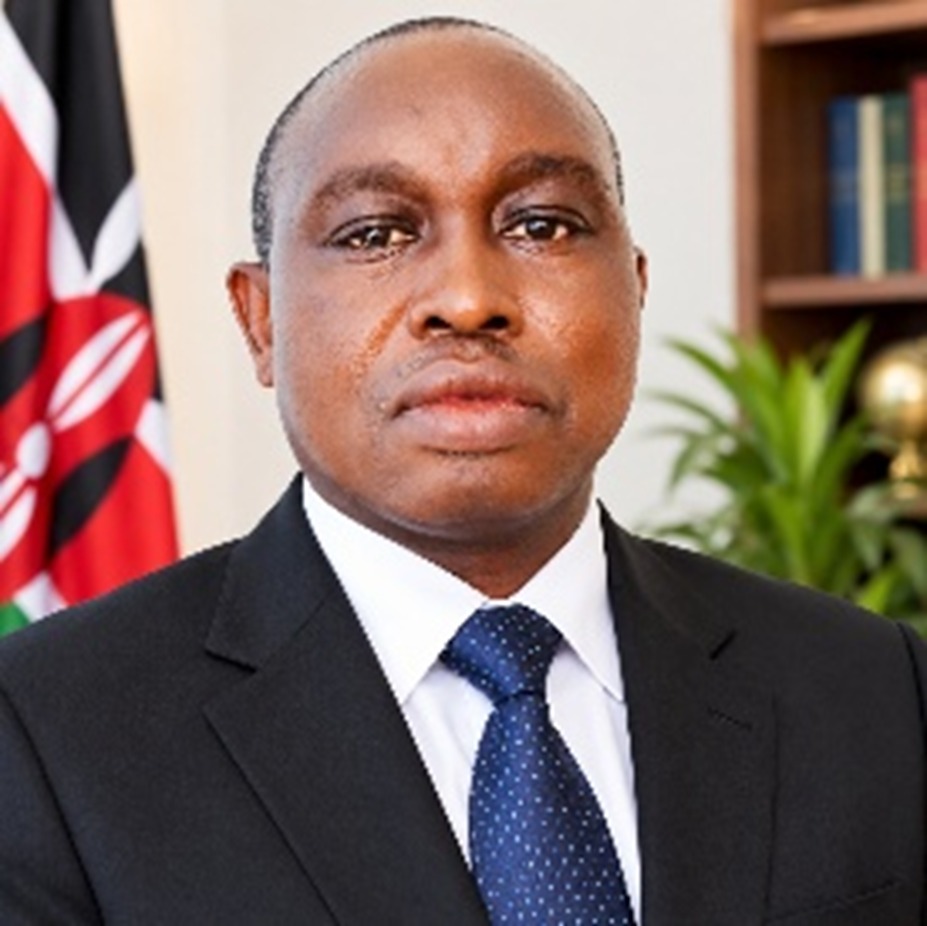
By Mr. Fredrick Kipchumba Chelimo – PWD
Email; jiamini.network@gmail.com
“A nation’s greatness is measured not by the splendour of its ceremonies, but by the dignity and opportunity it creates for its people.”
For the first time, Uasin Gishu, Nandi and Elgeyo Marakwet will jointly carry the national spotlight when Kenya marks Mashujaa Day on October 20, 2026, with Eldoret serving as the principal stage. A thematic week running from October 13 to 18 will focus on security, sports and the economy, bringing national leaders, investors, athletes, businesses and citizens into the North Rift. It is an extraordinary moment for the region. But when the flags come down, the stages are dismantled, the convoys disappear and the television cameras move elsewhere, one uncomfortable question will remain: what will Mashujaa Day have left behind for the ordinary people of this region? That is the question that must haunt every planner, leader and institution involved.
Because national celebrations are not merely spectacles. They are occasions on which government demonstrates what it believes about its citizens. If this Mashujaa Week is genuinely about the economy, then its economic footprint must be visible beyond conference halls and official speeches. A farmer cannot eat a policy document. A young graduate cannot pay rent with a summit slogan. A small trader cannot employ another worker because a dignitary delivered an eloquent speech about inclusive growth. And a person with a disability does not become economically empowered because they were invited into a photograph with a government official. Development becomes meaningful only when it travels the final distance from the boardroom to the household.
That is why the people of Uasin Gishu, Nandi and Elgeyo Marakwet are entitled to ask: How much of the economic activity generated by Mashujaa Week will actually remain here? How many local enterprises will supply food, transport, accommodation, construction, branding, cleaning, security, entertainment and other services? How much agricultural produce will be purchased from local farmers? How many young people, women and persons with disabilities will obtain genuine business opportunities? How much money will circulate among local businesses rather than merely pass through the region? These are not hostile questions. They are the questions of responsible citizens.
Indeed, government has an opportunity to demonstrate that public expenditure can become a catalyst for local enterprise without compromising procurement law, competition, transparency or value for money. Eligible youth, women and persons with disabilities already have a recognised pathway to public procurement through the Access to Government Procurement Opportunities framework. Mashujaa Week should demonstrate what meaningful inclusion looks like when the principle meets reality. There must be no room for the familiar theatre in which ordinary citizens are displayed as beneficiaries while economic opportunities quietly circulate among those already connected to power.
The Kenya Economic Summit, therefore, must not become another sophisticated conversation about Kenyans conducted largely without them. Kenya has held countless conferences on agriculture, manufacturing, entrepreneurship, digital transformation, investment and employment. The country does not suffer from a shortage of policy vocabulary. It suffers when policy promises fail to make the difficult journey into implementation. If agriculture is discussed, farmers should leave with stronger markets. If manufacturing is discussed, local suppliers should see opportunities. If finance is discussed, small enterprises should see realistic pathways to affordable capital. If digital transformation is discussed, young people should see routes into the digital economy. If tourism and culture are celebrated, artists, craftspeople and cultural entrepreneurs should participate in the value chain. Otherwise, economic dialogue risks becoming a ritual in which the people being discussed remain outside the room.
Mashujaa Day itself should also force us to reconsider who we call a hero. Across the North Rift are countless Kenyans whose contribution to the nation will never be captured by official titles. There are teachers who educated generations, farmers who feed communities, nurses and other health workers who serve under immense pressure, athletes who have carried Kenya’s flag across the world, entrepreneurs who create employment, environmentalists who protect our natural heritage, caregivers who quietly sacrifice for vulnerable relatives and community volunteers who solve problems long before government notices them. These, too, are Mashujaa.
The legitimacy of national recognition is strengthened when ordinary citizens can see themselves in the story of national heroism. This is particularly true for persons with disabilities. For decades, disability inclusion has featured prominently in official speeches. What is now required is not another declaration of inclusion, but evidence of it. Persons with disabilities should not merely sit in the audience, appear in ceremonial photographs or receive symbolic acknowledgement. They should participate in planning, procurement, exhibitions, sports, cultural activities, entrepreneurship forums and post-event evaluation.
Accessibility must extend beyond ramps. It means accessible venues and sanitation facilities, appropriate pathways, accessible information, communication support and reasonable accommodation. It means ensuring that participation is possible, dignified and substantive. But physical accessibility is only half the equation.
Economic inclusion is the harder test. How many disability-owned enterprises will secure legitimate opportunities? How many persons with disabilities will participate as suppliers, exhibitors, artists, athletes, innovators and entrepreneurs? What measurable value will reach disability-owned businesses? These questions should not be answered with applause. They should be answered with numbers. The same standard must apply to women, youth, small traders, farmers and other citizens who frequently remain at the margins of decision-making. And after the celebrations, the public should demand a Mashujaa Day Economic and Social Impact Statement.
The people deserve to know how much was spent, how much went to local suppliers, how many enterprises participated, how many temporary and longer-term opportunities were created, how much agricultural produce was sourced locally, how many youth, women and persons with disabilities benefited, what cultural enterprises earned, and what investments, partnerships and markets survived beyond October 20. This would not diminish the celebration. It would give it credibility.
The Government has already described the 2026 celebrations as an opportunity to showcase development and programmes delivering tangible benefits to citizens. That ambition should therefore be judged not only by the quality of the ceremony, but by the economic and social footprint it leaves behind. Uasin Gishu should welcome Mashujaa Day with pride. It should open its doors to Kenya, showcase its hospitality and celebrate the extraordinary contribution of the North Rift to sport, agriculture, enterprise and national life.
But pride must never become an excuse for silence. When the final speech is delivered at Kipchoge Keino Stadium and the last convoy leaves Eldoret, an ordinary resident should be able to point to something tangible: a contract, a customer, a job, a market, an investment, a business connection, a cultural opportunity, an accessible facility or a policy commitment that actually changed something. That is the real test.
Let Kenya come to Eldoret to honour its heroes. But let the people of Uasin Gishu, Nandi and Elgeyo Marakwet have something tangible to celebrate when Kenya leaves. Because a Mashujaa celebration worthy of its name should not merely create memories. It should create opportunities. And when the history of Mashujaa Day 2026 is eventually written, the most important chapter should not be how magnificent the ceremony looked. It should be how many ordinary Kenyans could honestly say: “Something changed for me because the nation came here.”
“The true measure of a celebration is not the applause it attracts, but the lives it leaves better and the historical impact associated with the occasion with it .”
Similar Posts by The Mt Kenya Times:
- Kenyans abroad: Is the American dream turning into an immigration nightmare?
- Stress disorder: When the body remains in survival mode
- Why most teachers in C4 schools have internalised failure
- The role of phones and social media in the lives of older people
- Delegate the Labour, Keep the Judgement: Artificial Intelligence in Namibian Schools
About the Author