Young Kenyans and the digital economy: Opportunity, access, and the road ahead
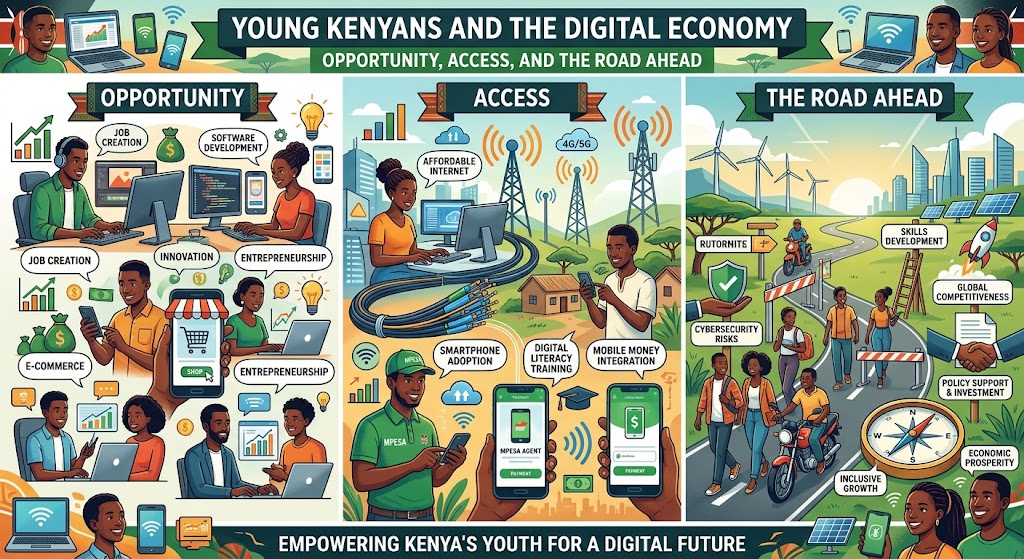
A communication and media student argues that Kenya’s youth are already shaping the digital economy — but they need better tools to go further
By Victorine Nekesa
Kenya’s digital economy has become an important part of everyday life, creating new opportunities for young people to learn, work, communicate, and build businesses. With the rapid growth of smartphones, internet access, digital platforms, and mobile money services, young Kenyans are increasingly using technology not simply for entertainment but as a genuine means of earning a living.
One of the most significant ways young people are participating is through online employment and freelancing. Many offer services such as graphic design, writing, photography, programming, digital marketing, and virtual assistance through online platforms — working with clients both within Kenya and abroad without leaving the country. For a generation that has grown up with technology, the barriers to entry are lower than they have ever been.
Social media has become an equally important tool for young entrepreneurs. Platforms such as Instagram, Facebook, TikTok, and WhatsApp enable business owners to advertise products, communicate with customers, and reach markets well beyond their immediate communities. A young person selling clothes, food, beauty products, or handmade items can promote a business at relatively little cost — something that would have been unimaginable a generation ago.
Mobile money and digital payment systems have further transformed the landscape. Services such as M-Pesa have made it significantly easier for young entrepreneurs to send and receive payments, manage small businesses, and participate in online commerce. Digital financial tools have reduced some of the barriers that once made it difficult for young people to start and sustain businesses.
Technology has also opened doors to learning and skills development. Young Kenyans can access online courses, tutorials, educational videos, and professional training from institutions across the world — acquiring skills that improve their chances of employment or entrepreneurship without the cost or logistics of formal study abroad.
Despite these opportunities, serious challenges remain.
Limited access to affordable and reliable internet continues to disadvantage young people in many communities. The cost of smartphones, computers, and data services prevents some from fully engaging with digital opportunities. A lack of adequate digital skills makes it harder still to compete in an increasingly technology-driven job market.
Online safety is another growing concern. Young people face real risks from cybercrime, online scams, identity theft, and the misuse of personal data. Greater awareness of digital security and responsible technology use is not optional — it is essential.
The government, educational institutions, private companies, and other stakeholders all have a role to play. Investment in affordable internet infrastructure, digital skills training, and entrepreneurship programmes can open participation to more young Kenyans. Schools and universities can do more to strengthen digital education so that graduates leave with practical skills that match the demands of a changing workplace.
Kenya’s young population is one of its most valuable assets in building a competitive digital economy. With the right skills, infrastructure, and support, young people can become creators of digital products, entrepreneurs, employees, and innovators — rather than simply consumers of technology developed elsewhere.
The future of Kenya’s digital economy will depend, in no small measure, on how effectively its young people are prepared and empowered to shape it. Getting that right is not only about individual opportunity. It is about employment creation, innovation, and long-term economic growth.
Similar Posts by The Mt Kenya Times:
- When the brew becomes a death sentence: How many more Kenyans must die?
- Kindiki defends Kenya Kwanza record: Can projects alone define a government?
- Botswanan writer lands in Nairobi: Dr. Otukile visits the country that gave her first break
- Kakuzi birdwatching tour ends in triumph as Japanese royalty sights rare migratory birds
- KSh6.4 million up for grabs as MKU searches for its most impactful alumni
About the Author