Youth stress mania: Internalised limitation in the transition to adulthood
 The Mt Kenya Times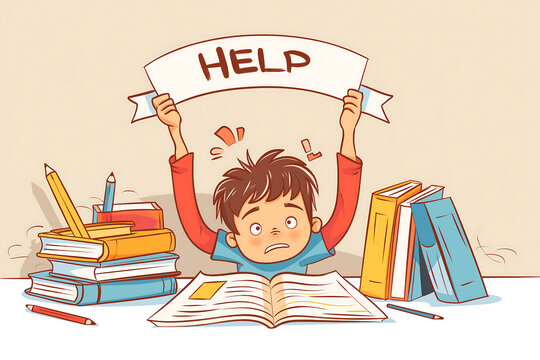
Economic pressure, online comparison and family silence are driving a cycle of stress among young people
By Wanjohi P Mugambi
Youth stress mania is an emerging psychosocial concept that describes a pattern of intense, fluctuating stress responses among young people who are navigating the transition to adulthood amid economic uncertainty, constant social comparison and compressed timelines for achieving success. Unlike clinical categories that isolate anxiety or depression as individual disorders, youth stress mania captures the collective and cyclical nature of stress as felt in everyday life. It shows up as alternating periods of high functioning and withdrawal, emotional volatility, disrupted sleep, irritability, lost motivation and engagement in risky behaviour intended to bring some short-term relief. The term mania is used here not in the psychiatric sense of bipolar disorder, but to describe the windlike movement of stress that shifts rapidly within individuals and also across peer groups.
The theoretical foundation for this construct rests on three interlinked mechanisms. The first is internalised limitation. Young people are exposed over long periods to repeated social messages that question their competence and future. These messages originate in family discourse, educational settings, religious institutions and community savings groups. Over time, external evaluation becomes internal belief. When a young person hears for many years that they cannot achieve, cannot lead and cannot manage resources, the result is not simply low self-esteem but a reduction in help-seeking and willingness to try. Research on self-efficacy shows that perceived capability is a much stronger predictor of action than actual skill. When permission to try is withdrawn socially, skill remains unused. The youth does not fail due to lack of capacity, but due to lack of socially granted legitimacy to attempt.
The second mechanism is amplified social comparison. The expansion of mobile internet has transformed reference groups for youth. Previously, comparison was limited to immediate peers within a village or school. Today, a young person compares their daily reality with curated images of success from thousands of peers in urban centres. Social comparison theory indicates that upward comparison under conditions of low control leads to shame rather than motivation. The device that provides information also delivers a constant measure of perceived inadequacy. This is compounded by economic conditions where visible markers of success such as clothing, housing and consumption are highly salient, while pathways to income are constrained. The result is a persistent gap between expected life markers and available means, which is experienced as personal failure rather than structural limitation.
The third mechanism is accelerated role pressure. Societies hold implicit, age-linked expectations for early financial independence, marriage, parenthood and contribution to family. These expectations are not formally codified but are socially enforced through gossip, indirect advice and conditional support. Young men face pressure to demonstrate financial capacity early, while young women are expected to show compliance and respectability, all while managing economic needs. When these timelines are not met, social stigma increases, which further isolates the young person and reduces access to social capital. Stress therefore becomes not only about a lack of money but about the social meaning of that lack. Youth report that the most stressful questions are not about employment itself but about when they will provide, when they will marry and when they will become responsible.
Silence is a maintaining factor. In many families, there is no culturally accepted vocabulary for psychological distress that does not pathologise or moralise the person. Expressions of stress are often interpreted as laziness, lack of prayer or weak character. Consequently, many young people adopt a strategy of saying they are fine while experiencing significant internal distress. This mismatch between public presentation and private experience prevents early support. Coping then shifts toward private behaviours that provide immediate distraction, such as excessive screen time, gambling, alcohol use and transactional relationships. These behaviours provide short-term regulation but increase long-term stress and reduce future opportunities, and so create a cycle.
Intervention approaches that focus only on skills training or financial capital without addressing these psychosocial mechanisms show low completion and retention rates. Evidence from community-based programmes suggests that sequencing itself matters. Creating a space for naming and externalising internalised messages before technical training increases engagement and application. Methods that use participatory drama, drawing and narrative allow youth to see that their experience is shared rather than individual failing. This process of externalisation reduces self-blame and helps build collective efficacy. When young people act or draw the social messages that have limited them, they begin to question who benefits from those messages and whether they are accurate. This is consistent with narrative therapy and liberation psychology approaches that treat problems as separate from persons and located within social discourse.
 The concept of divinity in this framework is defined not as religious doctrine, but as restoration of worth. It refers to practices that reaffirm that a person is not broken but unheard. Practices that combine listening, witnessing and documentation have shown promise. For example, when youth see their ideas and names documented in local publications or community exhibitions, their sense of agency increases. This is not because publication itself provides income, but because it provides social recognition that counters the dominant message of incapability. Artivism, understood as the use of low-cost creative forms such as drama and journalism to document lived experience, functions as a psychosocial intervention rather than only as advocacy.
Youth stress mania therefore requires a response that integrates psychosocial and economic support. It cannot be addressed by a single workshop or a one-time cash transfer. It requires consistent spaces where young people can be vulnerable without penalty, where failure of small projects is treated as data for learning rather than evidence of incapability, and where local knowledge is translated into accessible formats. It requires adults to shift from telling youth to be strong toward building structures that allow them to be weak safely and then recover. Future research should examine the prevalence of this pattern across different youth populations, its relationship to livelihood disruption, and the effectiveness of sequencing healing and skills in improving retention, savings behaviour and mental wellbeing outcomes. The central argument is that when young people are heard before they are taught, their capacity to learn, save and lead increases measurably.
Similar Posts by The Mt Kenya Times:
- The emperor’s new constitution: How Ruto’s reign unmasks the ghost of imperial presidency
- Annwen Jordan: Redefining women’s leadership, creative excellence & purpose-driven legacy
- Portugal beat Norway 2–1 in Oslo
- Mt Kenya Times ePAPER September 28, 2026
- Kalonzo turns 40-year jibe into rule of law defence
About the Author