World Bank’s KSh26B project to restore Kenya’s degraded landscapes and transform 750,000 lives

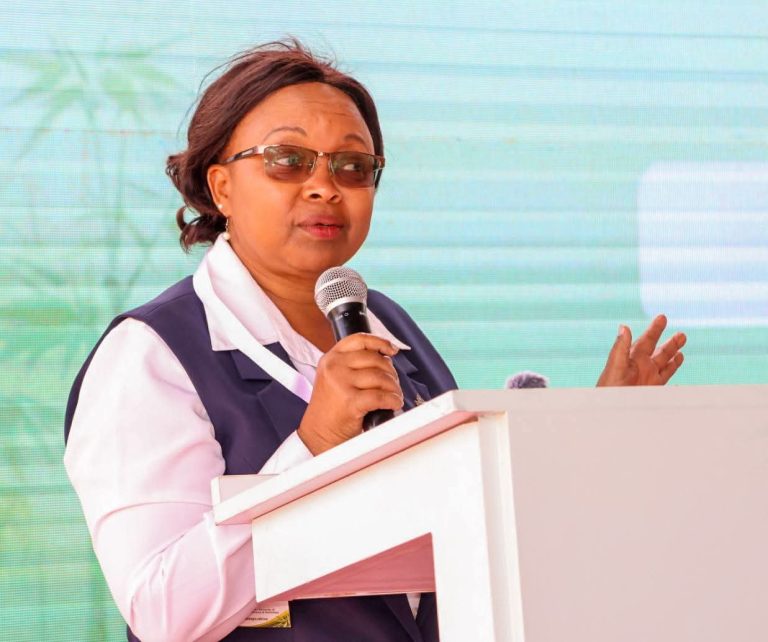
Environment Cabinet Secretary Deborah Barasa (centre), flanked by Laikipia Governor Joshua Irungu (right) and Forestry Principal Secretary Gitonga Mugambi, during the launch of the Kenya Watershed Services Improvement Project (KEWASIP) in Nairobi on Monday, November 2, 2026 | Photo: Courtesy
A landmark watershed investment targets five ecological regions — but the clock is ticking on Kenya’s land.
By Jane Njeri
The World Bank has committed KSh26B (US$200 million) to restore degraded land across 12 Kenyan counties, in a five-year programme expected to benefit 750,000 people and create 25,000 jobs.
The Kenya Watershed and Sustainable Landscape Investment Project — known as KEWASIP — will deploy International Development Association financing to help the Kenyan government enhance sustainable land and watershed management and improve livelihoods across five high-priority ecological regions, covering watersheds in Marsabit, Marmanet, Nyambene, Chyulu Hills and Shimba Hills. The 12 counties covered are Marsabit, Samburu, Garissa, Isiolo, Baringo, Meru, Tharaka Nithi, Tana River, Laikipia, Kitui, Makueni and Kwale — a geography that stretches from the semi-arid north to the coastal hinterland, encompassing some of Kenya’s most ecologically stressed terrain.
The scale of the challenge that KEWASIP is designed to address cannot be overstated. Kenya’s water towers — the forested highlands and rangelands that regulate river flow, recharge aquifers and sustain agricultural productivity for tens of millions of people — have been losing ground to deforestation, overgrazing, erratic rainfall and encroachment for decades. The consequences ripple outward: reduced stream flow, soil erosion, crop failures, and intensifying competition over water and pasture that has fuelled intercommunal conflict in counties such as Baringo, Laikipia and Isiolo. KEWASIP is not merely an environmental initiative; it is, at its core, a social and economic stabilisation programme dressed in conservation language.
“This project is not just about restoring land — it’s about restoring opportunity and resilience for Kenya’s rural communities, especially women, youth and marginalised groups,” said Qimiao Fan, World Bank Division Director for Kenya. “By investing in sustainable landscapes, we are safeguarding Kenya’s natural capital, which underpins food security, jobs and climate resilience.”
Fan’s framing is deliberate. The World Bank has learned, through decades of conservation financing across sub-Saharan Africa, that restoration programmes that exclude communities tend to fail. KEWASIP is structured to avoid that trap. The project will use an integrated landscape management approach, connecting catchments that span forests, rangelands and agricultural systems, structured across three core components: policy and regulatory strengthening, on-the-ground restoration and watershed management, and project management and capacity building.
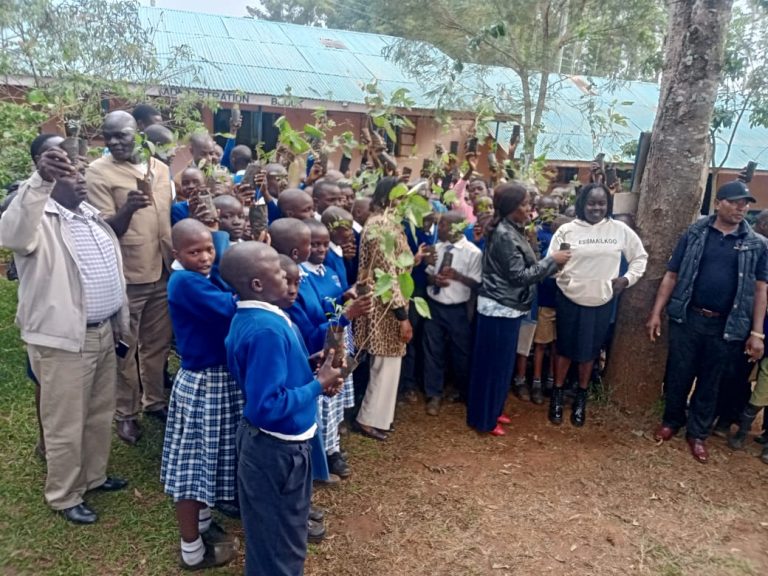
Approximately 25,000 jobs are expected to be created through interventions that promote sustainable livelihoods, including agroforestry, afforestation and the development of non-timber forest product value chains. The project will also engage local enterprises to explore investment opportunities that advance climate-smart land use and sustainable forest management. For counties such as Kitui and Makueni, where youth unemployment is high and rain-fed agriculture increasingly unreliable, those jobs represent a tangible lifeline rather than a policy abstraction.
The Kenya Forest Service, one of the main implementing agencies, has already mapped out 82 tree nurseries across the 12 pilot counties in readiness for implementation. That groundwork matters. Nursery infrastructure is among the earliest and most critical bottlenecks in large-scale restoration programmes; having it in place before disbursement begins signals a degree of institutional preparedness that has often been absent in comparable initiatives.
The project became effective on 23 December 2025, and its formal launch followed in January 2026, with county leaders convened in Nairobi to align roles and responsibilities across the 12 participating counties. The coordination challenge is formidable. KEWASIP must synchronise the efforts of the State Department for Forestry, the Kenya Forest Service, county governments and local communities across an enormous geographic and ecological spread. Past restoration programmes in Kenya have foundered not on funding or intention but on that coordination deficit.
The initiative sits within a national restoration agenda seeking to rehabilitate 10.6 million hectares of degraded landscapes by 2032 under the National Landscape and Ecosystem Restoration Strategy. That target — ambitious by any measure — requires an average annual restoration rate that Kenya has never previously achieved. KEWASIP will need to deliver not merely its own objectives but also demonstrate a replicable model that can be scaled across the remaining counties and landscapes outside its current footprint.
The political and electoral backdrop adds an additional layer of complexity. Kenya heads into a general election in August 2027, and large infrastructure and environmental projects routinely become tools of political patronage in the months before polling day. With KEWASIP funds flowing into 12 counties — several of them contested political battlegrounds — the implementing agencies will need to insulate the programme from the temptation to redirect resources towards electoral calculations. Transparent procurement, independent monitoring and community-level accountability mechanisms will be essential safeguards.
Over time, KEWASIP is expected to generate multiple benefits, including restored ecological function, improved water security, increased agricultural productivity and reduced conflicts over natural resources. Those benefits, however, will not materialise uniformly or immediately. Landscape restoration operates on a decade-long horizon, and communities accustomed to seeing development funds arrive and disappear will require sustained evidence of delivery before trust is established.
What KEWASIP represents, at its most fundamental level, is a recognition — by both the Kenyan government and its international partners — that the country’s land degradation crisis has moved beyond the threshold where incremental local interventions are sufficient. The scale of US$200 million, directed at five ecosystems simultaneously, reflects an understanding that Kenya is in a race against the combined effects of climate change, population pressure and policy neglect.
Whether that understanding translates into measurable, durable restoration on the ground will depend on the quality of implementation, the integrity of procurement, the genuine inclusion of local communities in governance and the willingness of county governments to enforce environmental regulations even when doing so is politically inconvenient.
Kenya’s land has been patient. It cannot afford to wait much longer.
Similar Posts by The Mt Kenya Times:
- Mt Kenya Times ePAPER November 3, 2026
- Kang’ata: ‘I turned down the Deputy President’s job — it was a trap’
- Wiper sets final deadline for 2027 aspirants as Kenya’s electoral race begins in earnest
- Kalonzo draws his line in the sand
- UDA and ODM on a collision course with destiny
About the Author