Kenya’s green service passport: What it is, who qualifies and why it matters
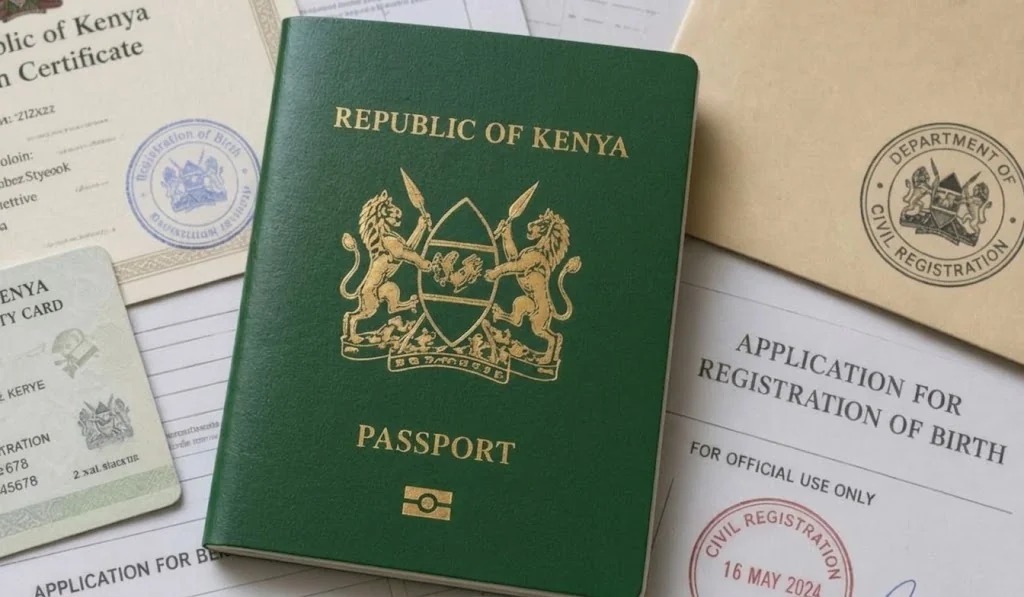
Kenya’s green service passport
The government has printed a new category of official travel document for public servants, but its rollout awaits regulations that will determine who gets one and on what terms
By Jane Njeri
Kenya is preparing to issue a new green-coloured service passport for public servants and state officers who travel abroad on official government assignments but do not qualify for diplomatic passports, Immigration and Citizen Services Principal Secretary Belio Kipsang told Parliament yesterday.
Kipsang made the disclosure when he appeared before the National Assembly Departmental Committee on Administration and Internal Security on Thursday, 5 November 2026. He confirmed that the passports had already been printed and were ready for distribution, but would only be issued once the government completed the regulatory framework governing their issuance. The announcement marks a significant expansion of Kenya’s official travel document architecture and raises immediate practical questions about eligibility, privileges and the distinction between different categories of government travel credentials.
The service passport is not an entirely new concept within Kenya’s document system. Kipsang noted that service passports had previously been issued to members of the disciplined services — police officers and military personnel travelling overseas on official duties. The planned expansion broadens the category to cover a wider range of public servants and state officers whose roles require international travel but whose positions do not carry the seniority or designated functions that qualify an individual for a diplomatic passport. Precisely which officials will be eligible remains subject to the regulations still being finalised, meaning that not every public servant should assume they will automatically receive one.
Understanding the new document requires situating it within Kenya’s existing passport framework. The country currently issues three categories of travel documents, each distinguished by colour and purpose. The ordinary passport, used by the overwhelming majority of Kenyans travelling for personal reasons — holidays, education, medical treatment, business — carries a sky-blue cover under the East African Community’s harmonised passport system. The diplomatic passport, reserved for designated senior officials and carrying a red cover, is issued to the President, Deputy President, Cabinet Secretaries, Principal Secretaries, county governors, senior judicial officers and specified security officials, as well as certain spouses and dependants of eligible officeholders. The service passport, green-covered, occupies the middle ground — an official document for government travel that is more widely available than the diplomatic passport but categorically distinct from the document an ordinary citizen obtains.
The practical difference matters. An ordinary passport supports a citizen’s general international movement, entirely independent of their professional status. A service passport identifies the holder as a government official travelling in connection with public duties, providing a formal travel credential that signals official purpose to receiving countries without conferring the specific privileges associated with diplomatic status. For public servants currently required to travel on ordinary passports despite undertaking official assignments, the new document offers both a practical improvement and a measure of institutional recognition.
One of the most important clarifications Kipsang’s announcement invites concerns the relationship between passport type and travel privileges. A service passport does not automatically entitle its holder to enter any country without a visa. Entry requirements remain determined by the destination country’s immigration rules and by any bilateral agreements or arrangements it has concluded with Kenya. Kenya’s official electronic visa system does provide for courtesy visas for diplomatic, official and service passport holders travelling on official duties or transiting for official business, but this facility operates subject to applicable conditions and does not constitute universal visa-free access. Holders of the new green passport will still need to satisfy the entry requirements of each country they visit.
Equally important is the distinction between passport colour and diplomatic immunity. Diplomatic immunity is not conferred by the possession of a red passport — it is governed by international law, specifically the Vienna Convention on Diplomatic Relations, and attaches to individuals who hold recognised diplomatic status and exercise designated diplomatic functions. A service passport holder is not a diplomat and does not carry the legal protections associated with diplomatic accreditation. That distinction has practical consequences for how holders understand their status and obligations when travelling abroad on official business.
The timing of the announcement places this development within a broader context of institutional reform and public administration modernisation that the government has pursued across several departments. The Immigration and Citizen Services department has in recent years expanded its digital infrastructure, streamlined passport processing and worked to bring Kenya’s document standards into closer alignment with regional and international frameworks. The introduction of a formal service passport category continues that trajectory, providing a structured credential for a category of official travel that had previously relied on ordinary passports or the more selective diplomatic document.
For the public servants who will ultimately benefit from the new document, the practical implications are clear: an official travel credential that accurately reflects the purpose of their travel, potentially simplifying interactions with foreign immigration authorities and signalling government affiliation in a way that an ordinary passport does not. For the government, it represents a tidier, more coherent document architecture that distinguishes categories of official travel more precisely than the current system allows.
The outstanding question is timing. Kipsang was explicit that issuance would not begin until the regulatory process was complete. Given that the passports are already printed and the institutional rationale is established, the pressure now falls on the government to finalise those regulations without unnecessary delay. Public servants with international travel requirements are waiting, and the document that is meant to serve them is already sitting in a government facility, ready to be used.
Kenya has printed its green passport. The next step is ensuring it reaches the hands of those it was designed to serve — and doing so through a regulatory process that is transparent, timely and clearly communicated to the public servants who need to know where they stand.
Similar Posts by The Mt Kenya Times:
- Mt Kenya Times ePAPER November 7-8, 2026
- Karua demands Lissu’s release as Tanzania court conviction draws regional condemnation
- Jubilee accuses UDA of stealing its slogan as 2027 election battle lines sharpen
- Rigathi Gachagua mourns elder sister Eunice Nyangari Gachagua, 77, the family’s guiding light
- A father’s prayer: Ruto celebrates daughter Charlene’s wedding in heartfelt message
About the Author