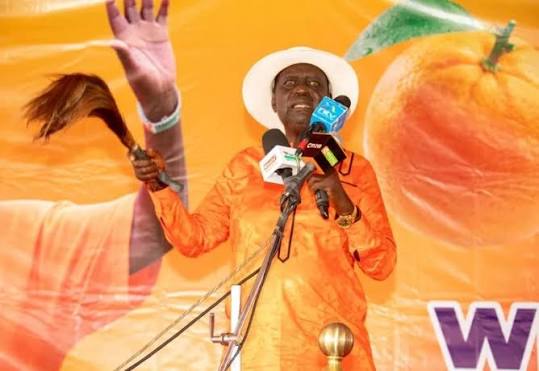

The Orange Democratic Movement has received the single largest share of Kenya’s political parties funding, edging out the ruling UDA in the latest allocation covering 47 parties.
By Yvonne Wambui
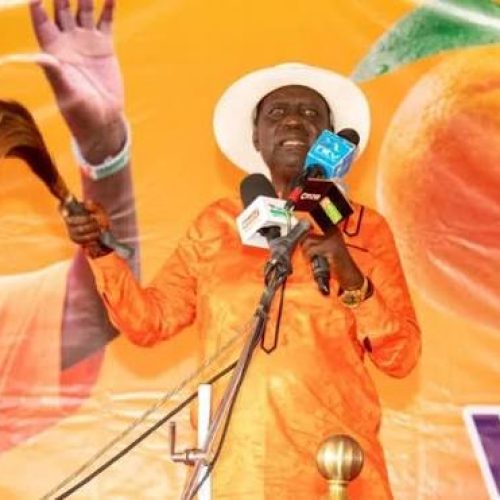
The Orange Democratic Movement (ODM) has emerged as the biggest beneficiary of Kenya’s KSh 2.26 billion Political Parties Fund, receiving KSh 801.85 million — the largest single allocation among 47 political parties that participated in the 2022 General Election, according to a report by the Registrar of Political Parties tabled before Parliament yesterday.
The figure positions ODM, now led by Oburu Odinga following the death of his younger brother, the late Raila Odinga, ahead of President William Ruto’s ruling United Democratic Alliance (UDA) and the Jubilee Party in what is one of the most consequential annual distributions of public money to Kenya’s political landscape. The fund exists to support parties in running their operations, maintaining structures and promoting democratic participation — and the scale of the allocations this cycle underscores just how unevenly that support is distributed across the political spectrum.
ODM’s total allocation comprises a primary disbursement of KSh 421.22 million, a supplementary allocation of KSh 380 million and a carried-forward balance of KSh 634,896 from the previous financial period. The combination of a primary grant and a supplementary top-up pushed ODM’s total marginally above UDA’s, a gap that is likely to sharpen debate about how the formula rewards electoral performance and parliamentary representation.
UDA, which controls the presidency and commands a significant parliamentary bloc, received KSh 788.74 million — placing it second, albeit by a relatively narrow margin. Jubilee Party, now associated with former Interior Cabinet Secretary Fred Matiang’i following its dramatic political realignment in recent years, secured KSh 184.89 million, making it the third-largest recipient. Together, the three parties absorbed approximately 79 per cent of the total funds distributed, leaving the remaining 44 parties to share the balance — a concentration of resources that critics argue entrenches the dominance of established political outfits at the expense of newer and smaller formations.
Among the mid-tier beneficiaries, Wiper Democratic Movement-Kenya, led by former Vice-President Kalonzo Musyoka, received KSh 98.81 million, reflecting its sustained organisational base in lower Eastern Kenya. The Democratic Action Party-Kenya (DAP-K), associated with Eugene Wamalwa, was allocated KSh 43.20 million. The United Democratic Movement received KSh 36.83 million, Ford-Kenya was allocated KSh 35.33 million, and the Kenya African National Union (KANU) — once the country’s sole legal party and now a shadow of its former self — received KSh 32.89 million.
The allocations are determined under the Political Parties Act using a formula that weighs the number of votes a party obtained at the previous general election alongside the number of elected representatives it fields across all levels of government. That formula inherently favours parties with broad national reach and strong parliamentary representation, which explains why ODM and UDA dominate the distribution despite their very different positions — one in government, one navigating a post-Raila future with considerable uncertainty about its long-term political direction.
What makes this cycle’s figures particularly noteworthy is the context in which they land. Political parties across the country are actively preparing for future electoral contests, and financial resources at this stage carry outsized strategic importance. Access to party funding determines whether grassroots structures can be maintained, whether local offices remain operational and whether parties can sustain the kind of continuous engagement with voters that translates into electoral strength. For smaller parties scraping by on allocations in the tens of millions, the gap between their resources and those of the top three is not merely financial — it shapes their entire capacity to compete.
ODM’s position at the top of the table is also significant given the party’s current moment. The death of Raila Odinga — the towering figure who built ODM into a national force over two decades — has left the party at a crossroads. Oburu Odinga inherits both the leadership and the challenge of holding together a coalition that was, in many respects, built on his brother’s singular political personality. The KSh 801.85 million allocation provides a substantial financial platform from which to attempt that consolidation, but money alone will not resolve the deeper questions of identity and direction that now confront the party.
For UDA, the second-place finish in funding despite holding the presidency and a parliamentary majority reflects the technicality of how the formula operates — ODM’s stronger performance in the 2022 vote in certain categories, combined with the supplementary disbursement, nudged it ahead. It is a distinction the ruling party’s strategists will note, though UDA’s proximity to state resources through its position in government gives it advantages that do not appear in the Registrar’s report.
The tabling of this report before Parliament also reopens broader questions about accountability. Kenya’s Political Parties Act requires that parties submit audited accounts detailing how public funds are spent, but enforcement of that requirement has historically been inconsistent. With KSh 2.26 billion of taxpayer money now distributed, the scrutiny on how each party accounts for its allocation will inevitably intensify — as it should. Kenyans have a right to know whether these funds are strengthening genuine democratic structures or simply sustaining party bureaucracies with little accountability to ordinary members and voters.
The report now sits before Parliament, and the conversation it triggers about equitable distribution, formula reform and financial accountability is one that Kenya’s political class can no longer afford to have only on paper.