

A night planned as a celebration of Cristiano Ronaldo’s legacy turned into a sobering lesson as Denmark dismantled Portugal 4–1 in the UEFA Nations League at Braga.
By Andalo Christine Ingutia
Portugal’s carefully choreographed tribute to Cristiano Ronaldo was yesterday gate-crashed by a ruthless Denmark side who showed no interest in sentiment, handing the hosts a stunning 4–1 defeat in the UEFA Nations League at the Estádio Municipal de Braga — their heaviest home loss in the competition’s history.
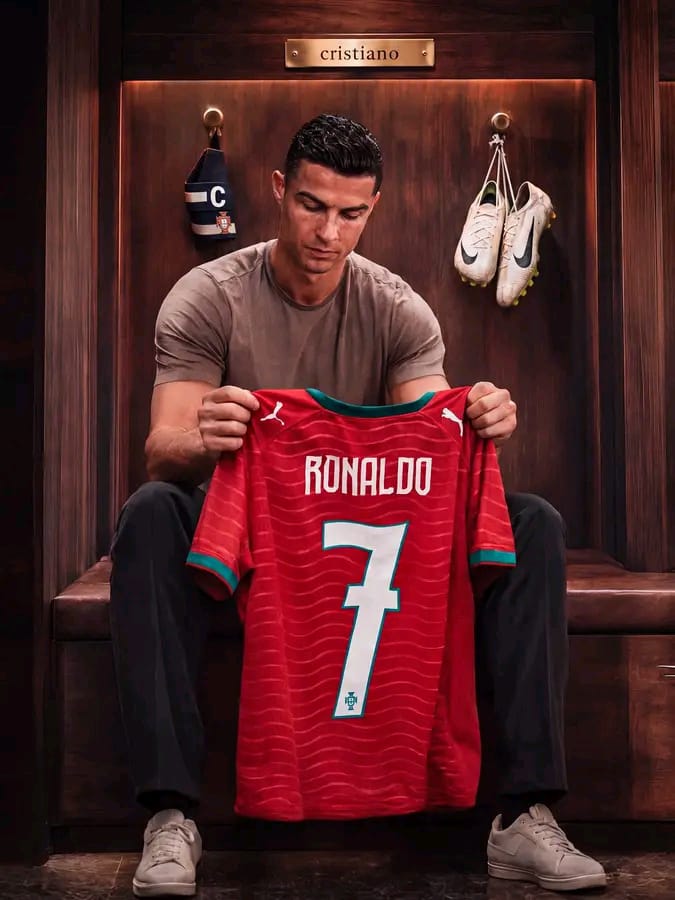
The evening had been designed as an emotional farewell to Ronaldo’s international legacy, with Portugal’s players and their mascots taking to the pitch in shirts bearing his iconic number 7, while supporters unveiled a breathtaking stadium display honouring the forward’s extraordinary contribution to Portuguese football. It was a night built for warmth and celebration. Denmark, however, had not read the script.
Pierre-Emile Højbjerg broke the deadlock in the 43rd minute, stepping up to convert from the penalty spot after VAR confirmed a handball by Portugal defender Rúben Dias. It was a clinical, composed finish that set the tone for everything that followed — and Portugal never truly recovered.
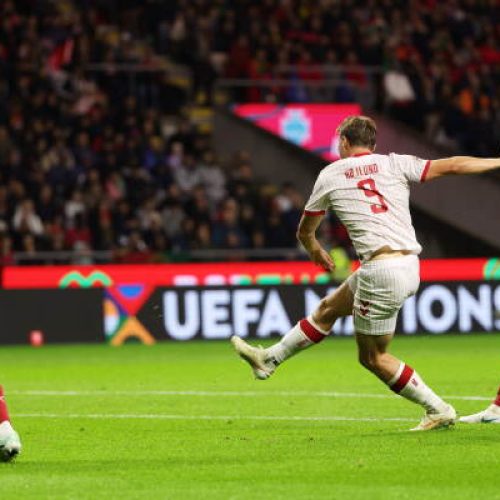
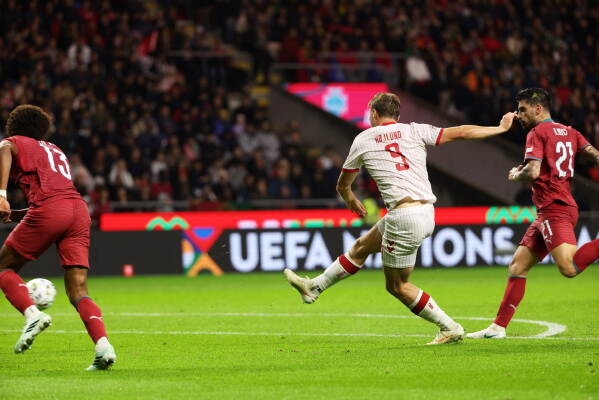
Denmark returned from the break with greater intent and sharper teeth. Rasmus Højlund, one of Europe’s most dangerous young strikers, took centre stage with a devastating seven-minute double that effectively killed the contest. He first volleyed home Mikkel Damsgaard’s cross in the 50th minute, all timing and technique, before firing a low, precise effort past Diogo Costa in the 57th minute to put the visitors firmly in control. The Braga crowd, so electric before kick-off, had fallen into a stunned silence.
The evening’s misery was completed in the 75th minute when Joachim Andersen rose highest from a corner to power a header into the net, making it four and emphatically ending any Portuguese hope of a comeback. Bernardo Silva provided a late consolation in the 94th minute, but it was exactly that — a consolation, with no bearing on a result that told an uncomfortable story about where this Portugal side currently stands without the man they had spent the evening honouring.
Portugal head coach Jorge Jesus was characteristically blunt when asked whether Ronaldo’s absence had contributed to the defeat. “Missing what? He’s no longer on the national team, so what’s missing? The only thing missing is his presence here to keep me company,” Jesus said. It was a deflection dressed as a quip, but it also contained a pointed challenge to his players — that the Ronaldo era is over and the responsibility of carrying Portugal forward rests entirely with those now in the squad.
There is an irony in all of this that is hard to ignore. The night was meant to draw a line under the Ronaldo chapter with grace and gratitude, to send him off with the full-throated affection of a nation he served for more than two decades. Instead, it exposed with unusual clarity the size of the vacuum his retirement has left — not because Portugal lack quality, but because replacing a player of Ronaldo’s psychological force and goalscoring certainty is not something that happens in one match, or one season, or perhaps even one generation.
The result, painful as it is, does not alter Portugal’s standing in Group A4. They remain top with 12 points and have already secured their place in the quarter-finals. Denmark move to nine points, keeping alive their own qualification hopes heading into the final round of group fixtures. Portugal travel to Cardiff to face Wales on Tuesday, while Denmark host Norway in Copenhagen.
For Denmark, it was a statement — a victory on Portuguese soil that announced their own ambitions loudly and without apology. For Portugal, it was a reality check delivered on the worst possible night. The tributes to Ronaldo were genuine and deserved. But football, as it always does, moved on before the applause had even faded.